MEBC 2026
Monaco Energy Boat Challenge 2026
From July 8 to 11, 2026, the Swiss Solar Boat will participate in the 13th edition of the Monaco Energy Boat Challenge, organized by the Yacht Club de Monaco.
This page will allow you to follow our adventure in Monaco: schedule, events, live stream link, official video, and daily recaps with photos.
Watch the competition live!
MEBC Live Stream: #Live & Replay Zone - Monaco Energy Boat Challenge
Our Category: SeaLab
We are competing in the SeaLab category, dedicated to innovative projects centered around clean propulsion, energy efficiency, and new naval architecture.
The Events
We will participate in four main events:
- Maneuverability in the Port
- 500m Speed Record
- 32 Nautical Mile Crossing to Ventimiglia and Back
- 3-Hour Endurance Race
MEBC Challenge YouTube Video: #MEBC2026 Swiss Solar Boat - Communication Prize video
Simplified Schedule
Wednesday, July 8
9:00 AM – 5:00 PM
Technical Inspections & Sea Trials
5:00 PM
End of Technical Inspections
7:00 PM
Opening Ceremony
Thursday, July 9
10:00 AM – 11:00 AM
Parade
1:00 PM – 2:00 PM
SeaLab Maneuverability in the Marina
4:00 PM – 7:00 PM
Tech Talks
4:30 PM – 5:00 PM
YCM Speed Record – SeaLab
5:30 PM – 6:00 PM
Daily Award Ceremony
Friday, July 10
9:00 AM – 1:00 PM
Alternative Fuel Conference
2:00 PM – 5:00 PM
16 Nautical Miles – SeaLab
3:00 PM – 7:00 PM
Tech Talks
5:30 PM – 6:00 PM
Daily Award Ceremony
Saturday, July 11
2:00 PM – 4:00 PM
SeaLab Endurance Race
5:30 PM – 6:00 PM
Daily Award Ceremony
8:00 PM
Closing Ceremony
Daily Recaps
Day 1 - Monday, July 6
Daily Recap #1 – Monaco Energy Boat Challenge: Back in Action!
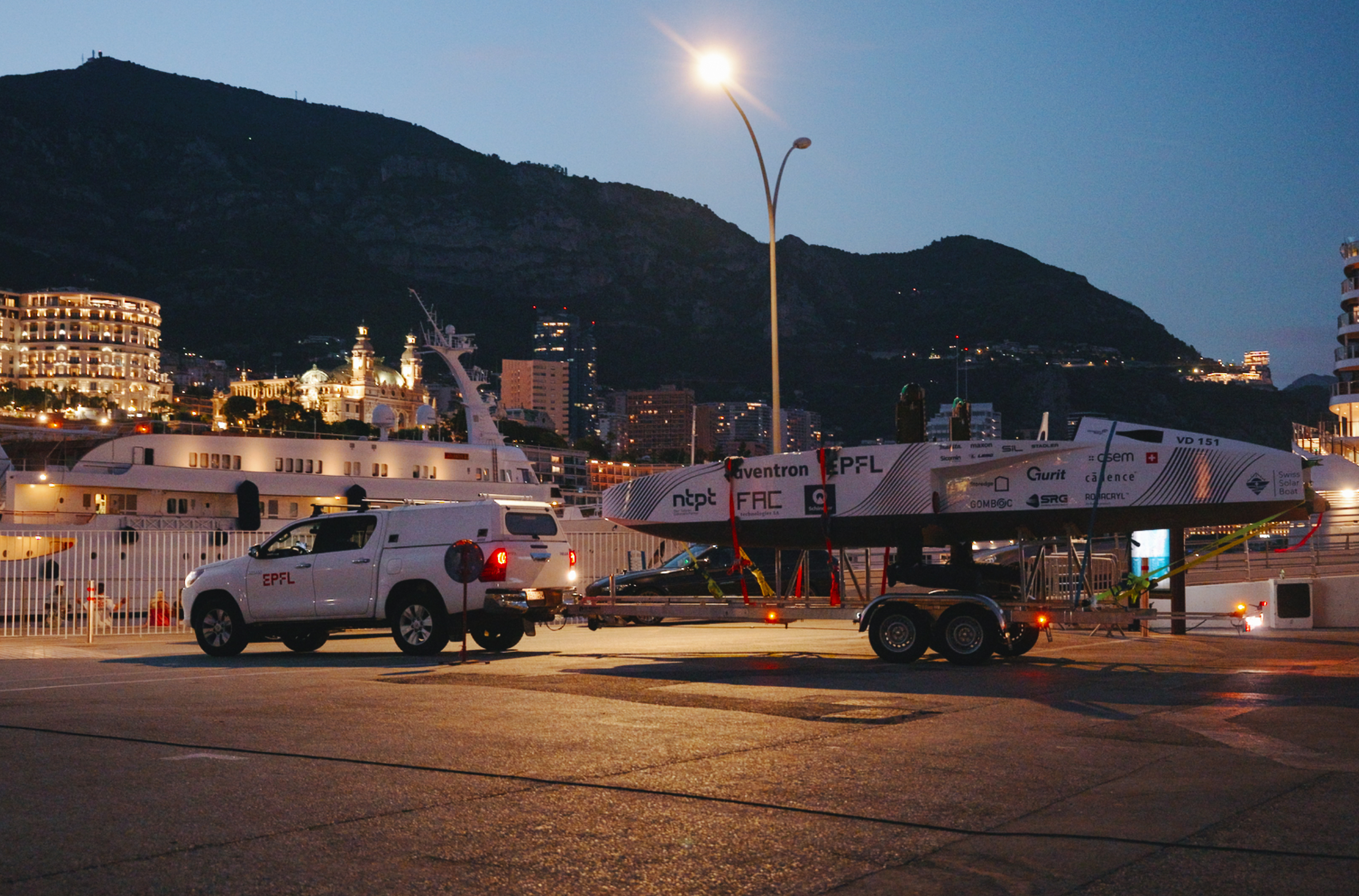
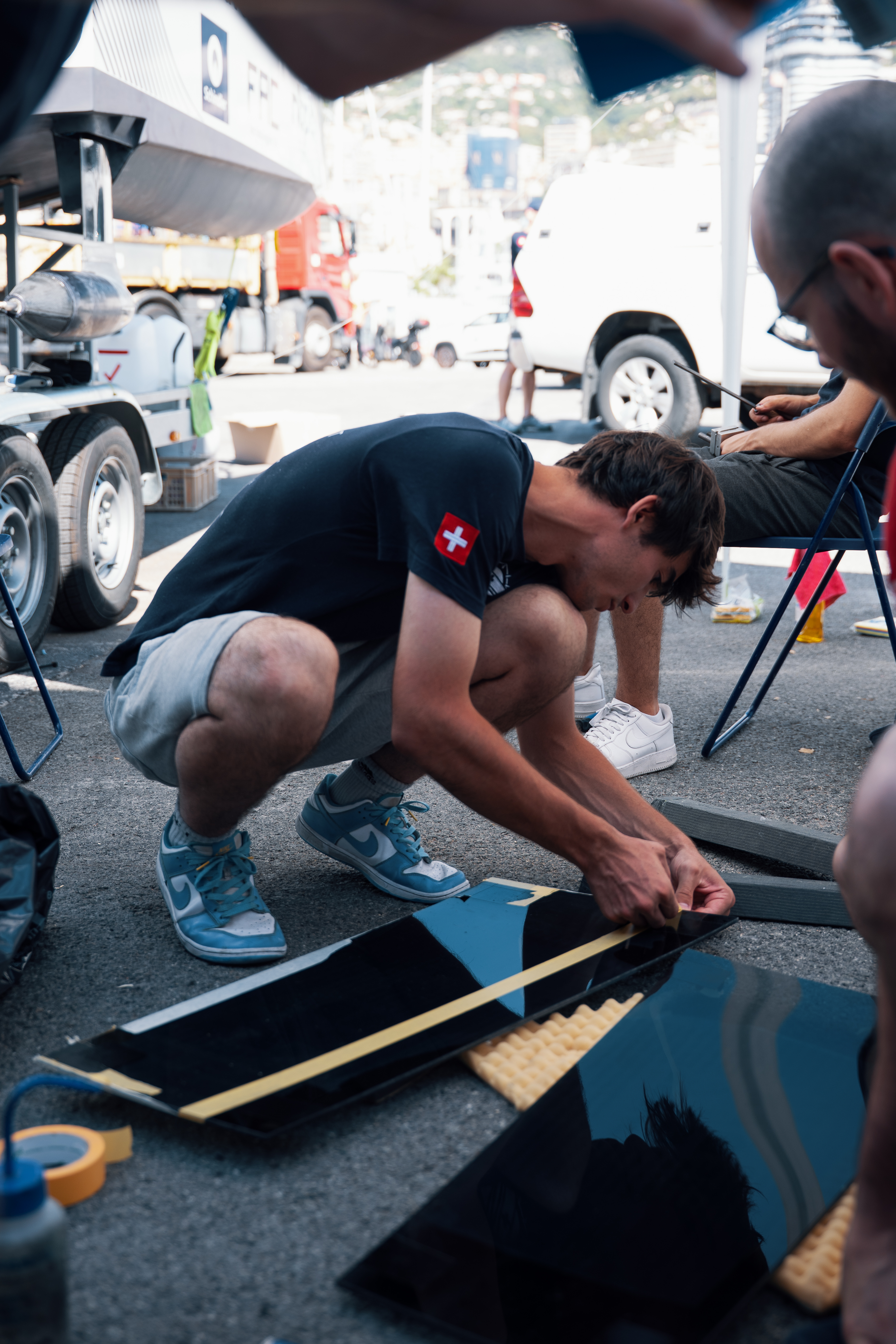
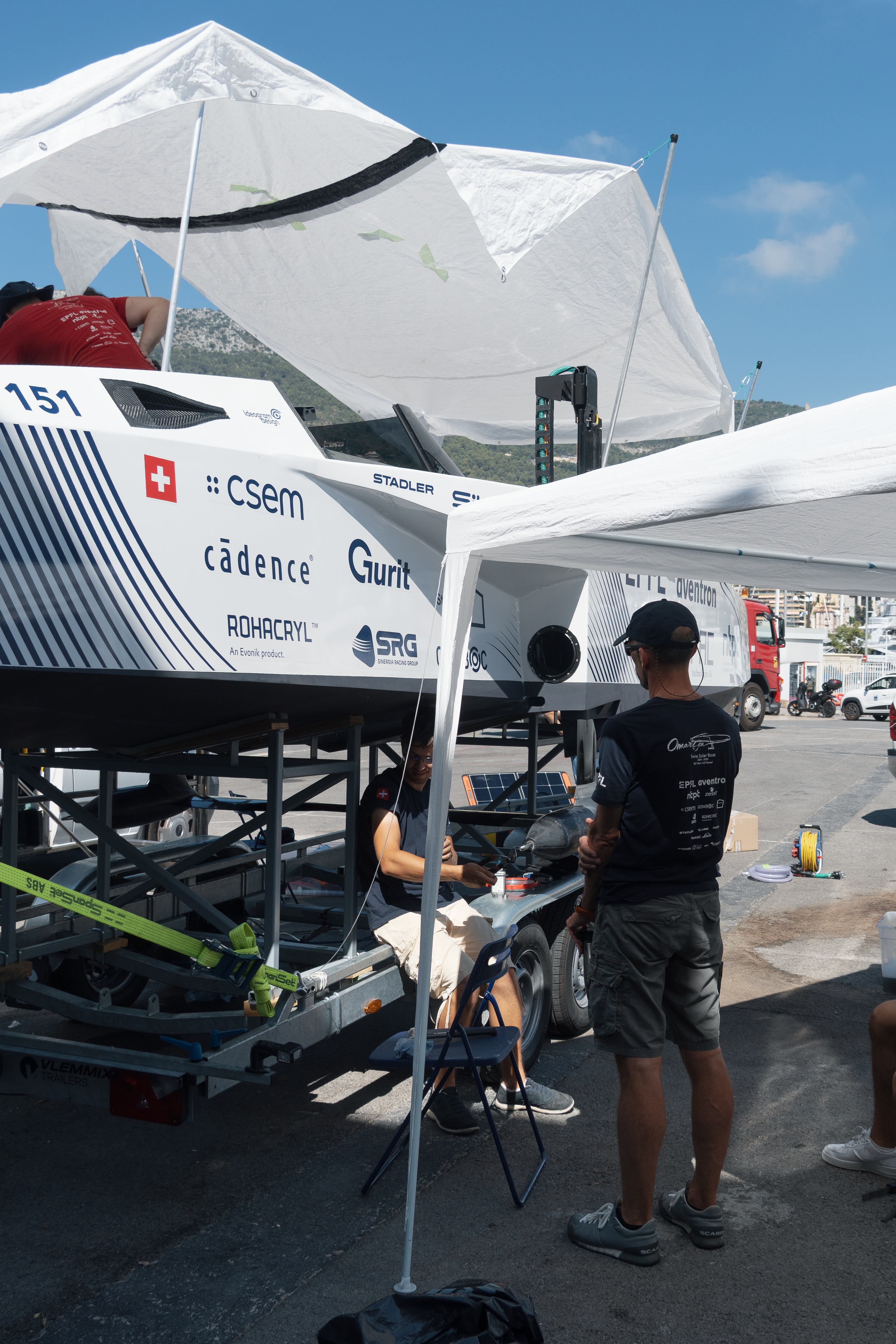
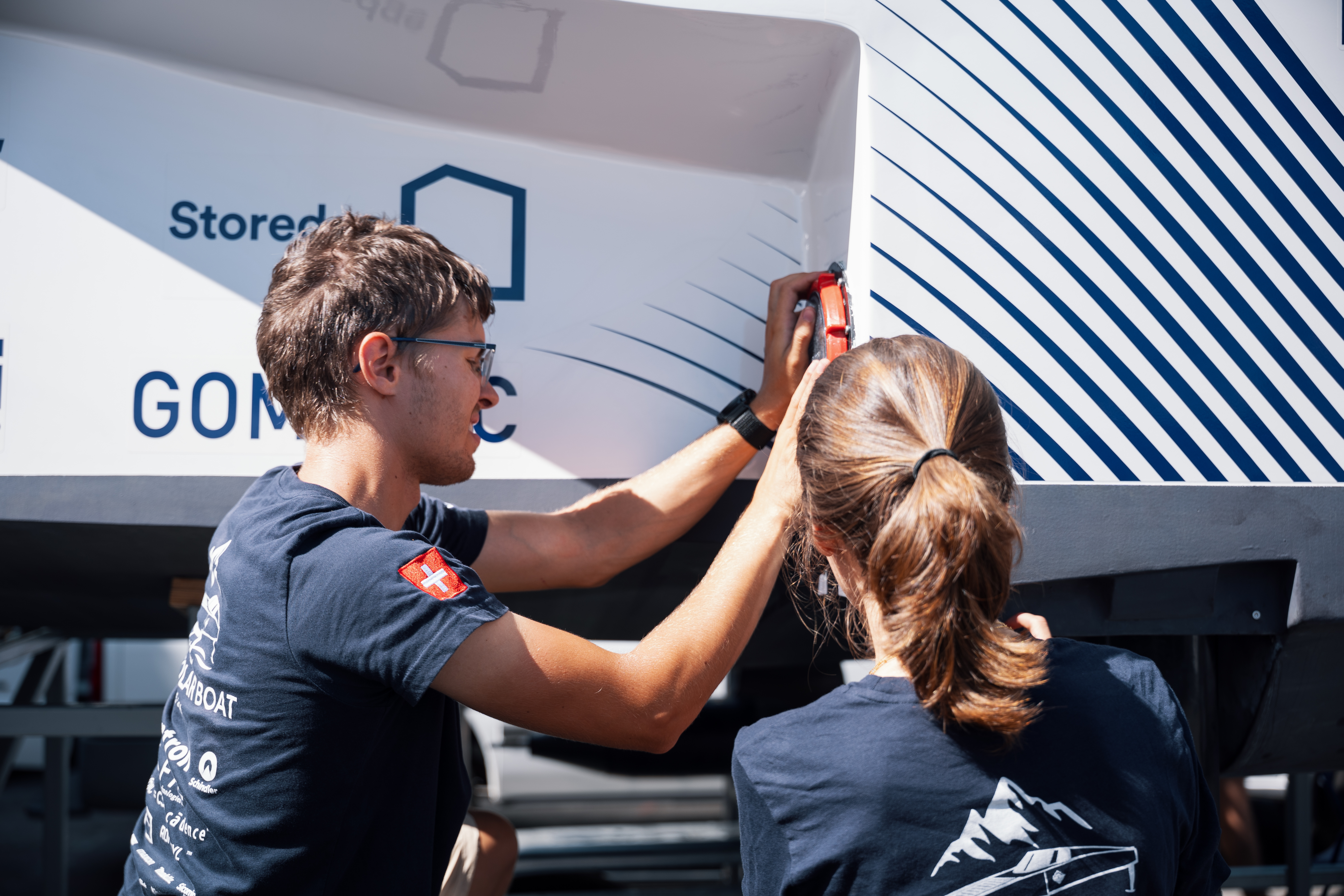
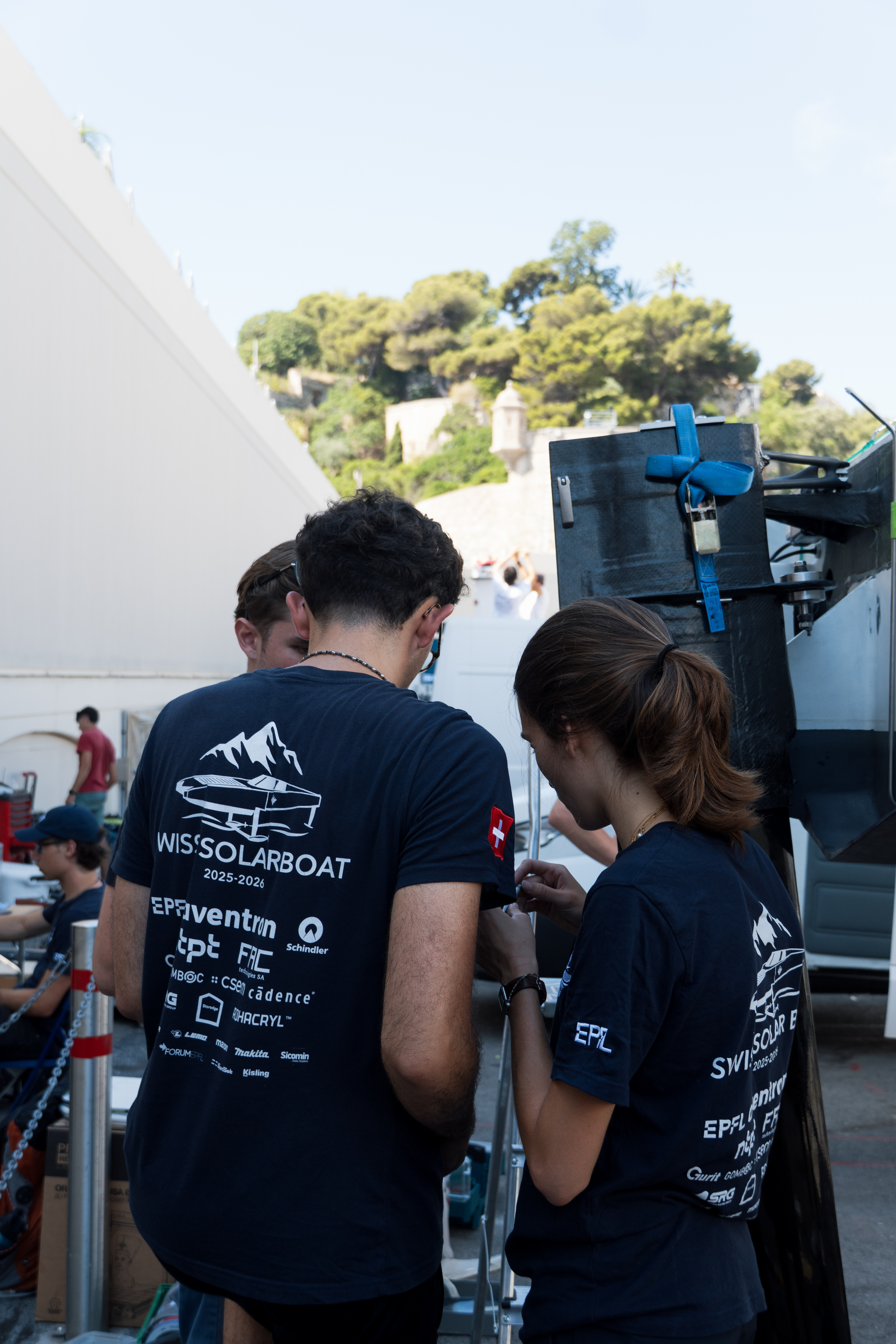
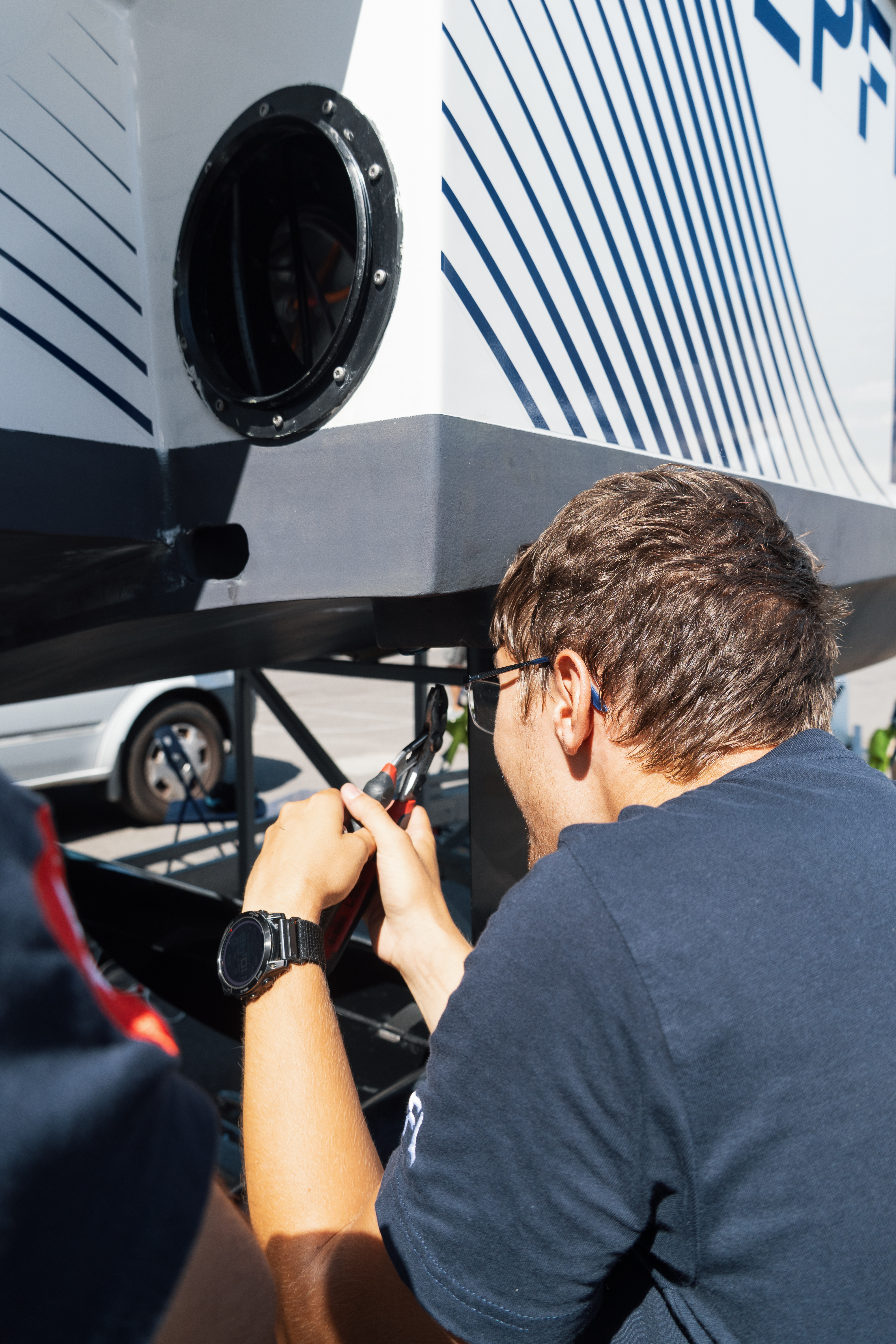
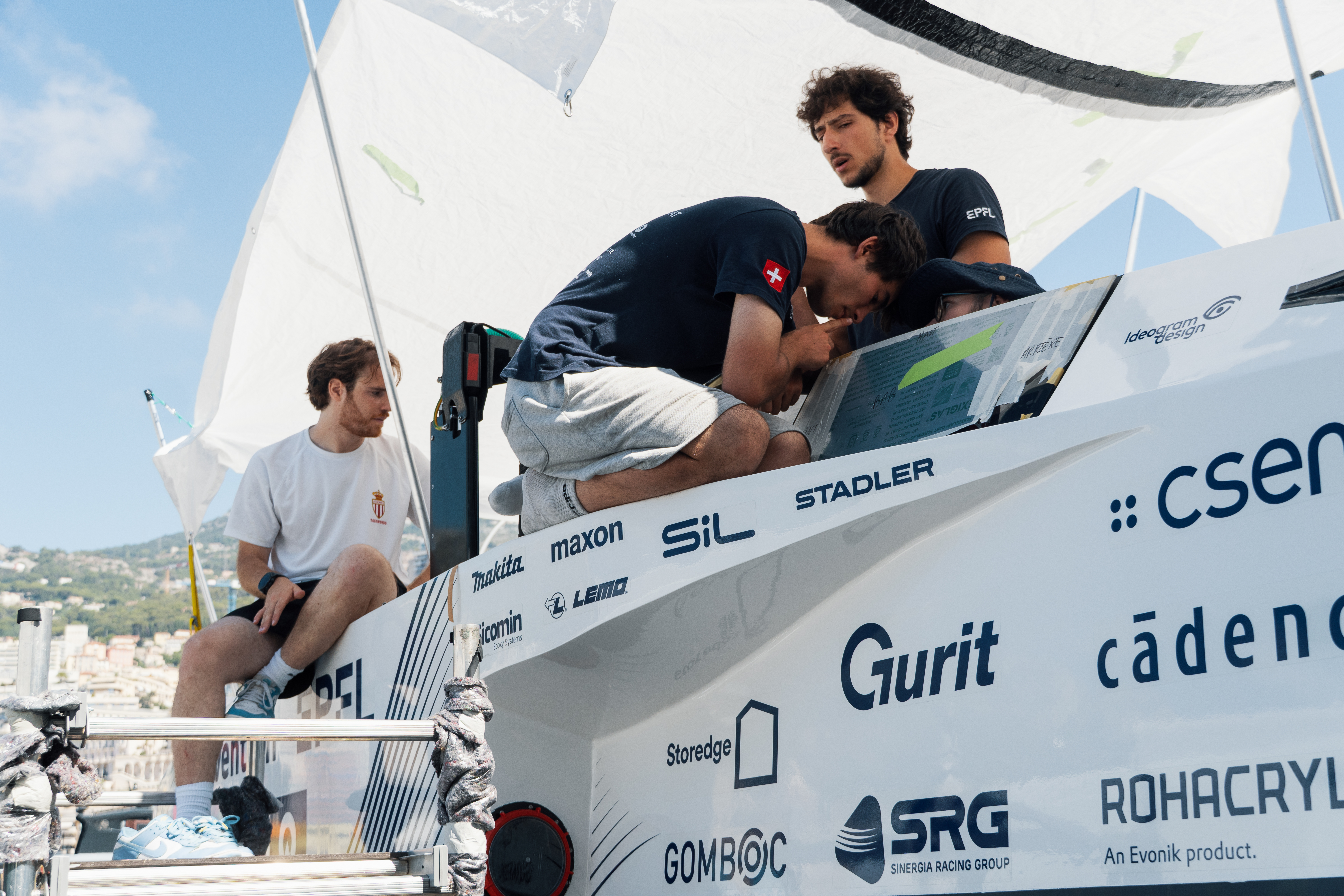
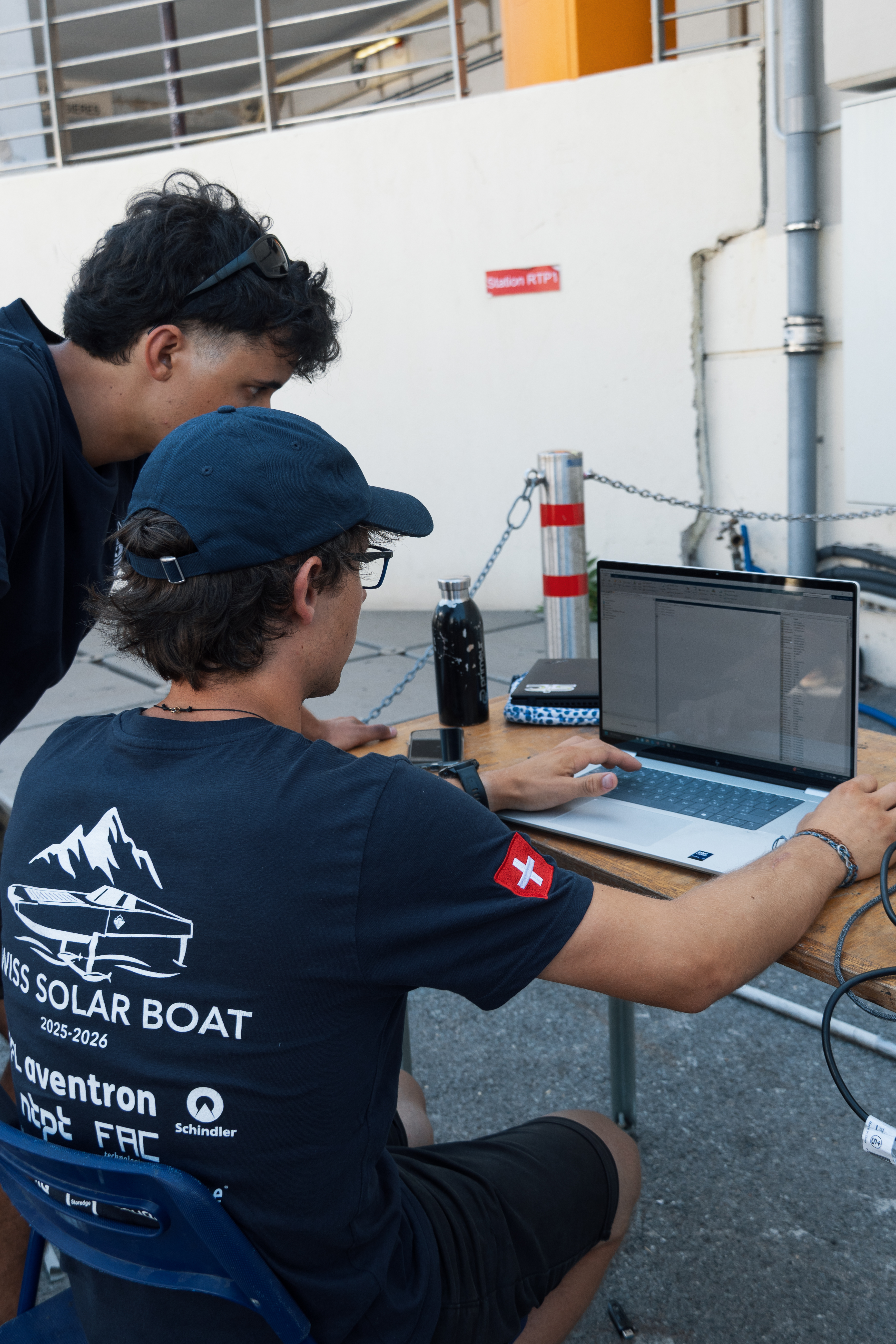
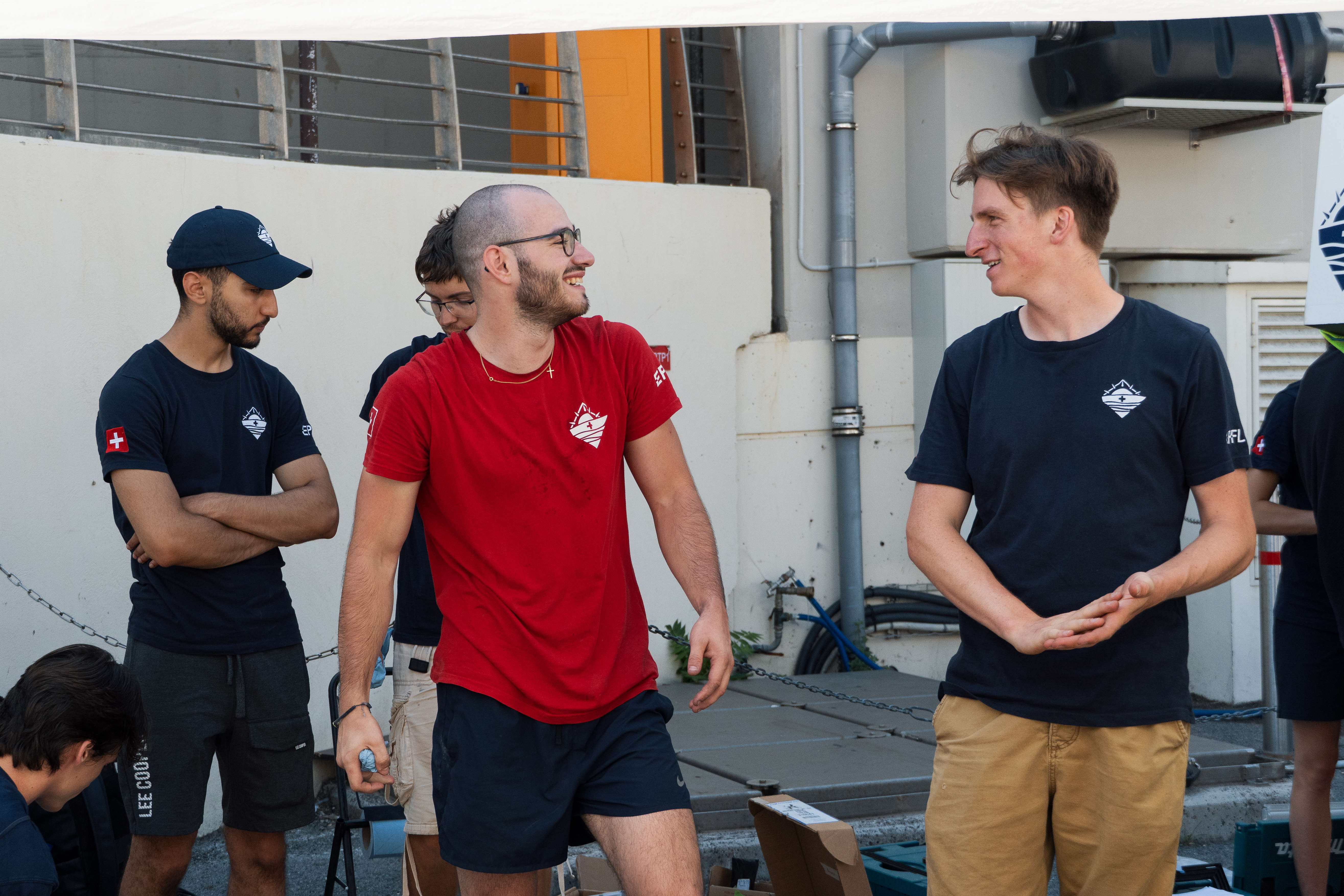
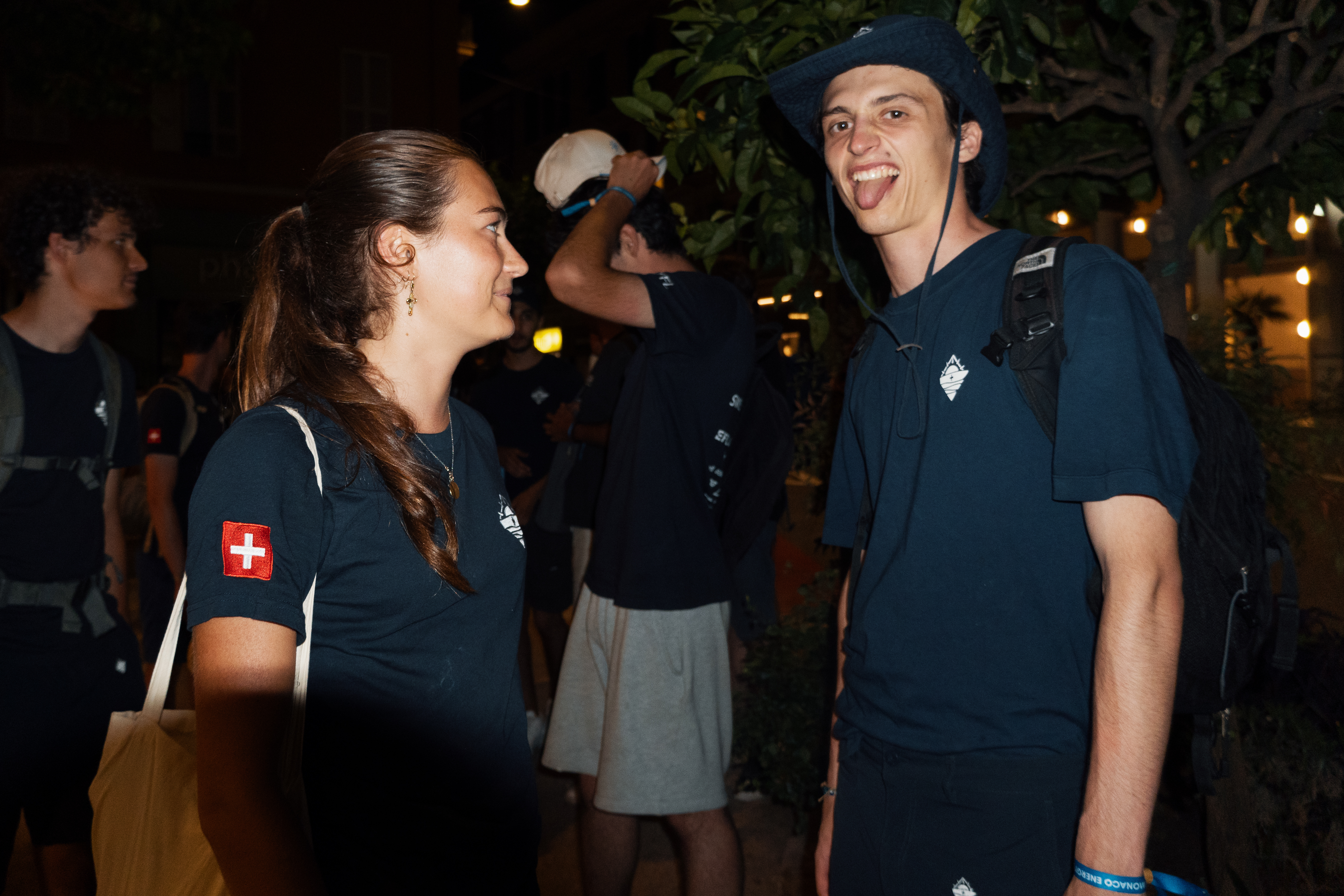
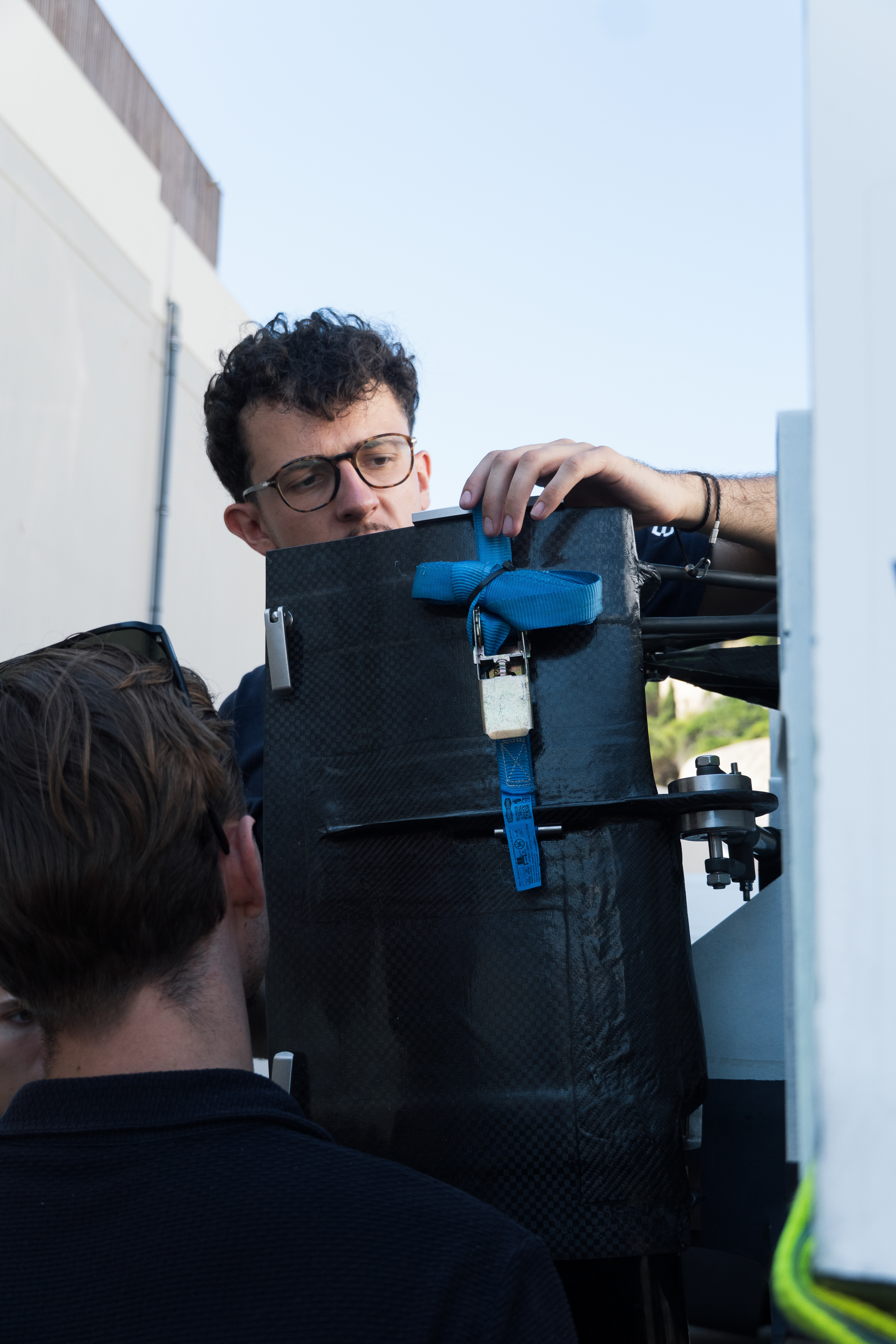
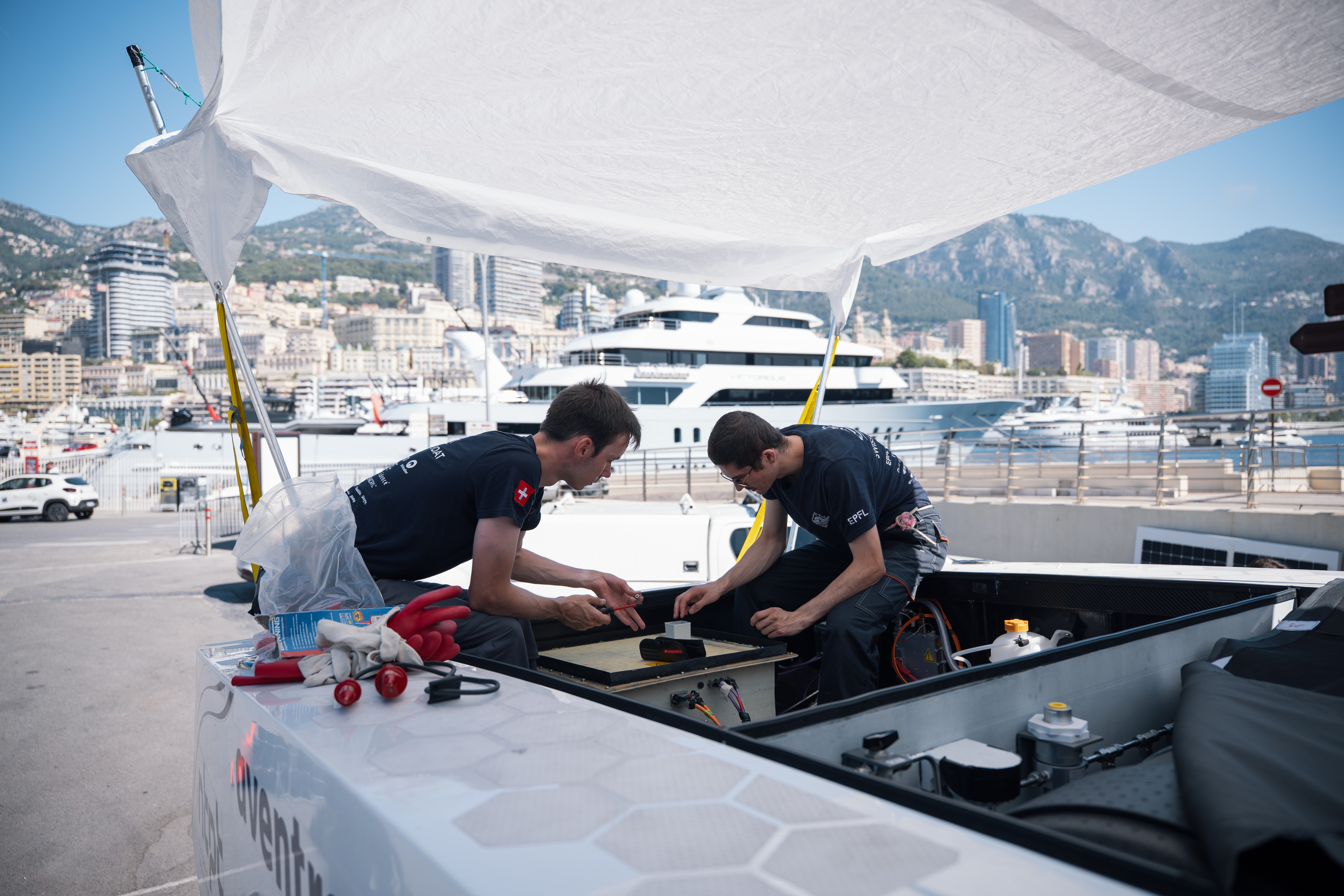
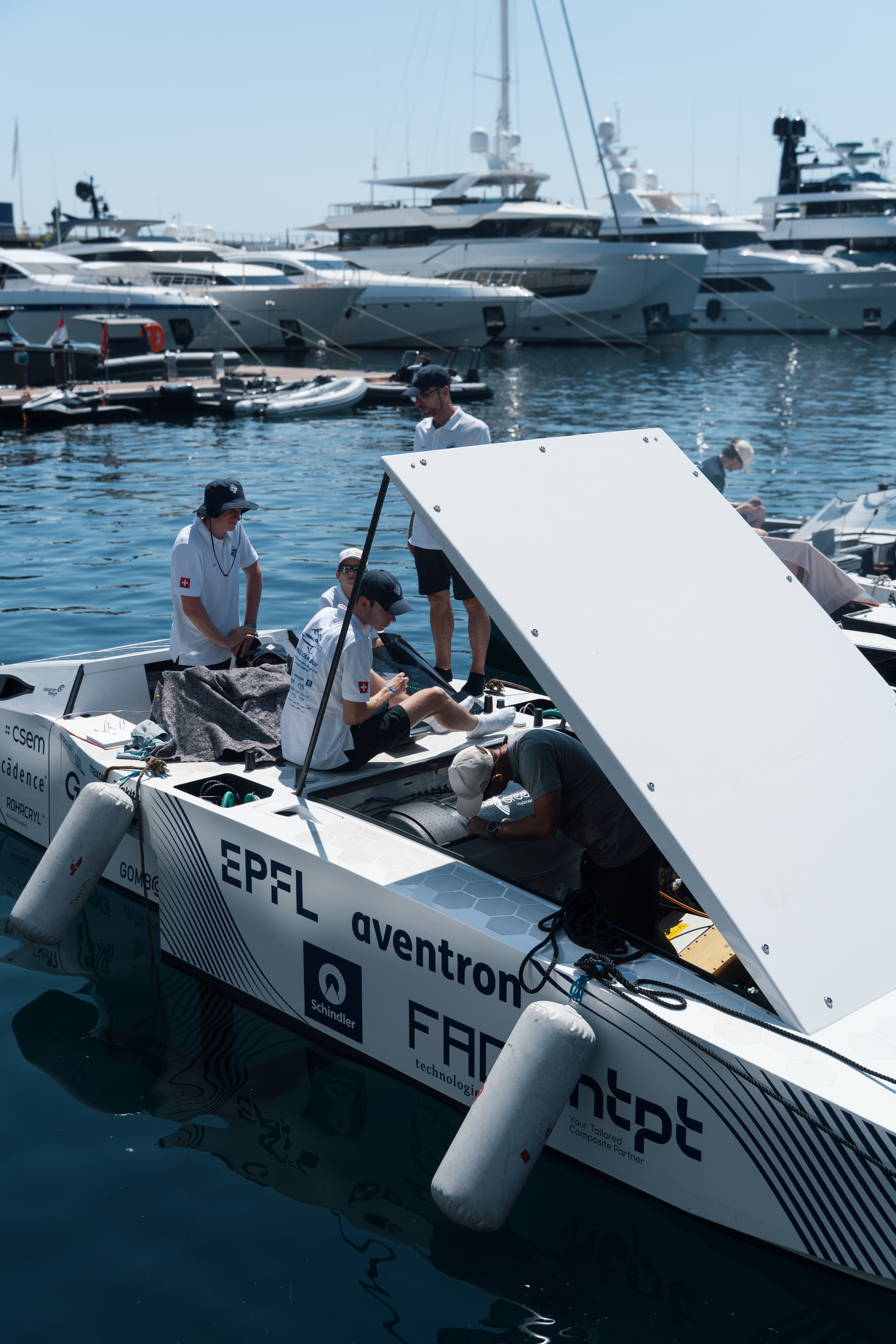
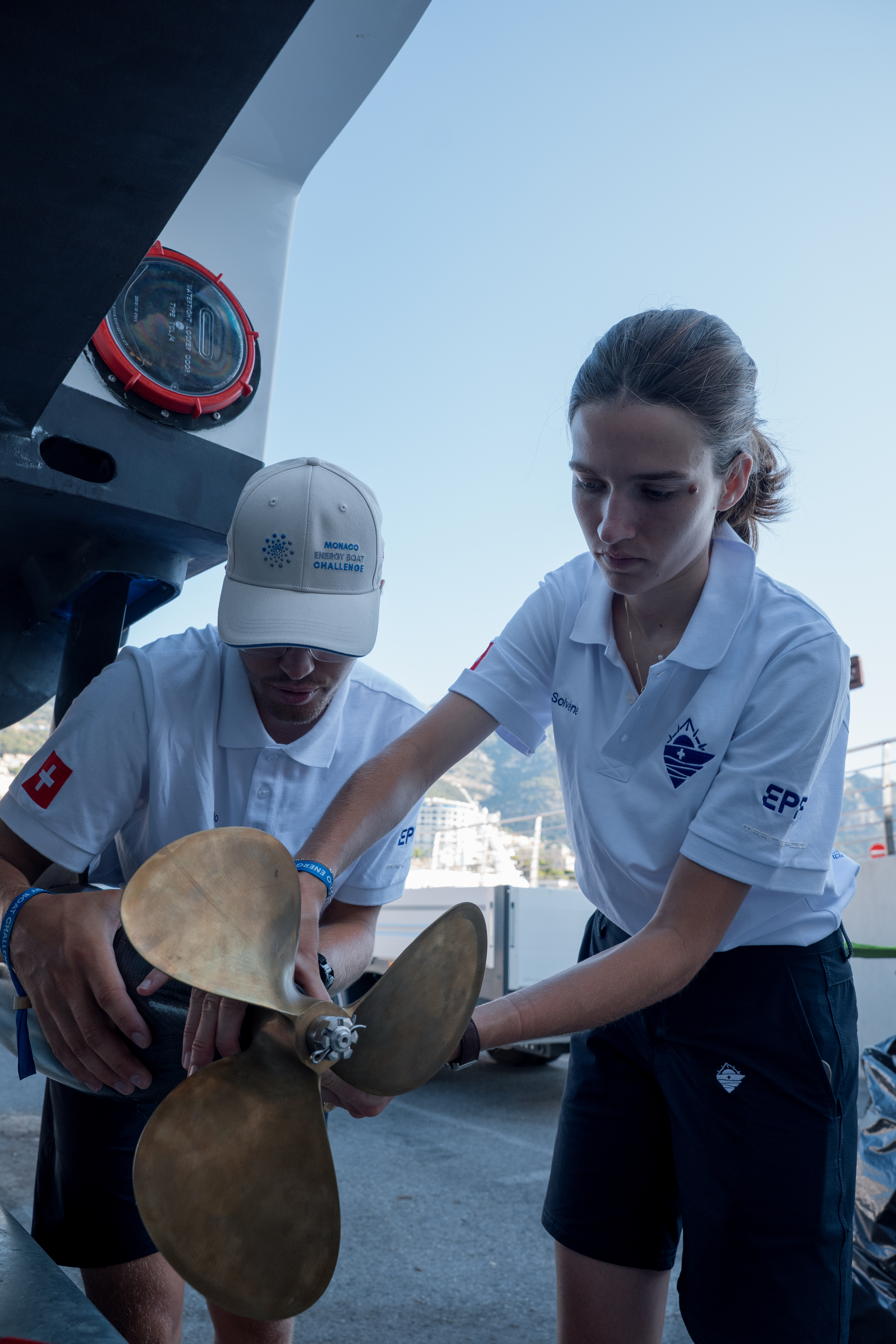
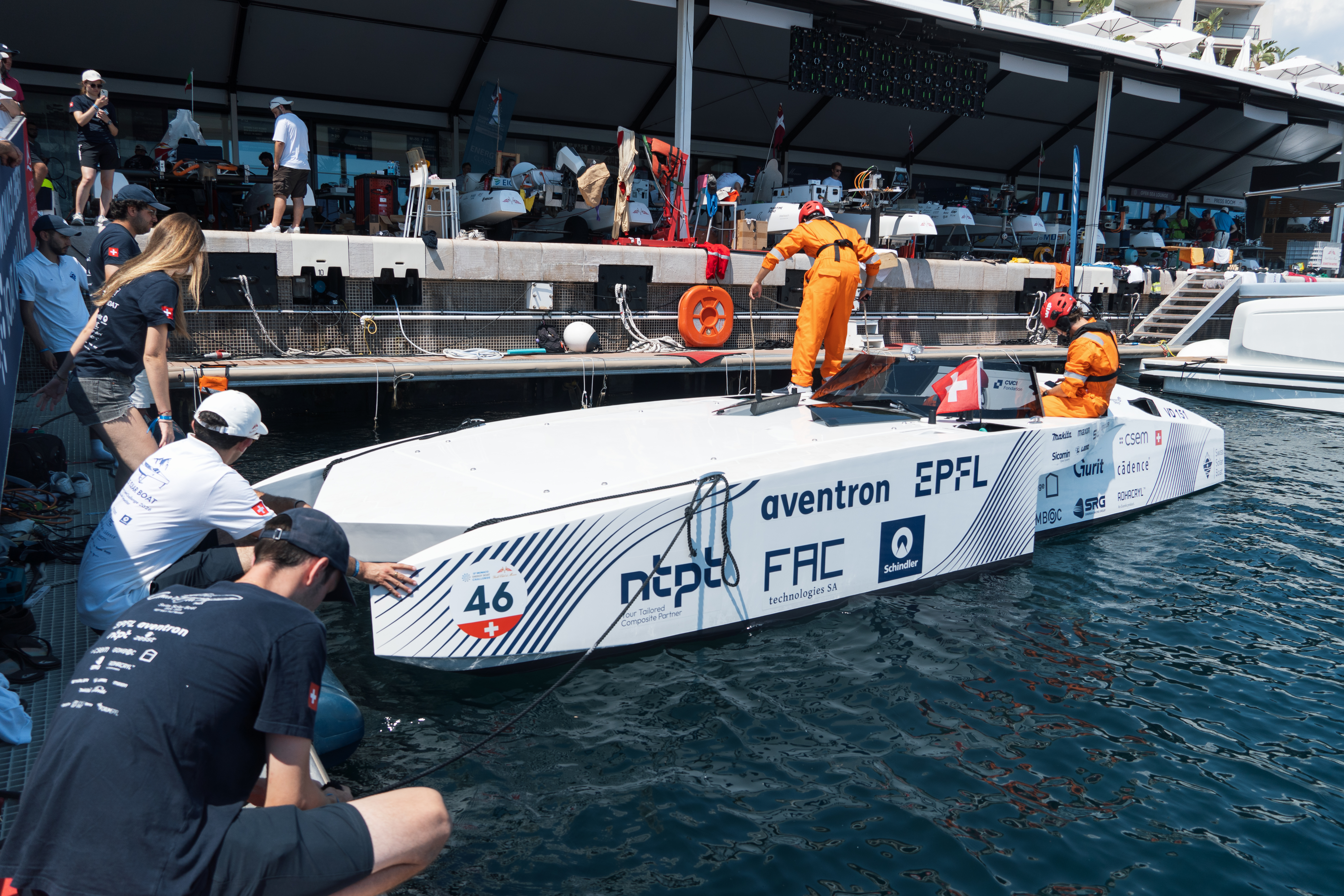
After bringing the boat to the Monaco harbour on Sunday evening, we arrived early this morning, ready to get back to work. The first mission of the day was to reassemble everything that had been removed for transport: the propellers, the rear foil systems, and the windshield. Transporting a prototype always comes with a bit of uncertainty, so while reinstalling each system, we carefully checked that nothing had been damaged on the road. Electrical connections, mechanical parts, hydrogen components : every detail mattered. Thankfully, after a full round of testing, everything performed as expected. The hydrogen system in particular behaved perfectly, which was an important matter for the team. With the technical work progressing well, we also took some time to give the boat a proper wash. The Lobst’Air is shining again!
One of the highlights of the day was meeting the other teams. We had great discussions with Tecnico Solar Boat, Surge Twente and TU Delft, comparing our designs, exchanging ideas, and sharing our common passion for high-performance boats. Even though many teams tackle the same challenges, every solution is unique, and it’s always inspiring to discover different approaches. To be honest, the level of this year’s competition is high. Some of the boats are seriously impressive, and it’s clear that we’ll have to give everything we’ve got if we want to fight for a place on the podium.
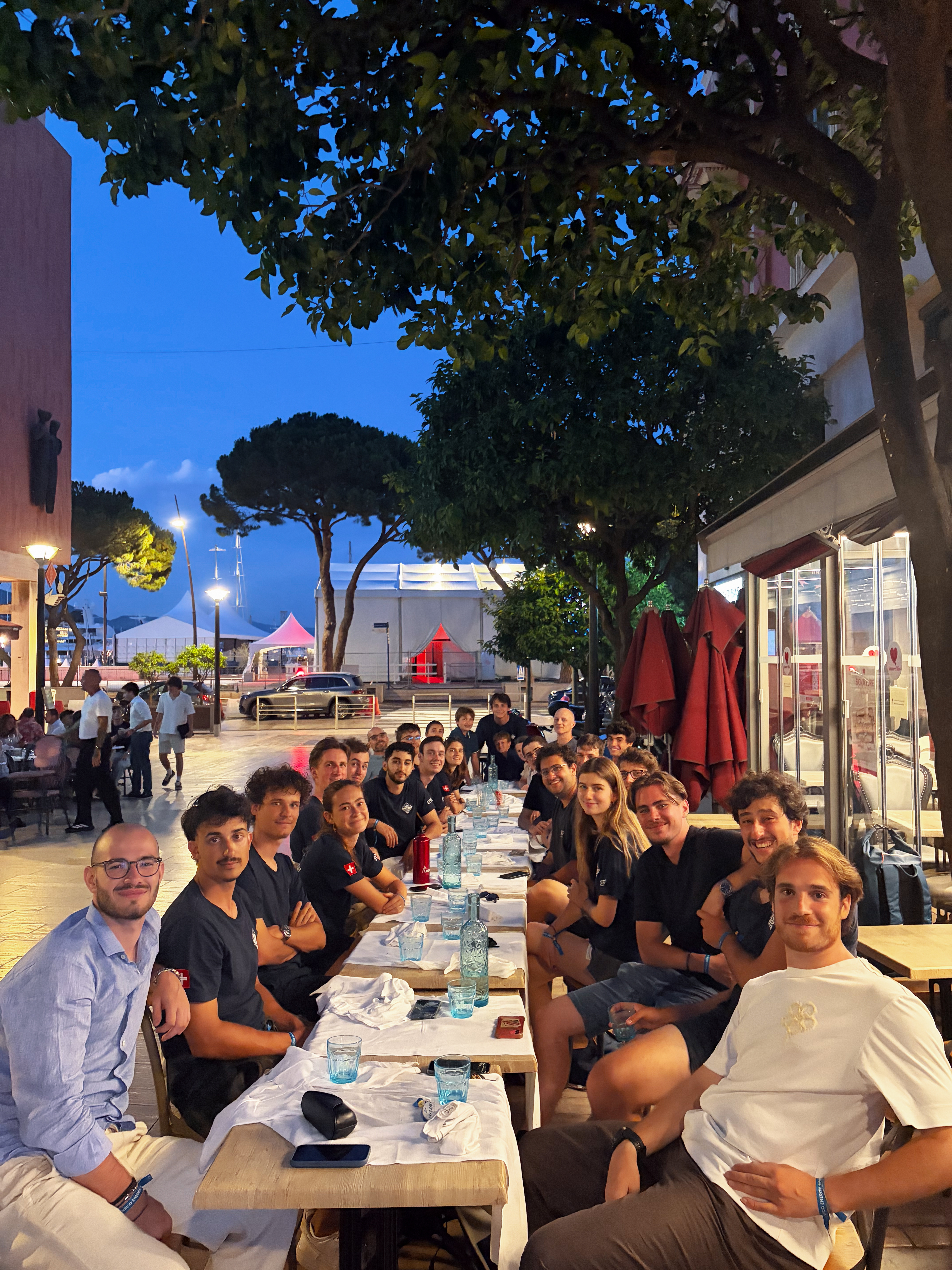
After a productive day, we finally took a short break to enjoy Monaco together before the busy days ahead. We shared pizzas on a terrace, debriefed the day’s work, and finished the evening with ice cream by the harbour. Stracciatella had success! There was still a little work left to finish fitting the windshield supports, but we decided that a good night’s sleep was the smarter choice. Tomorrow will be a crucial day with the technical inspection. If everything goes according to plan, we’ll finally be able to launch the boat and complete our first on-water tests before the competition officially begins on Wednesday. Those first navigation tests will be essential to validate the reliability of all our systems under real operating conditions.
A special happy birthday to Baptiste Vignau, our Composite Lead, and a big thank you to our amazing cooks for preparing tomorrow’s lunch boxes.
See you tomorrow for the next recap !
Day 2 - Tuesday, July 7
Daily Recap #2 – Monaco Energy Boat Challenge: Inspection Day Completed!
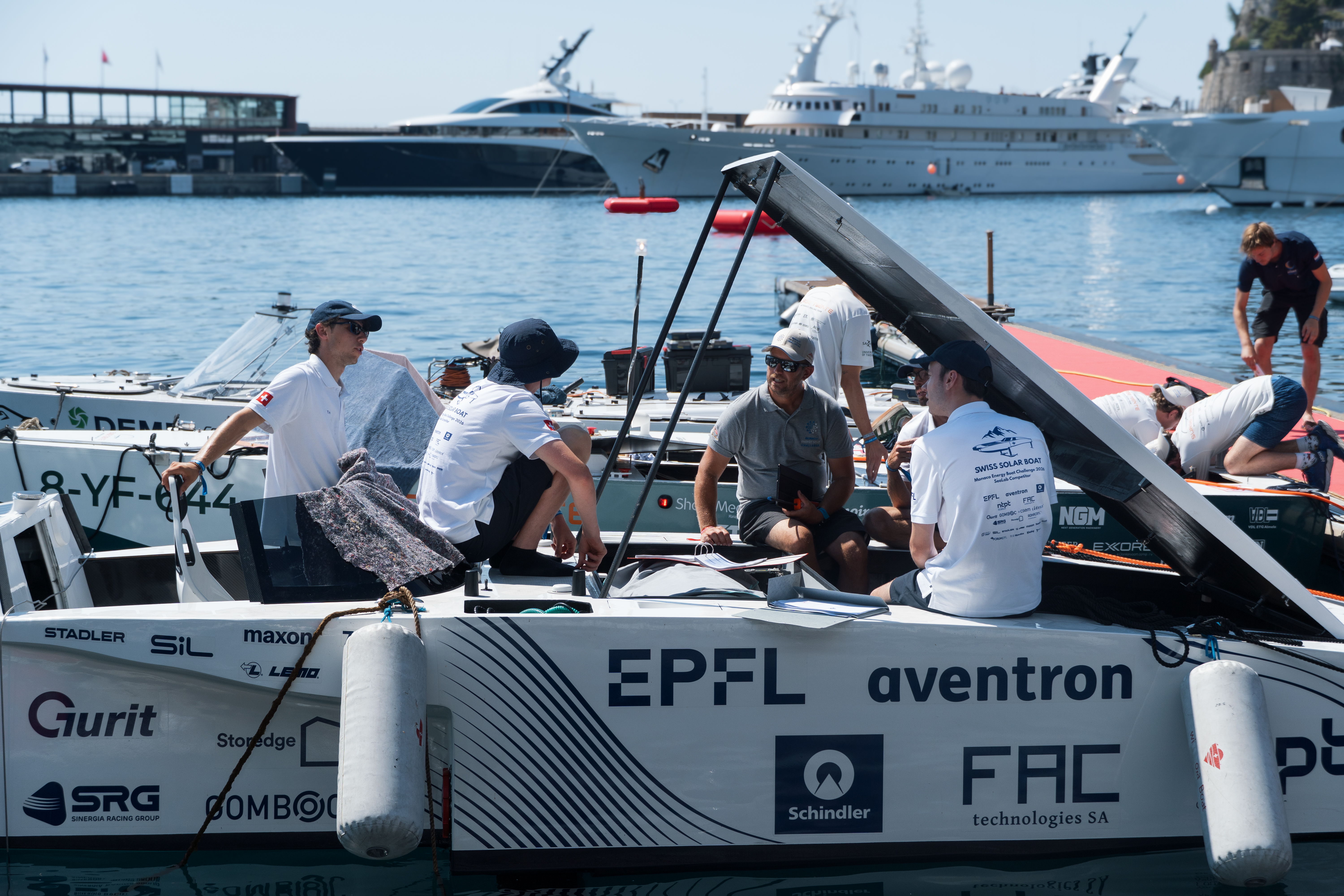
The alarm rang early once again, with the whole team meeting at 8:00 AM to give the boat one final check before a full day of technical inspections. Every document had been prepared over the past months, but today was the moment to prove that every system on board was not only well designed, but also safe and compliant with the competition rules.
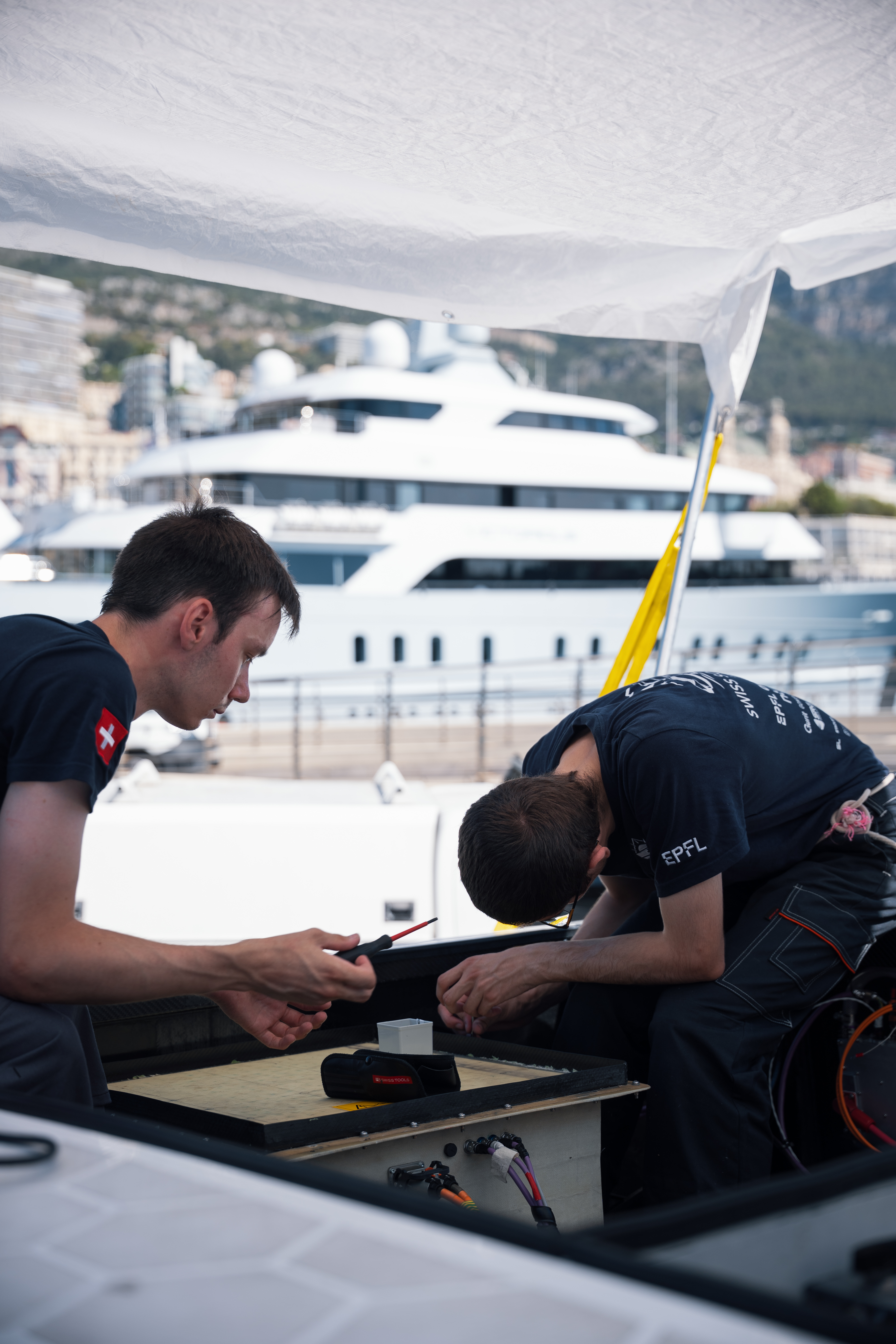
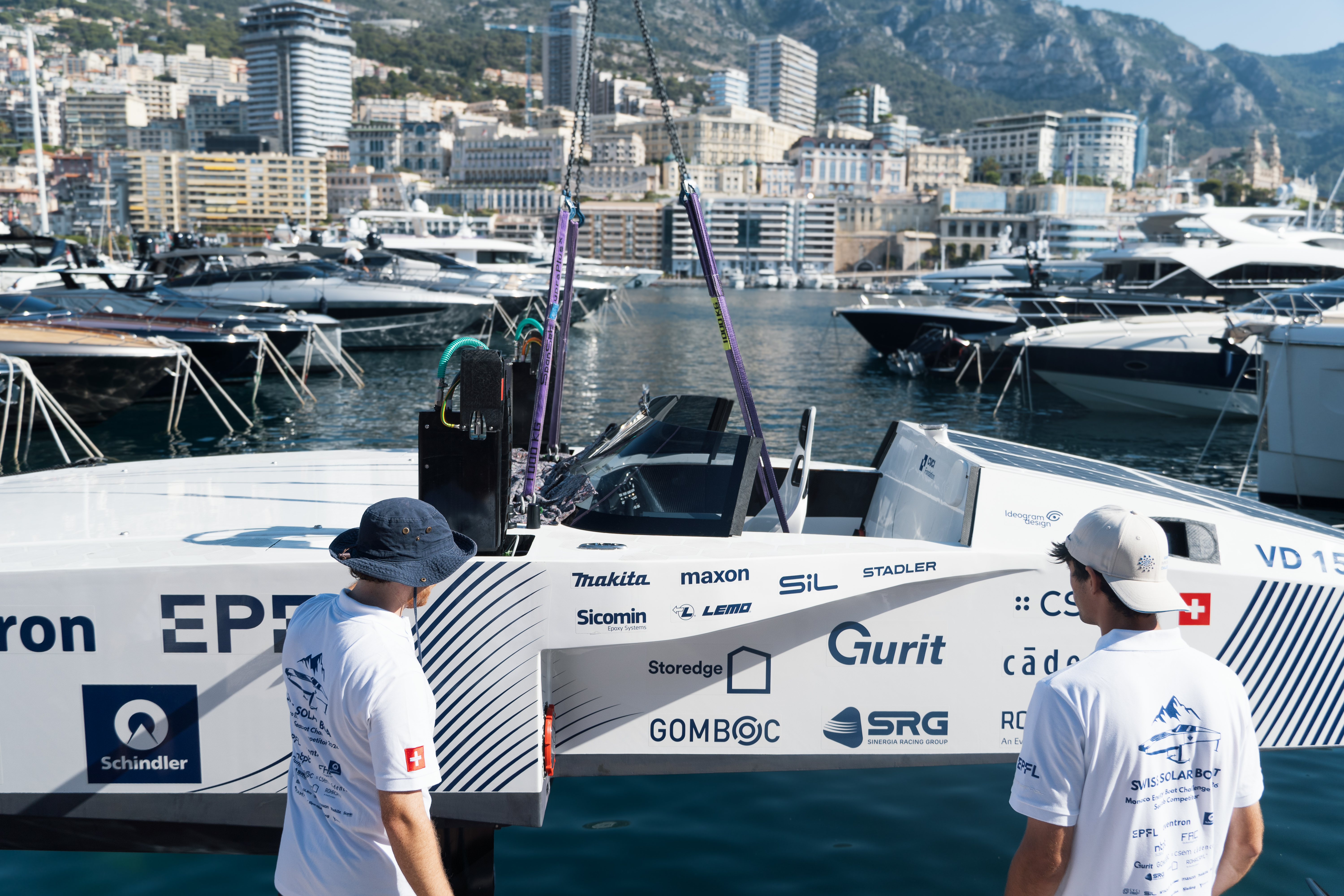
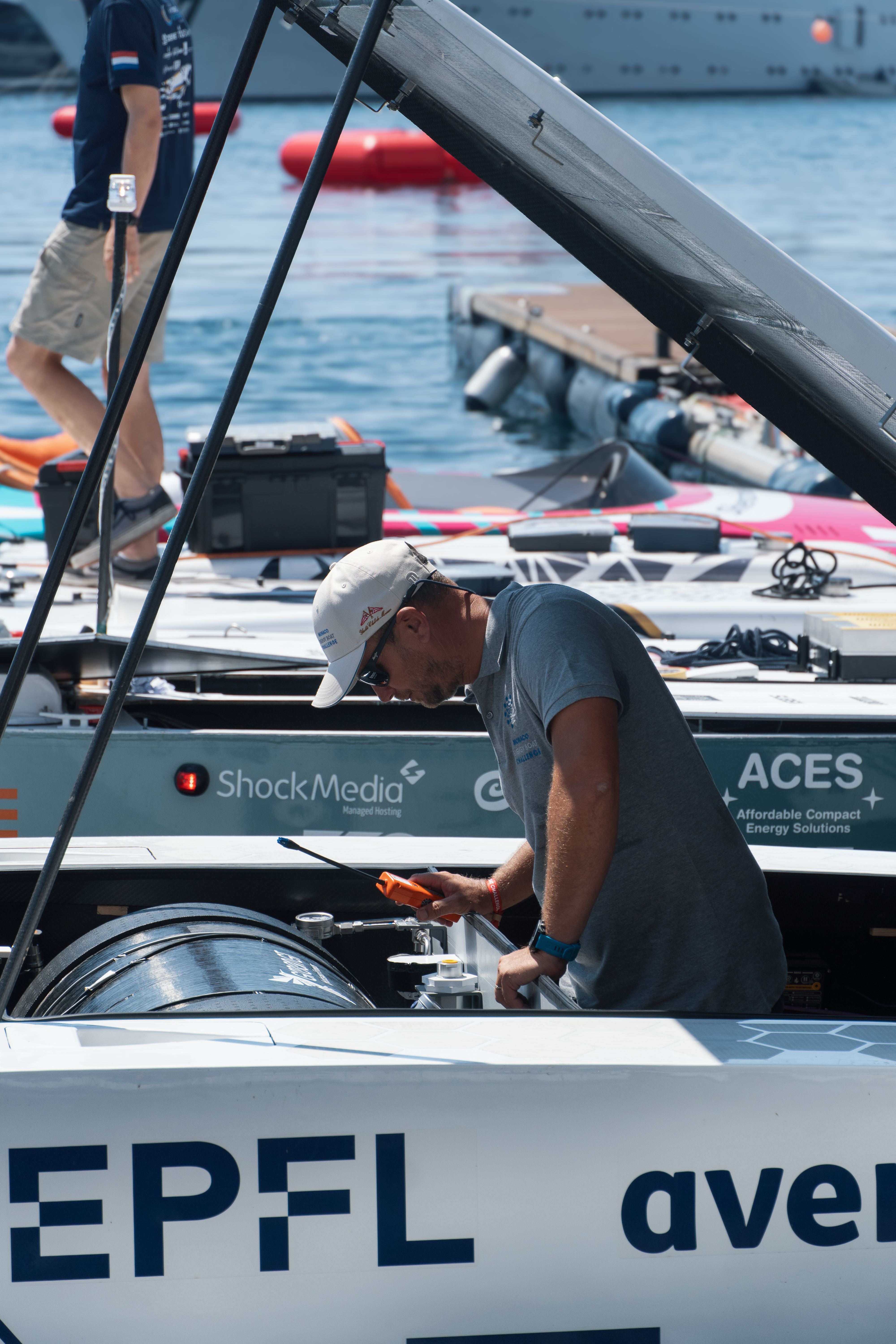
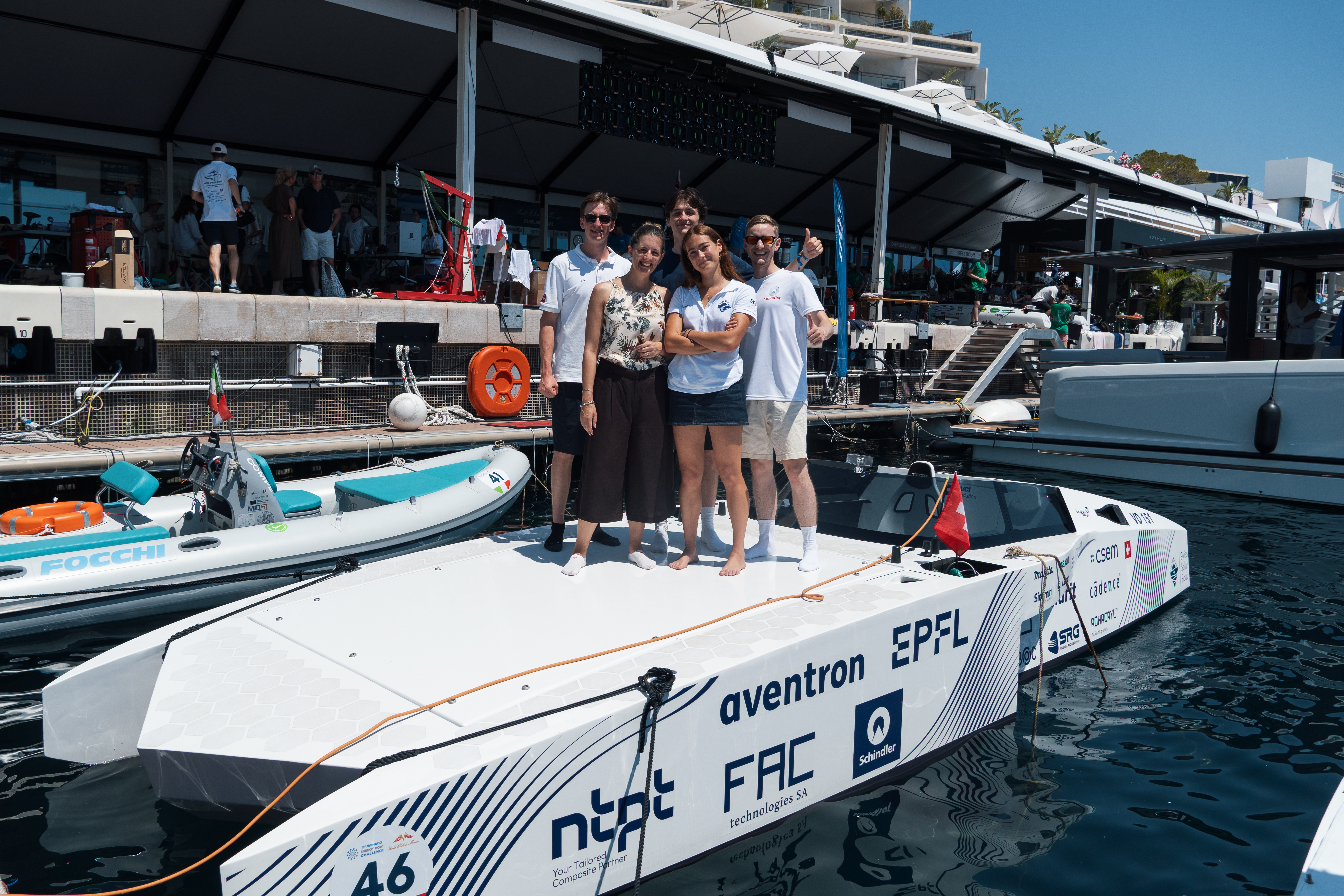
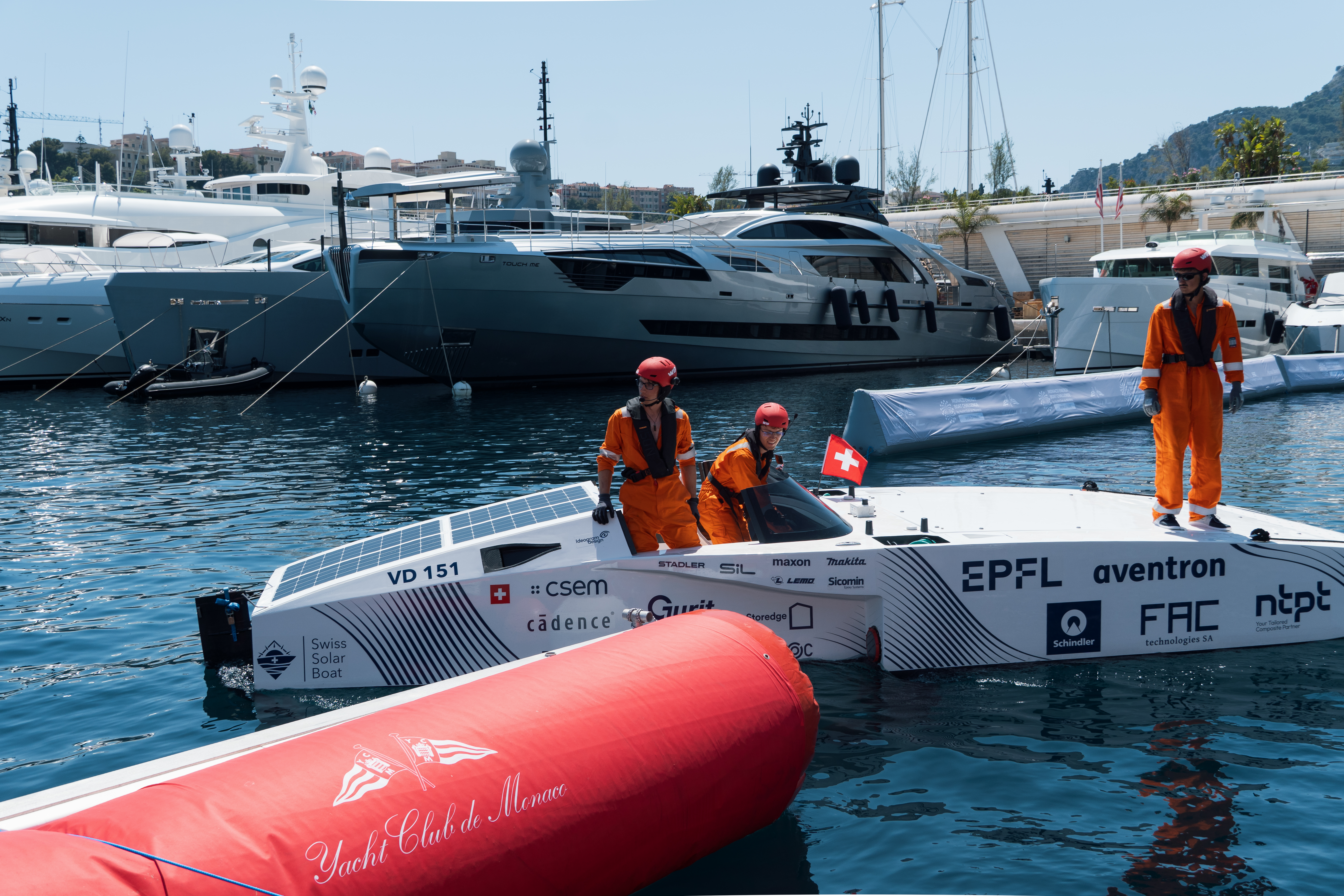
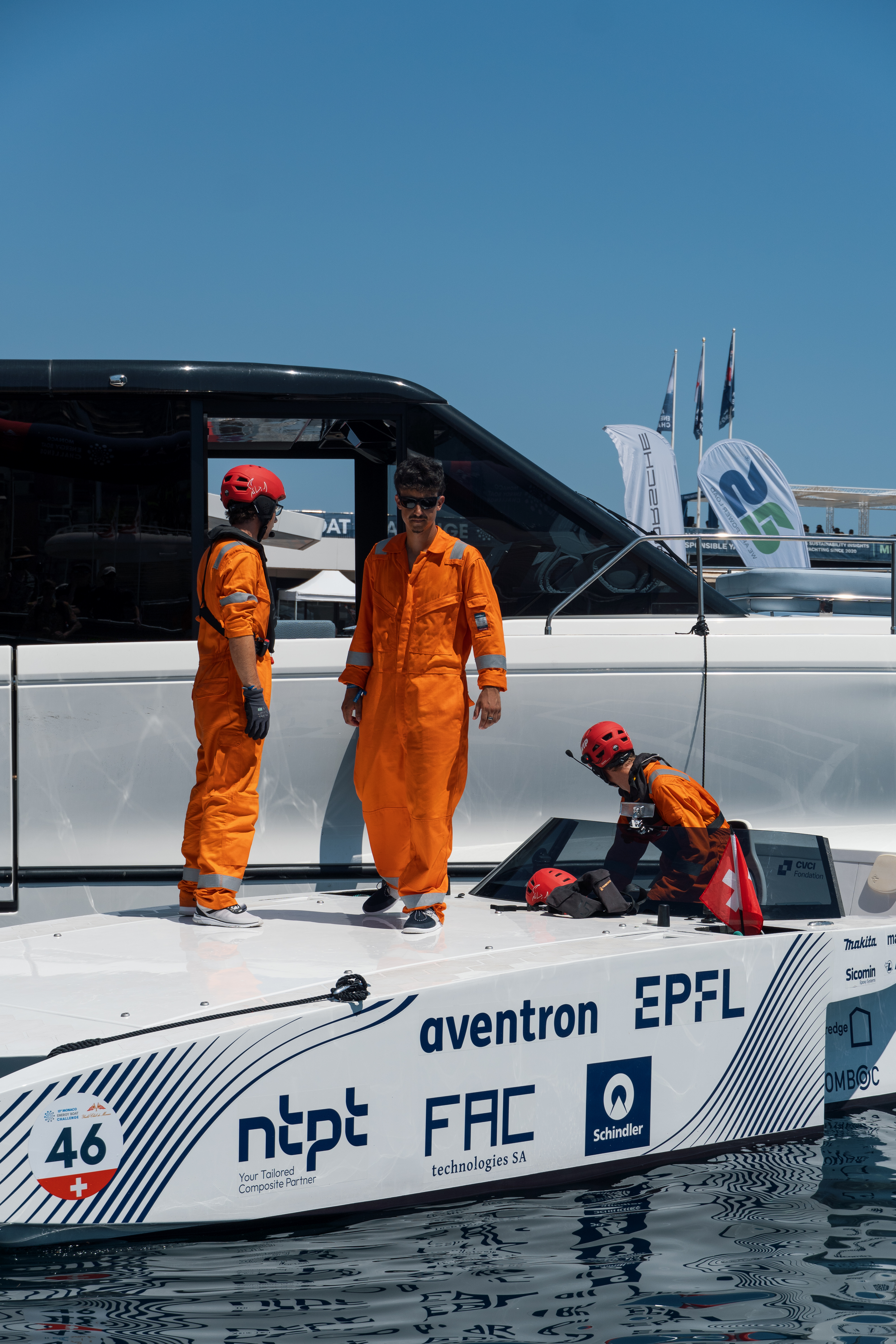
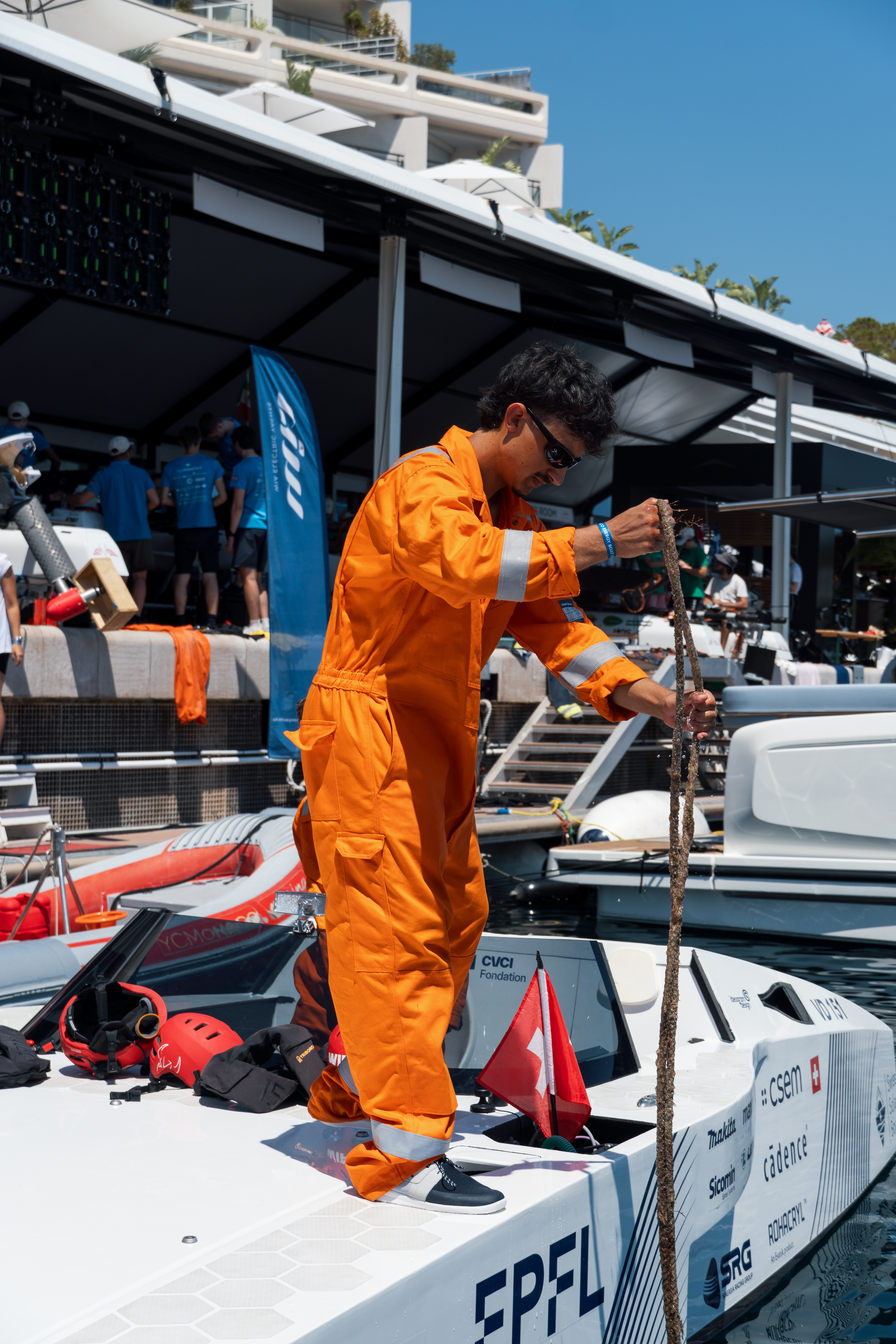
We began with the hydrogen inspection (Picture 4,6 and 8). We first presented the complete hydrogen circuit diagram before showing how the hydrogen tank compartment is ventilated and explaining our start-up and shutdown procedures. The system was then pressurized, and every fitting was checked for leaks. We detected a very small leak, comfortably below the acceptable limit of 10 ppm, so no issue there. The inspectors also suggested adding a few extra supports to better secure some hoses around the fuel cell, a small improvement that we will implement before the next runs.
The High Voltage inspection followed. We first demonstrated that pressing the emergency stop button immediately disconnects all high-voltage systems, including the battery and the propulsion. The inspectors then challenged us with questions about the electrical architecture: how the battery is electrically isolated, the sizing of the fuses and HV cables, the design and manufacturing of the battery pack, and our choice not to include an active cooling system. Once the discussion was over, we headed back to the boat, where they checked that every high-voltage warning sticker was correctly positioned and that the insulation monitoring indicators were clearly visible.
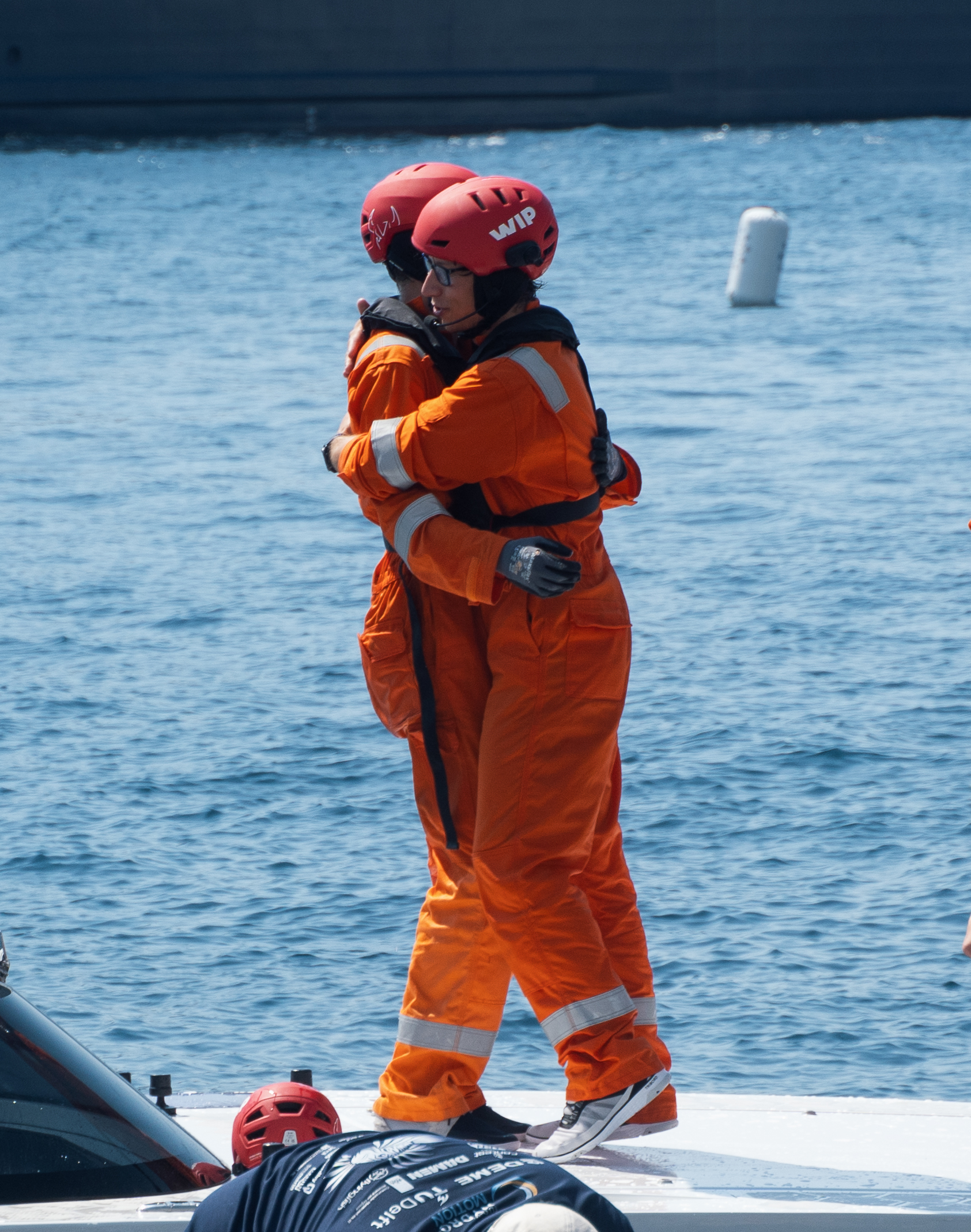
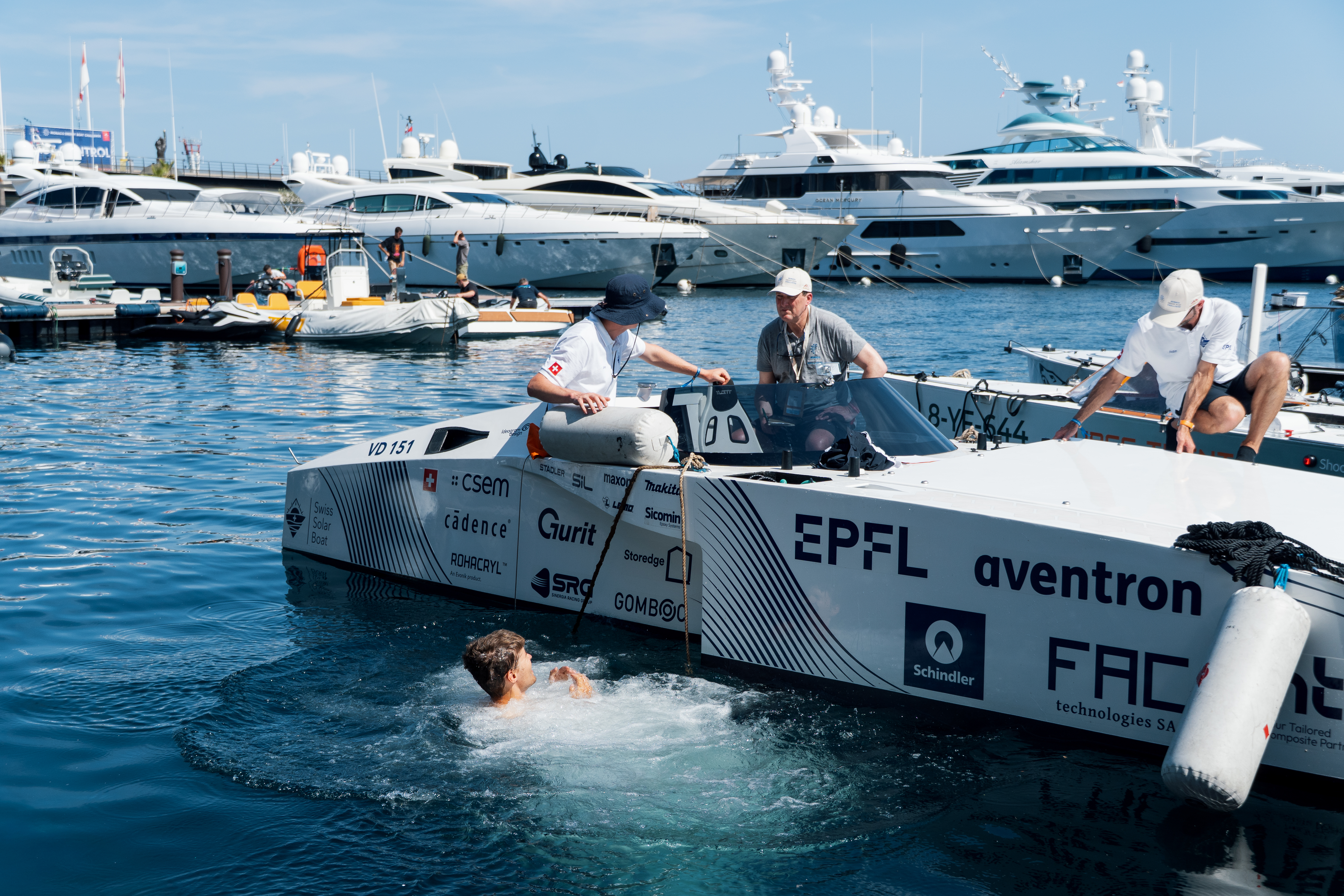
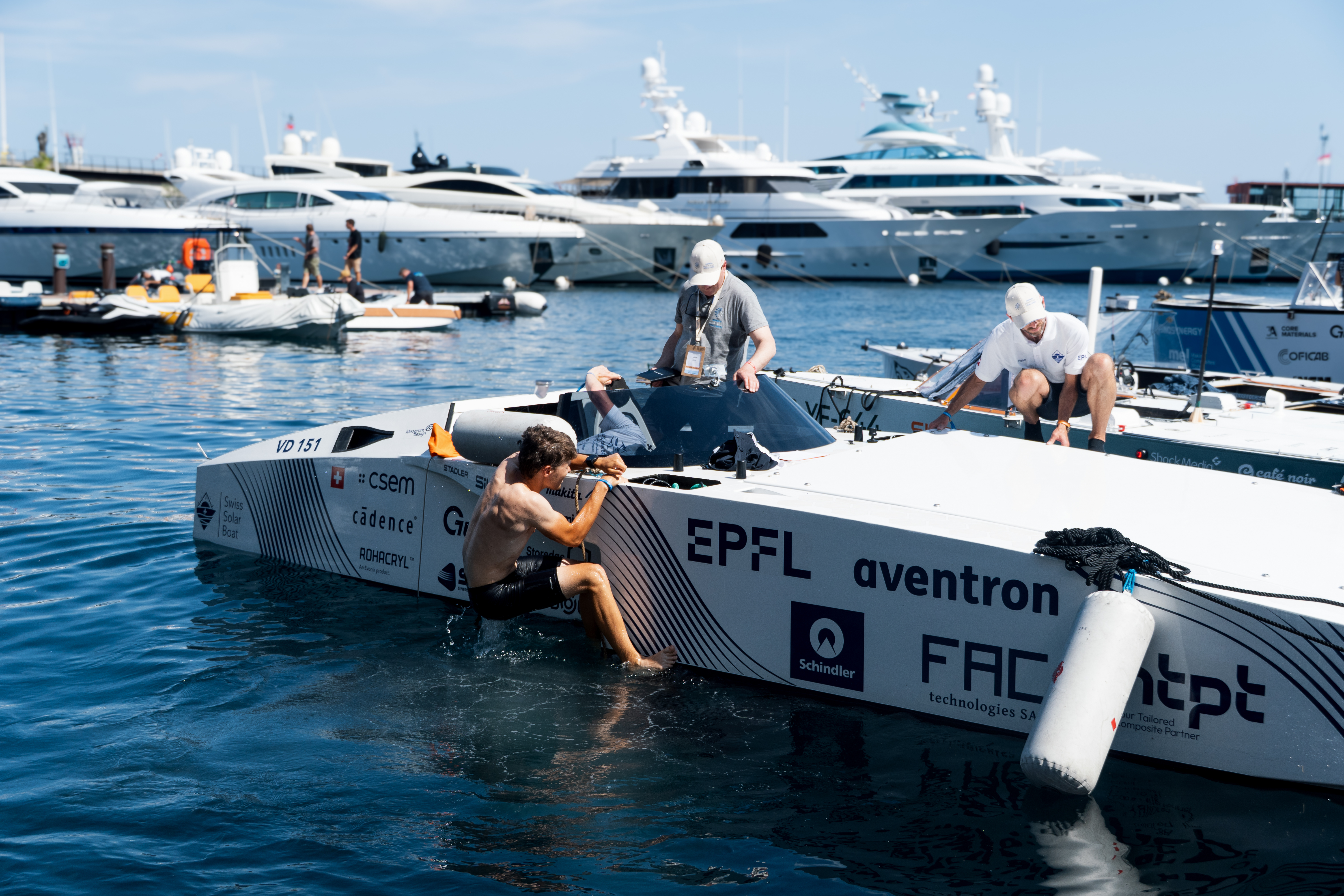
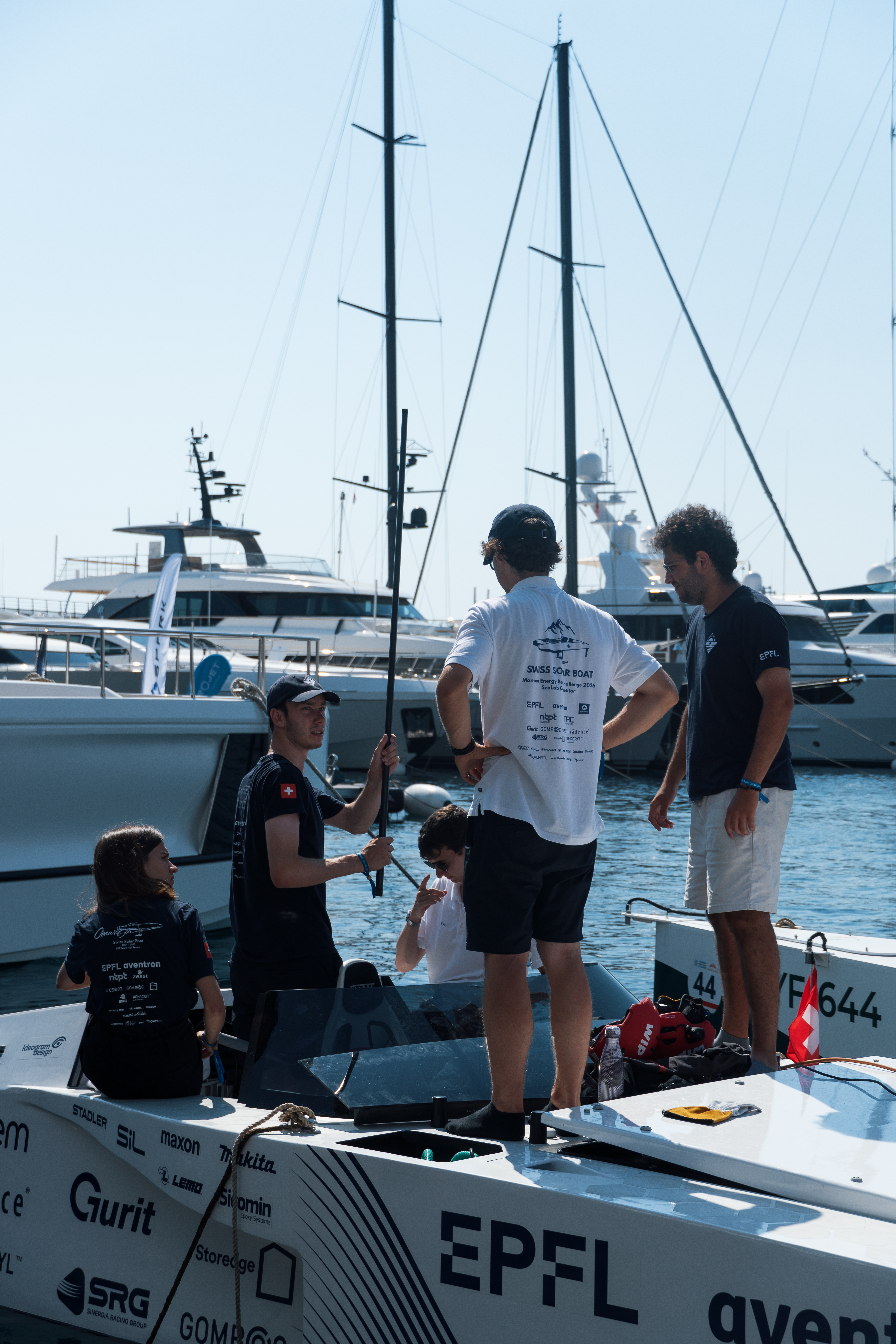
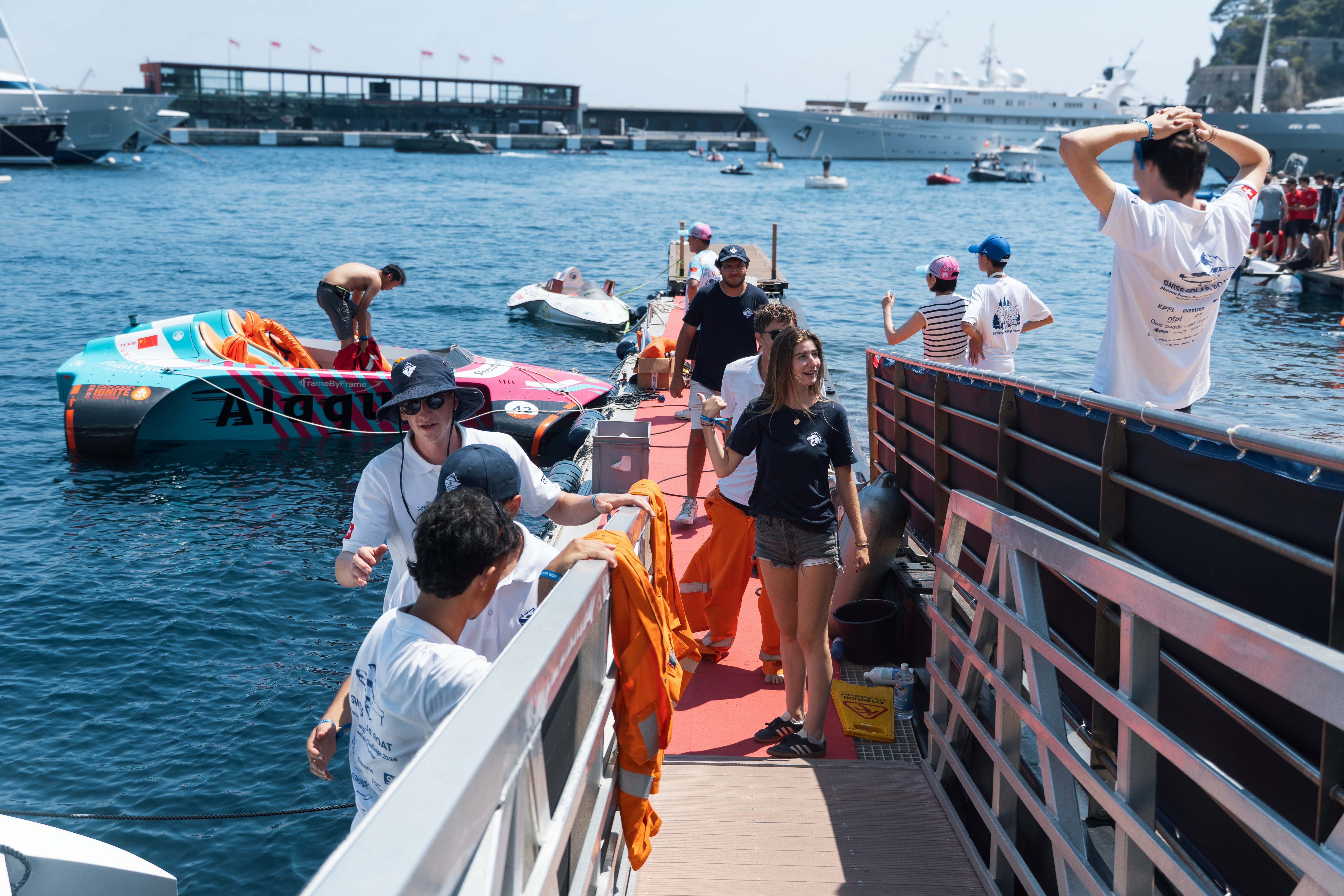
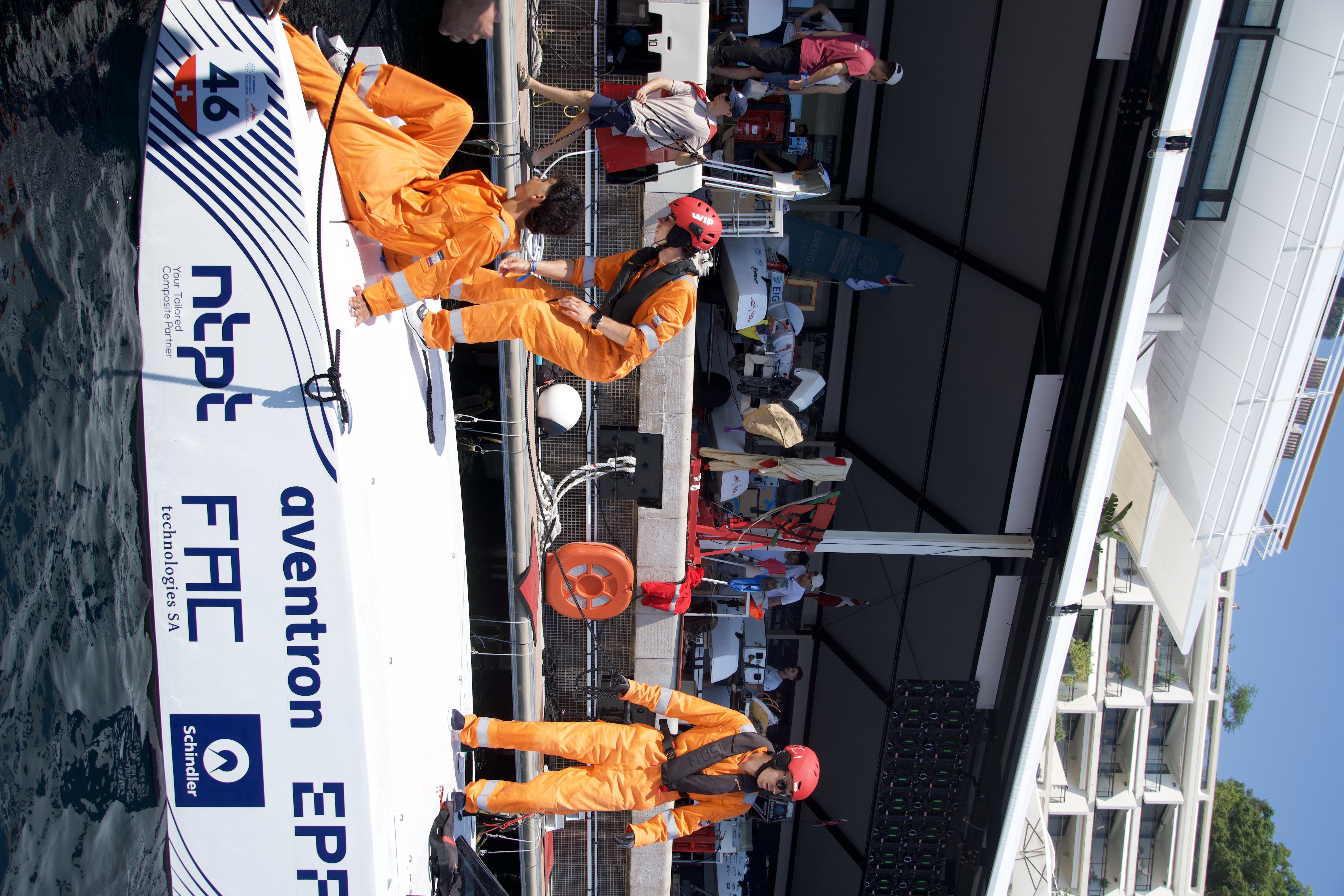
The final inspection focused on the structural and mechanical aspects of the boat. The inspectors carefully checked all the mandatory safety equipment on board, from life jackets and the anchor to navigation charts and distress flares. They also verified the driver’s visibility from the cockpit before moving on to a practical test, making sure it was easy to climb back onto the boat from the water (Picture 1 and 14). The last part of the inspection took place in the technical room, where we went through our documentation point by point, discussing topics such as fire protection and demonstrating that the boat can be stopped quickly and safely in case of an emergency.
While the technical team was busy answering questions throughout the day, the rest of the team gathered valuable information about the Tech Talks and the different prize categories to make sure we are as well prepared off the water as we are on it!
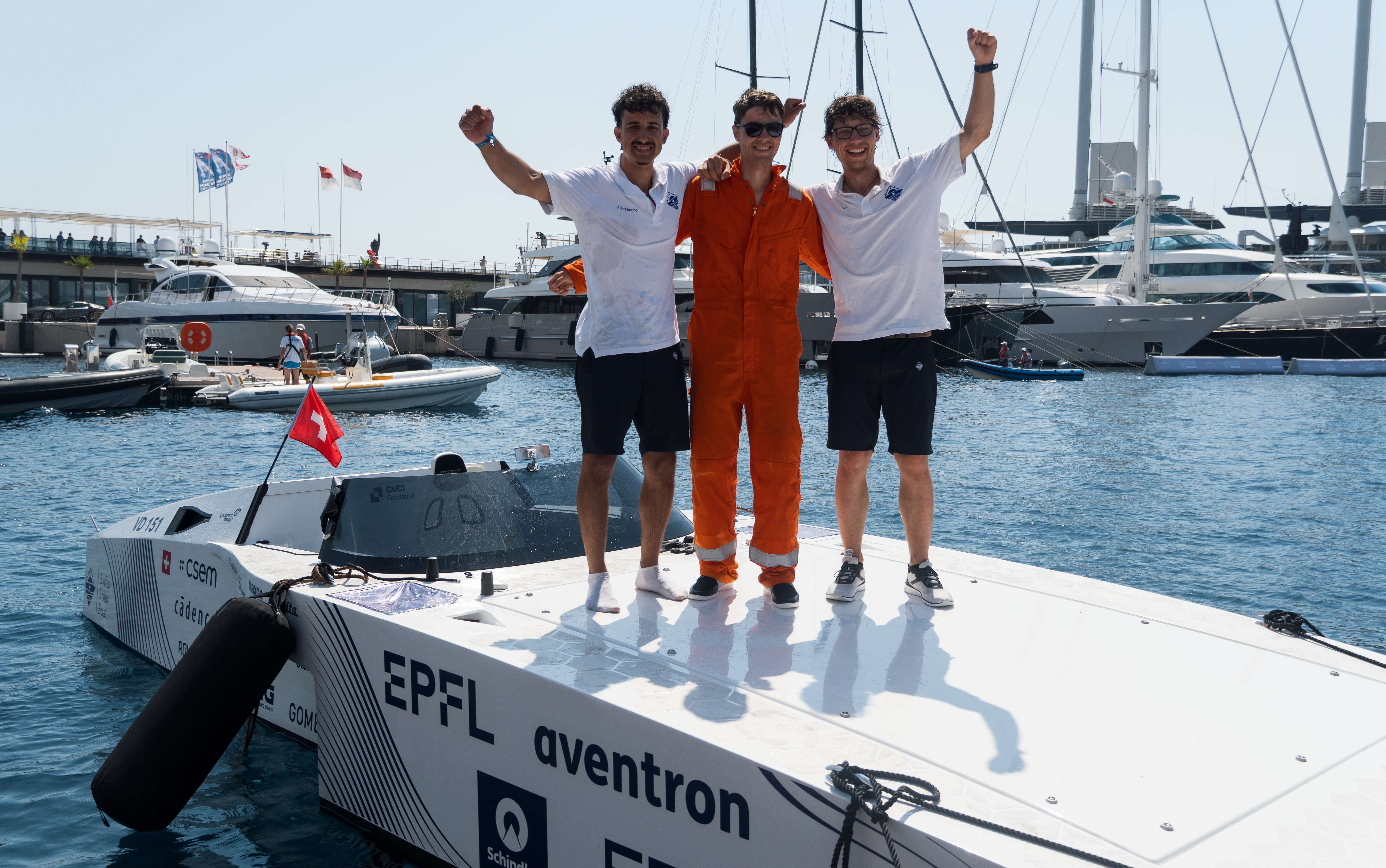
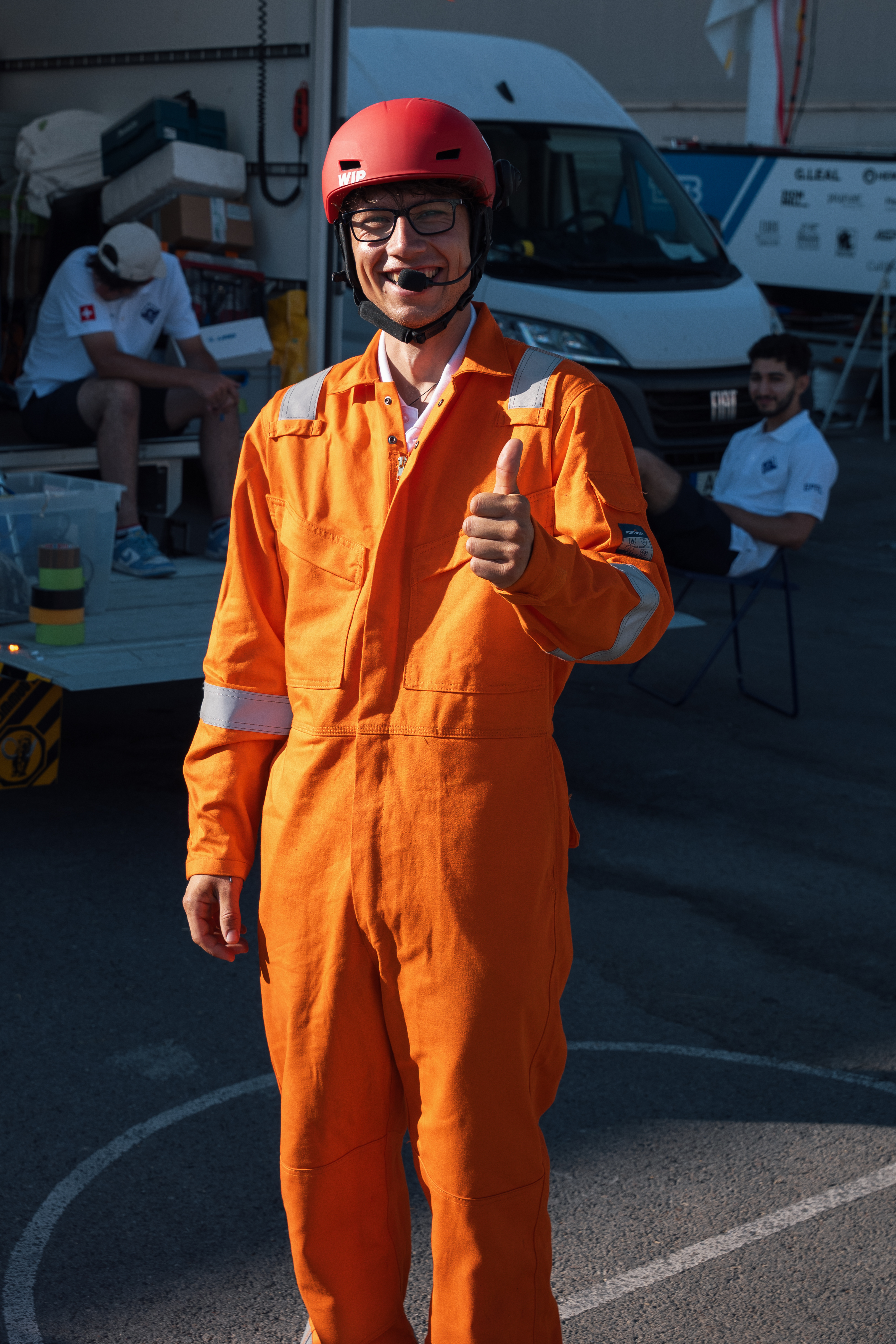
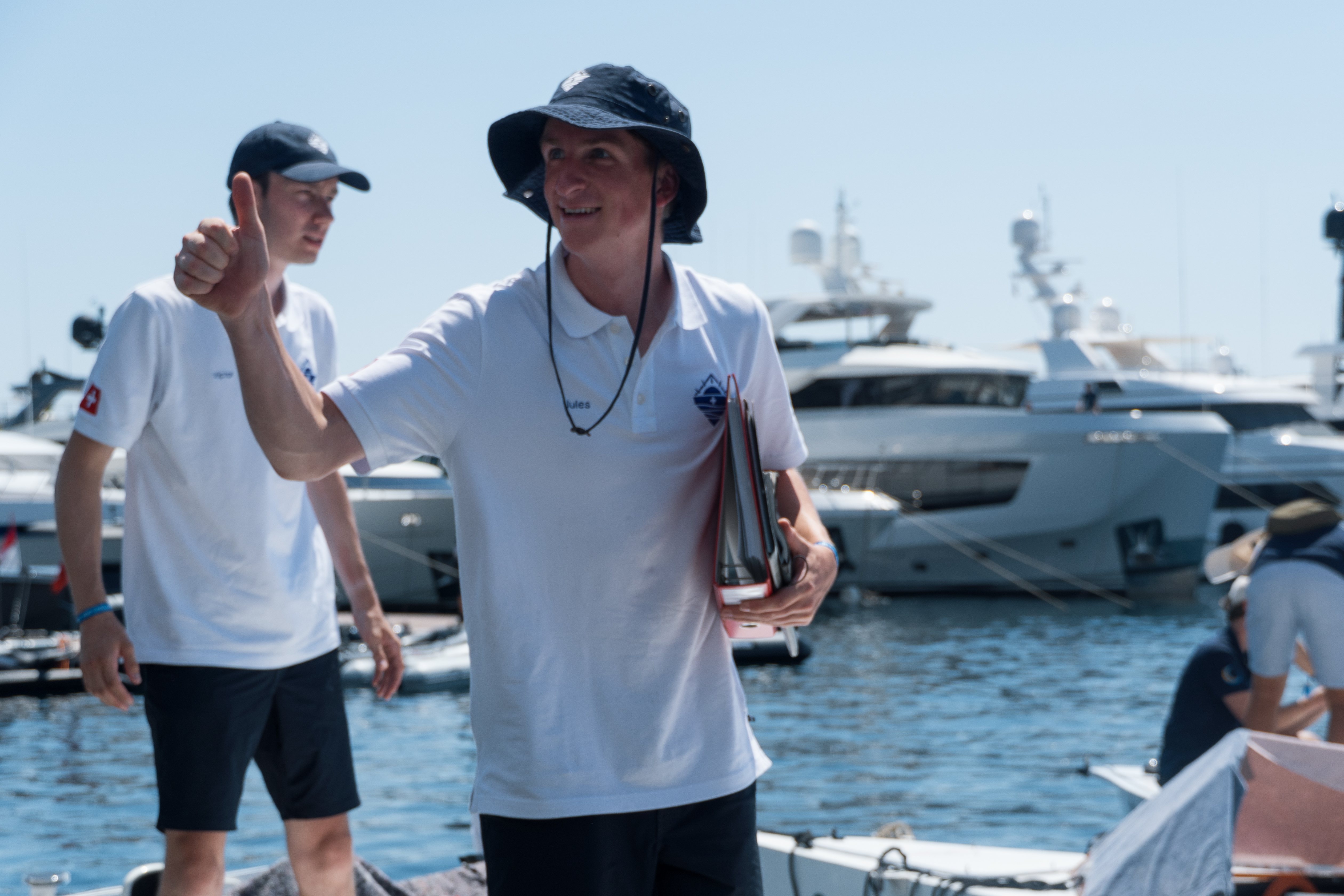
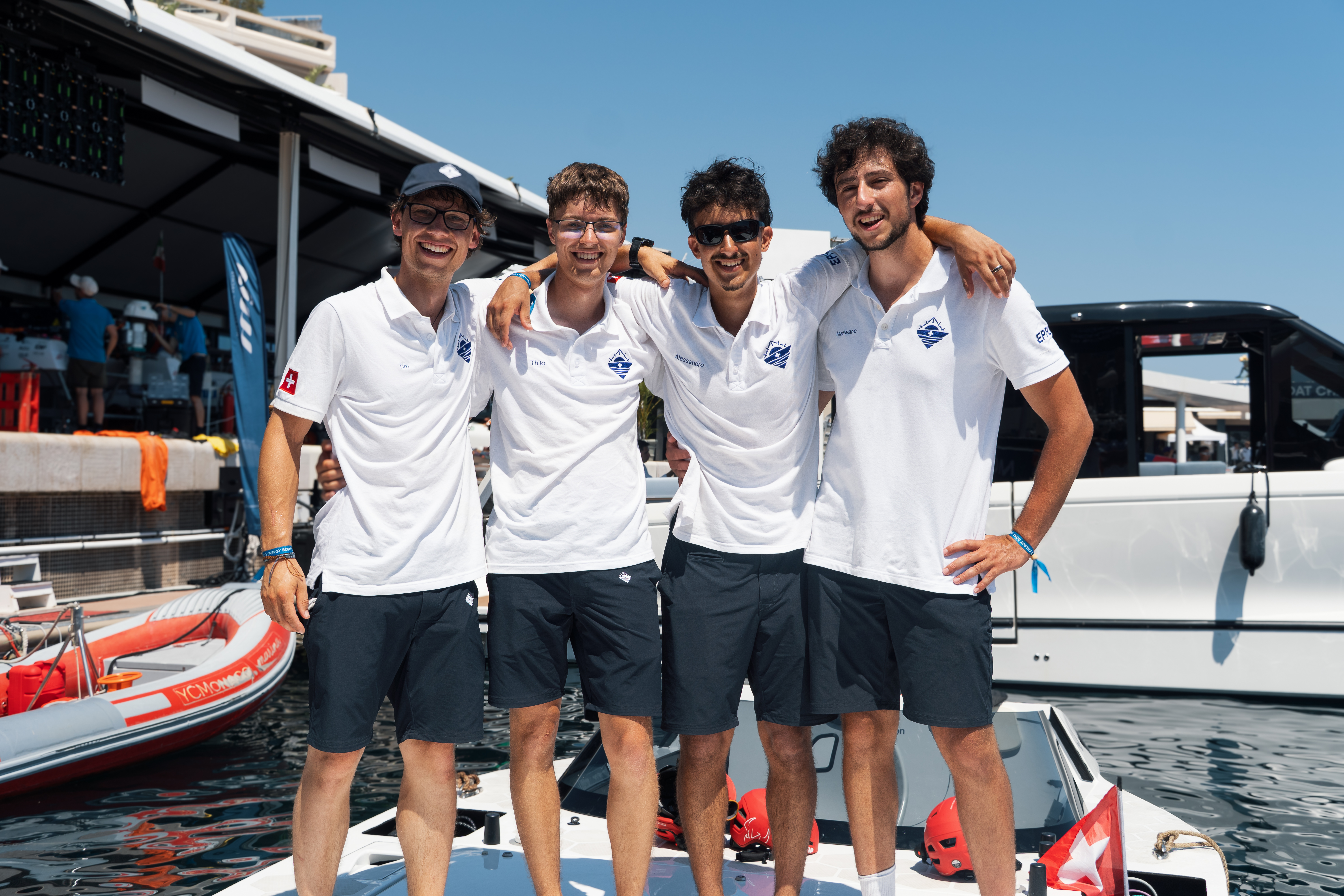
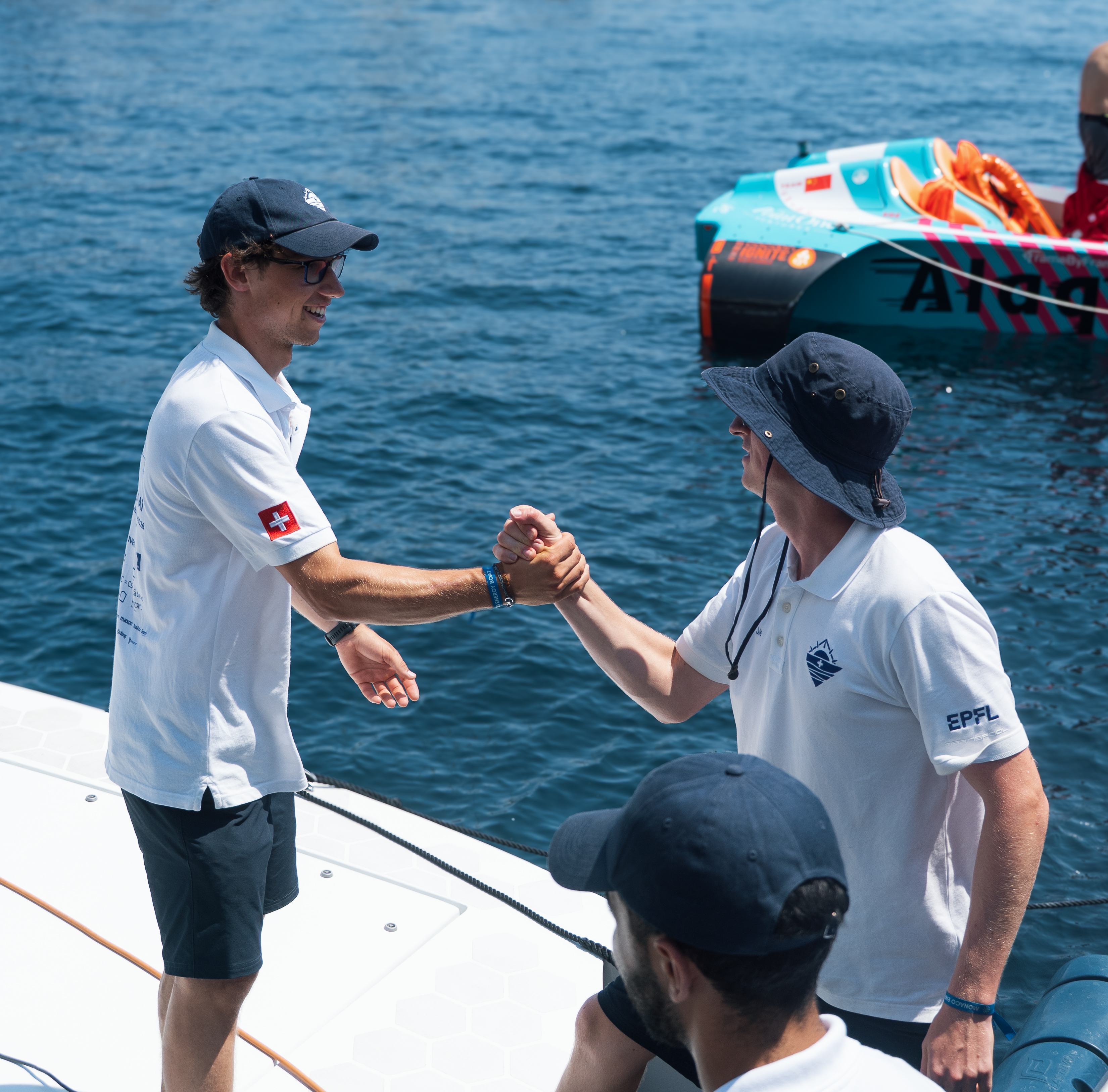
By the end of the afternoon, we had successfully passed every inspection. It was a huge relief for the whole team and an important milestone after months of work (Picture 15 :+1:).
Unfortunately, the inspections finished too late for us to launch the boat, meaning our first on-water tests will have to wait one more day. Some team members stayed in the harbour during the evening to finish installing the windshield side panels, while the inspection team celebrated the successful day with a well-deserved beer. The rest of the team headed back early to get some rest before another important day.
Tomorrow morning, we’ll complete our final mandatory maneuverability test. Once that’s done, the rest of the day will finally be dedicated to testing the boat on the water and fine-tuning every system before the first races begin on Thursday.
See you tomorrow for the next recap!
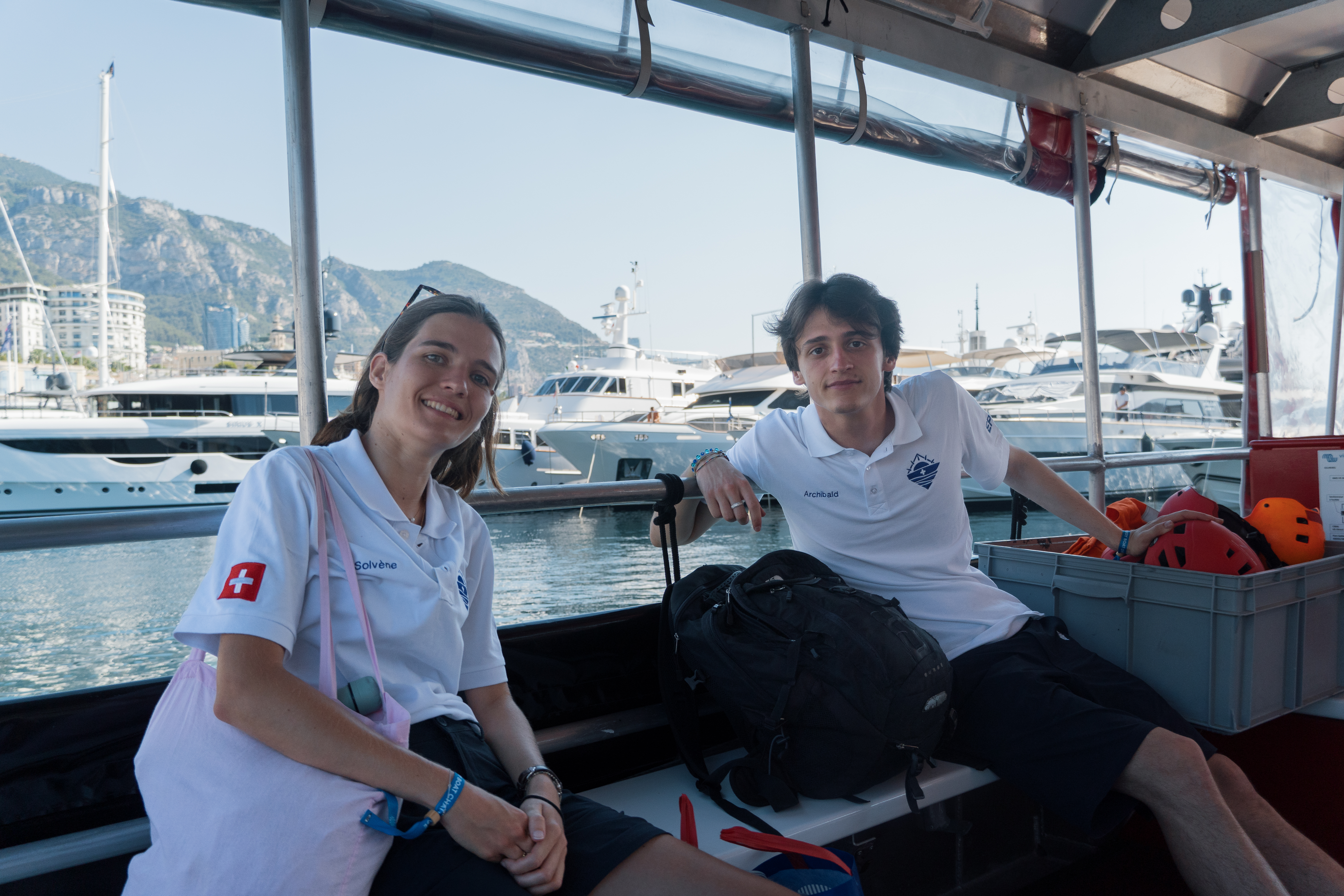
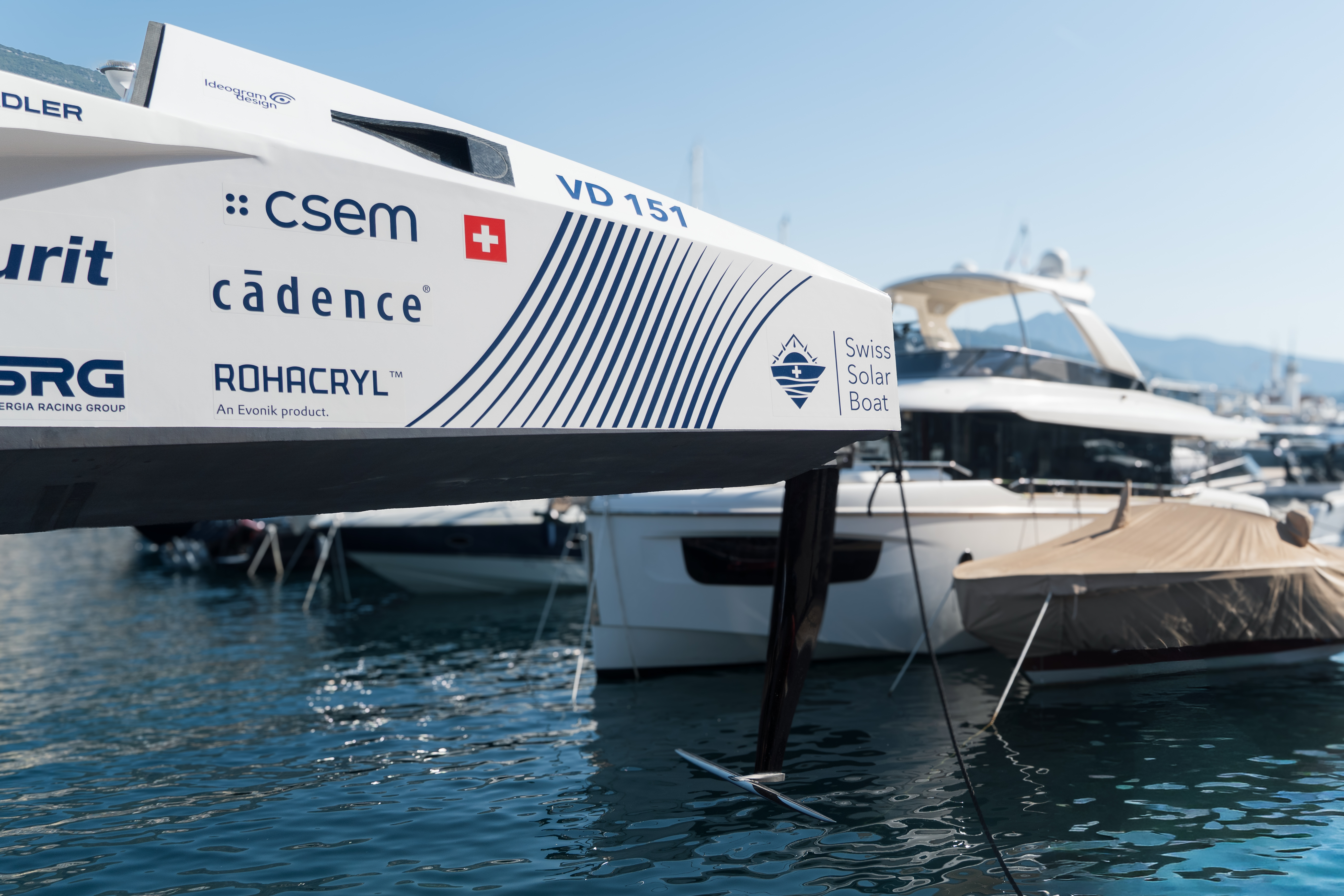
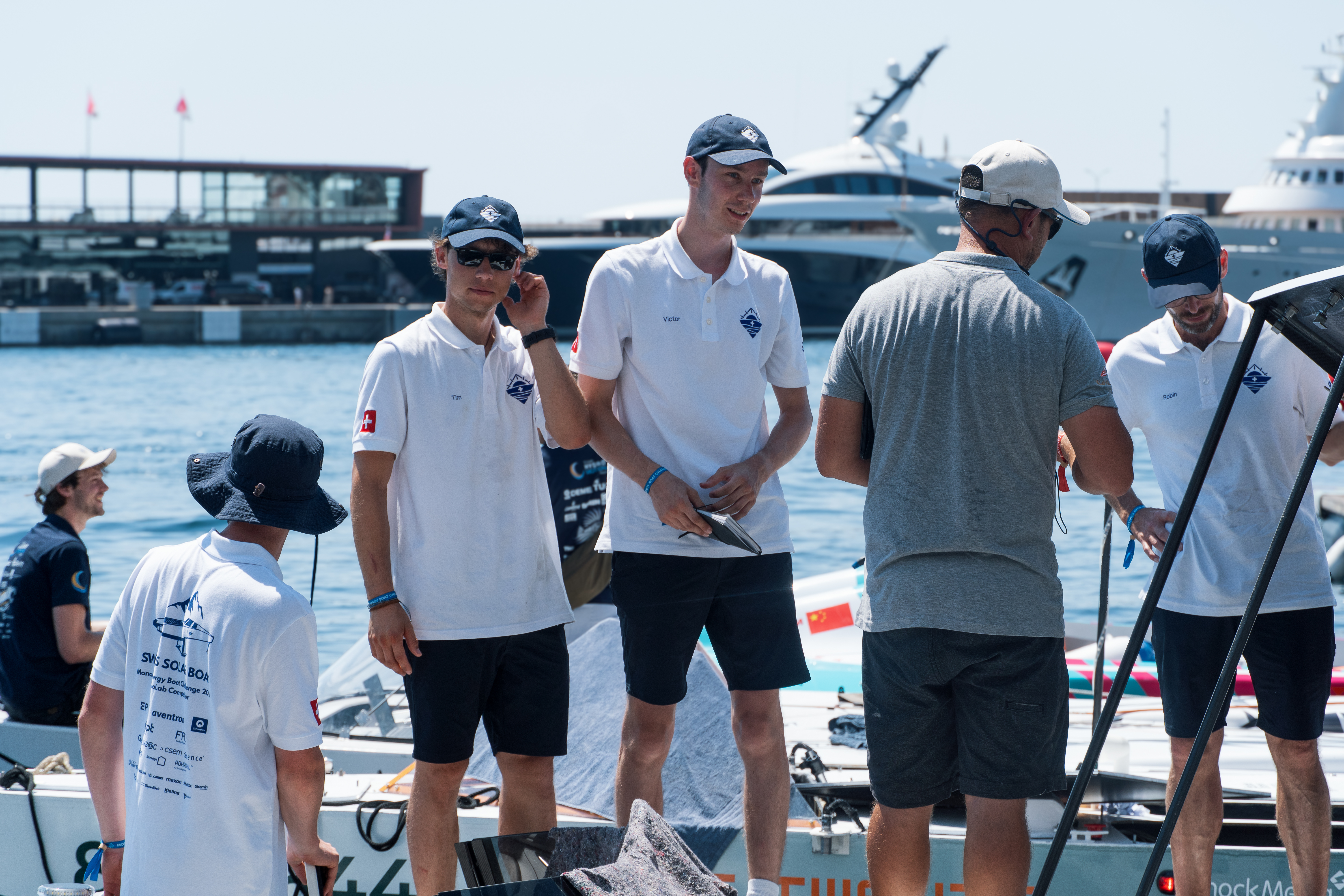
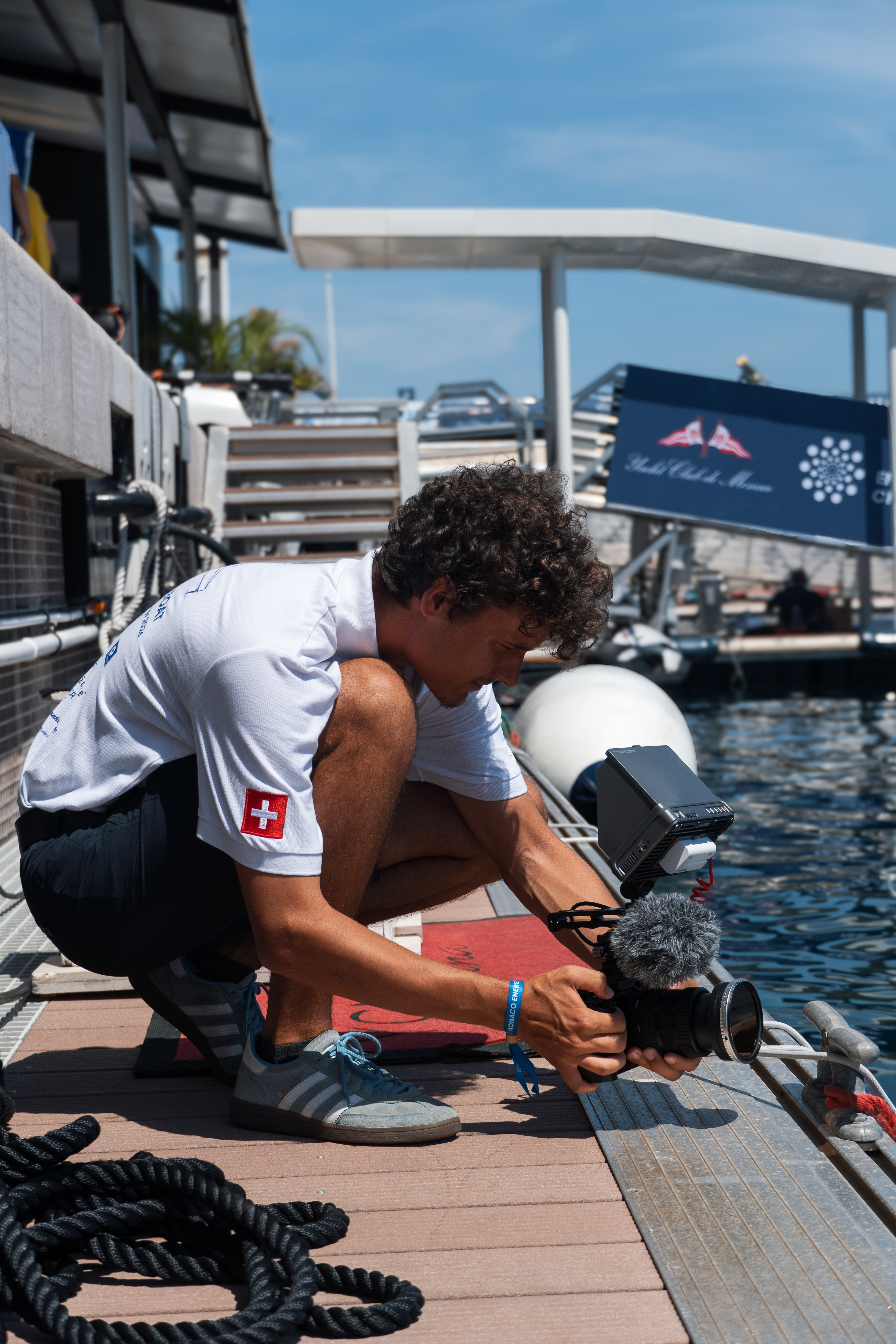
Day 3 — Wednesday, July 8
Daily Recap #3 – Finally sailing!
Another early start for the team, with everyone meeting at 8:30 AM at the Yacht Club before the 9:00 AM drivers’ briefing. The plan for the day seemed straightforward: complete the maneuverability test in the morning and then spend the rest of the day testing the boat on the water. As always in Monaco, things didn’t quite go according to plan.
The first challenge came before we had even left the dock: the boat refused to start. After some investigation, we traced the issue back to the low-voltage battery. We dismantled the system and discovered that a few poor-quality connectors were causing unreliable electrical contact. Once they were properly secured, everything came back to life. Crisis averted!
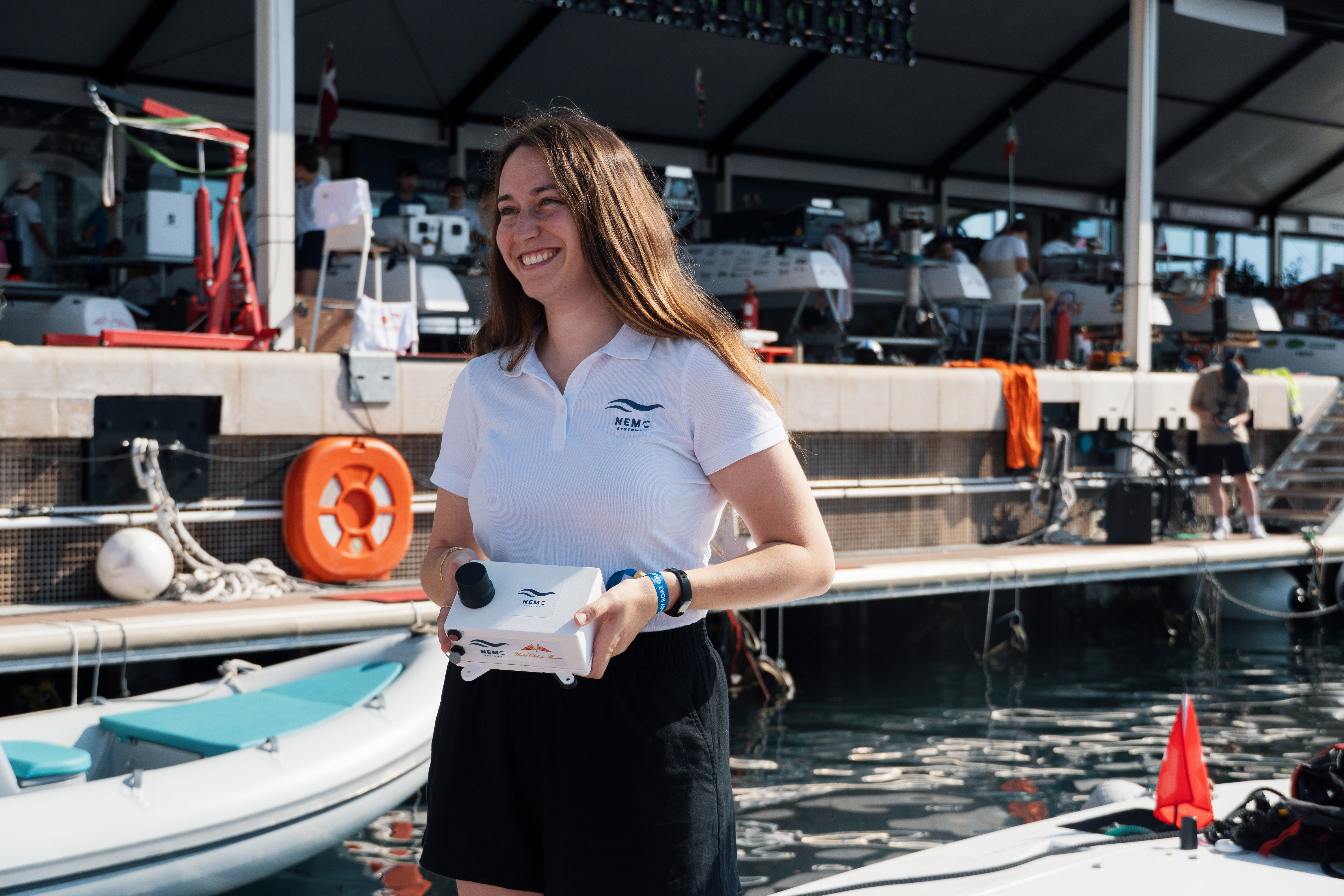
With the boat finally running, we headed out for the maneuverability test. The test itself went smoothly, but another issue quickly appeared: the sonar sensors were returning very strange values. Since these sensors are essential for future high-speed foiling runs, we immediately returned to the Yacht Club to investigate. The culprit? A tiny coding mistake introduced in the latest software update: a multiplication by four instead of a division by four. Sometimes that’s all it takes to keep a boat on the dock instead of flying above the water.
After fixing the software and waiting for our testing slot, we finally headed back out around 3:00 PM for our first real testing session in front of the Port of Monaco.
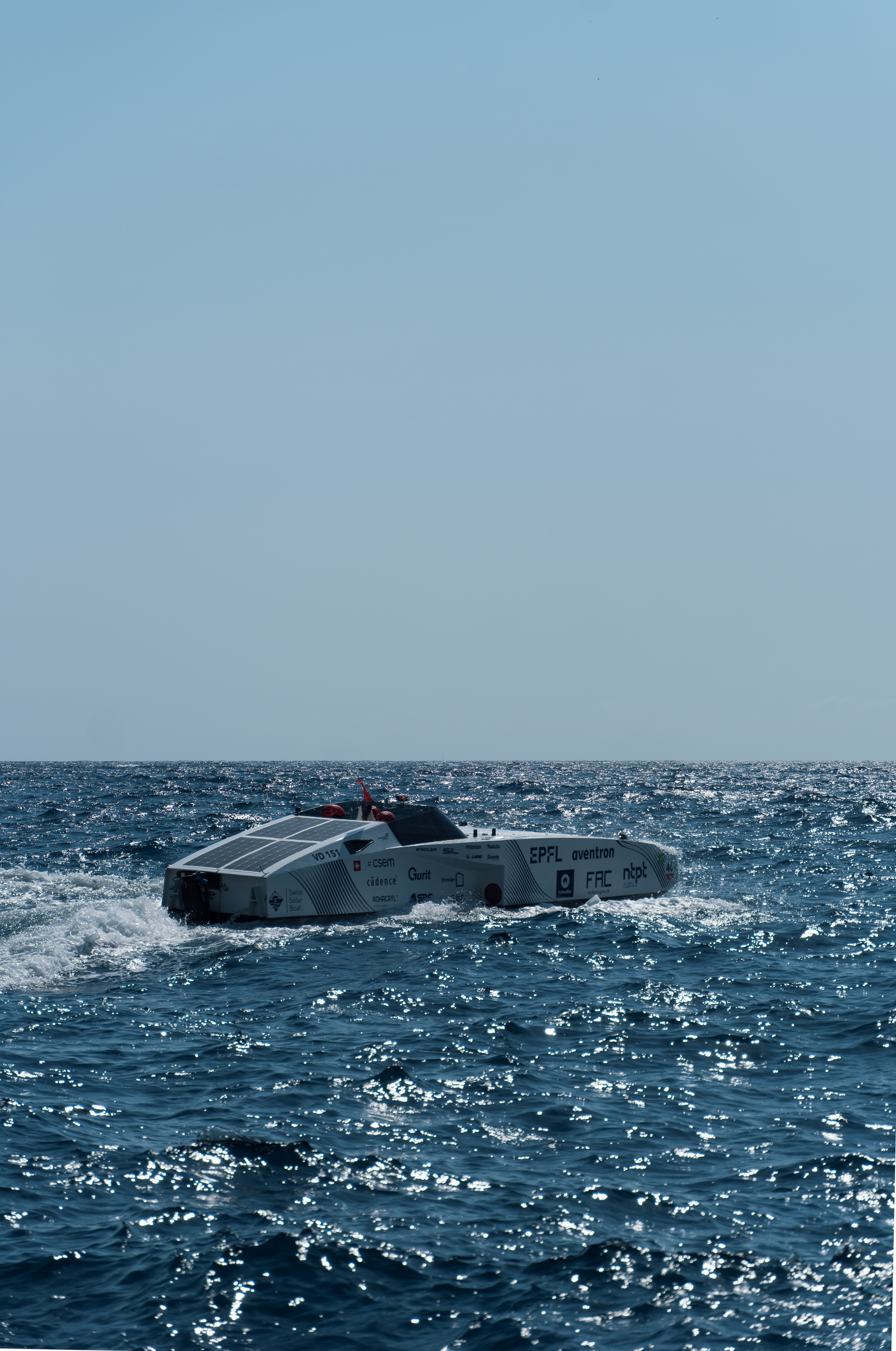
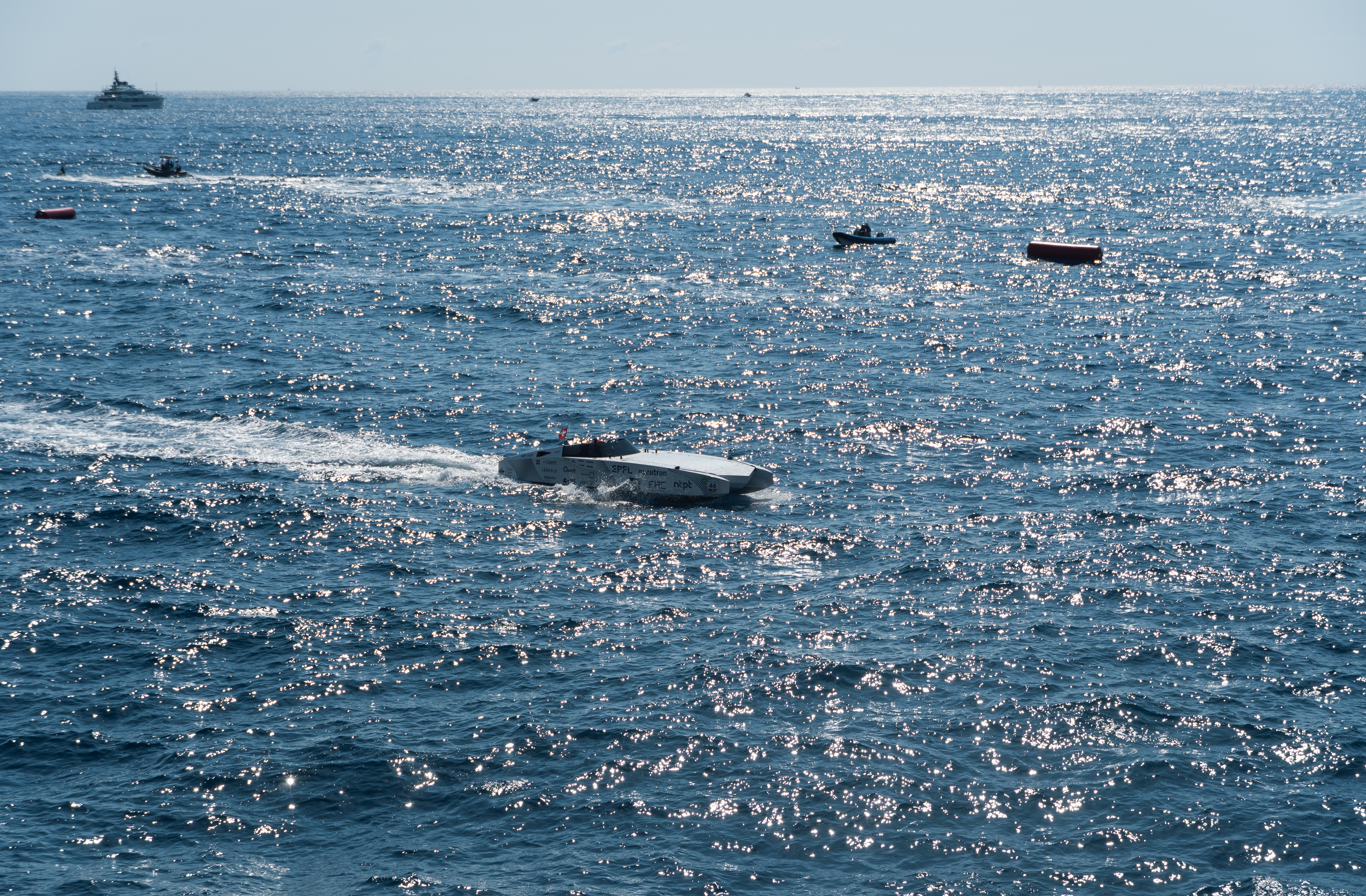
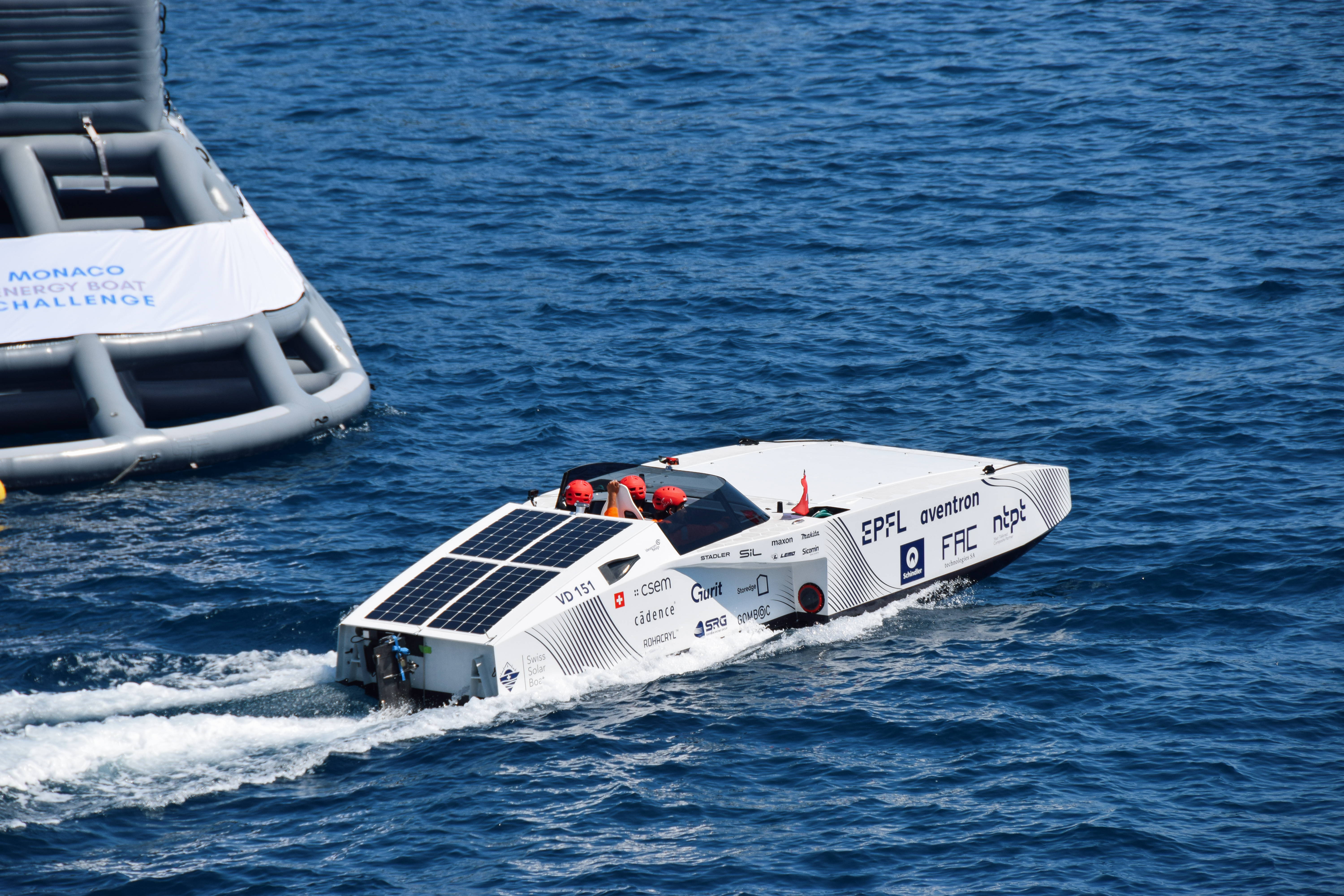
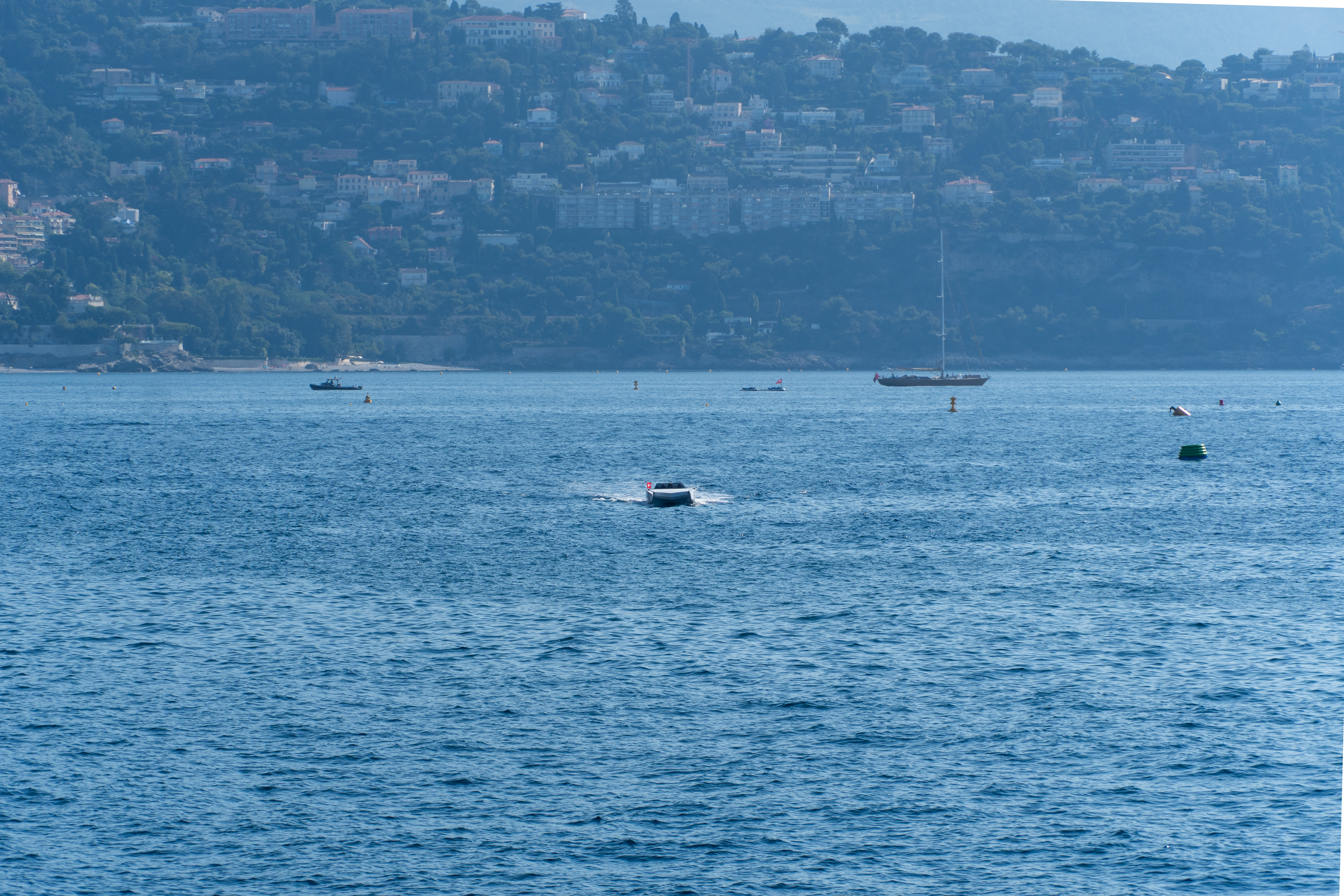
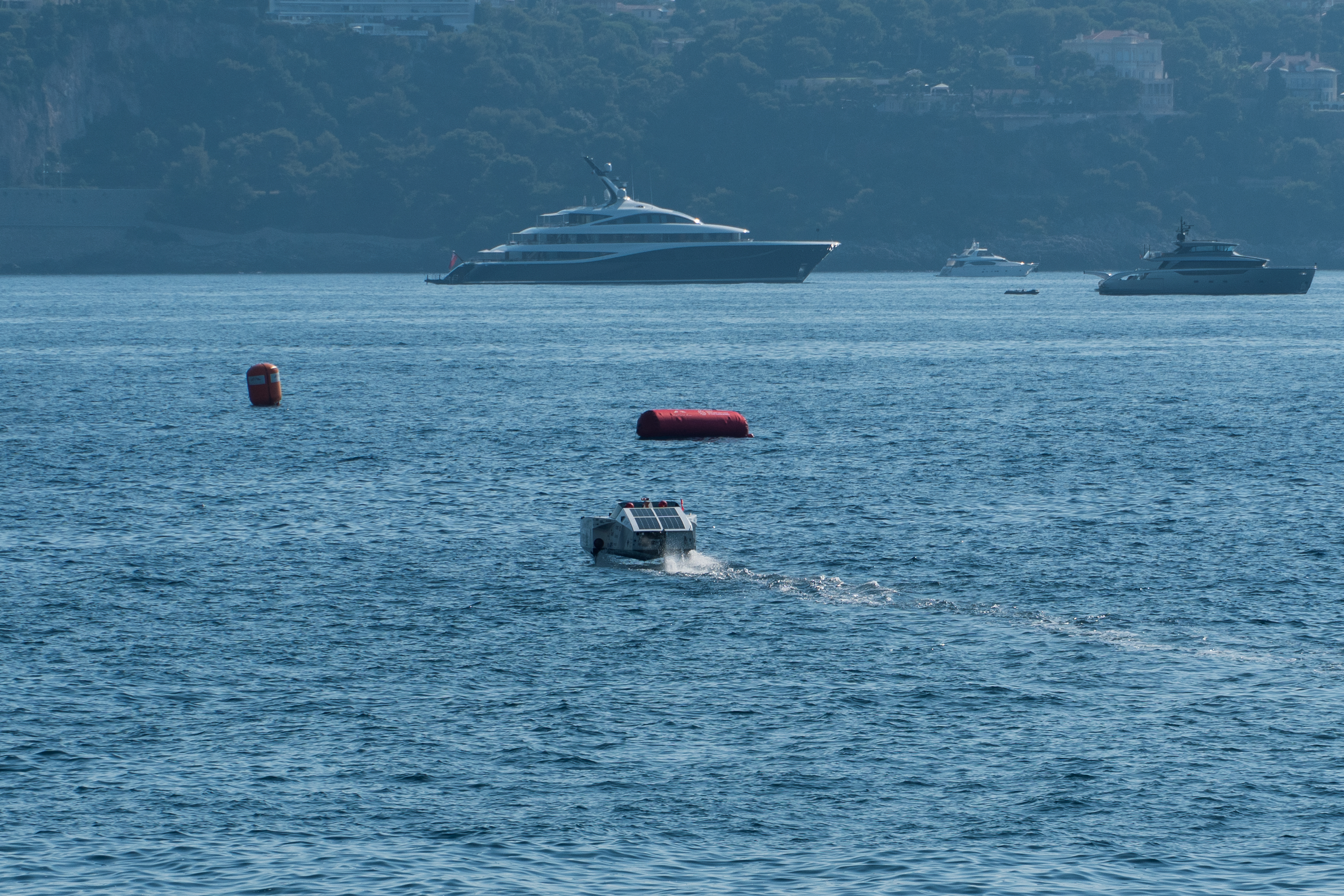
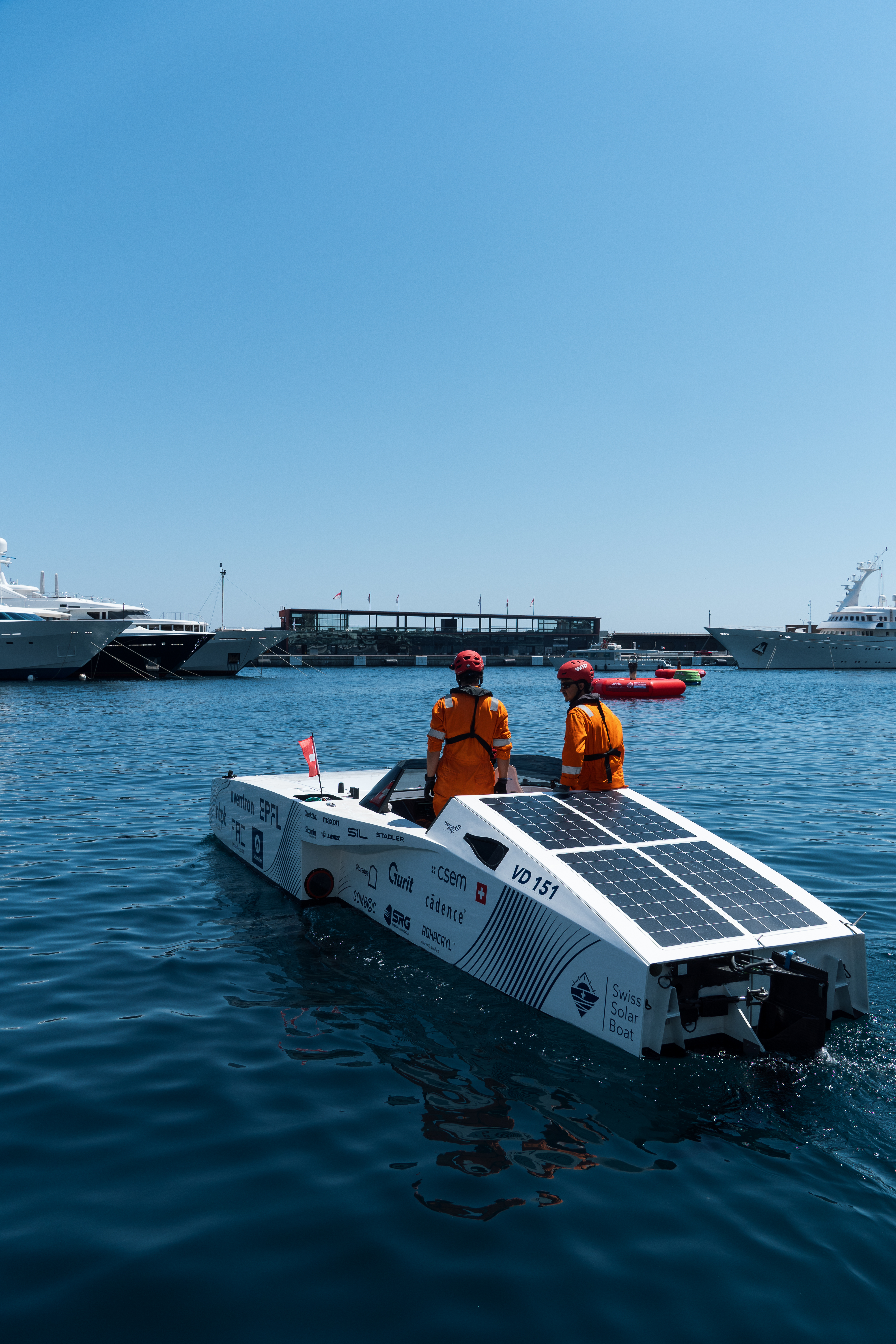
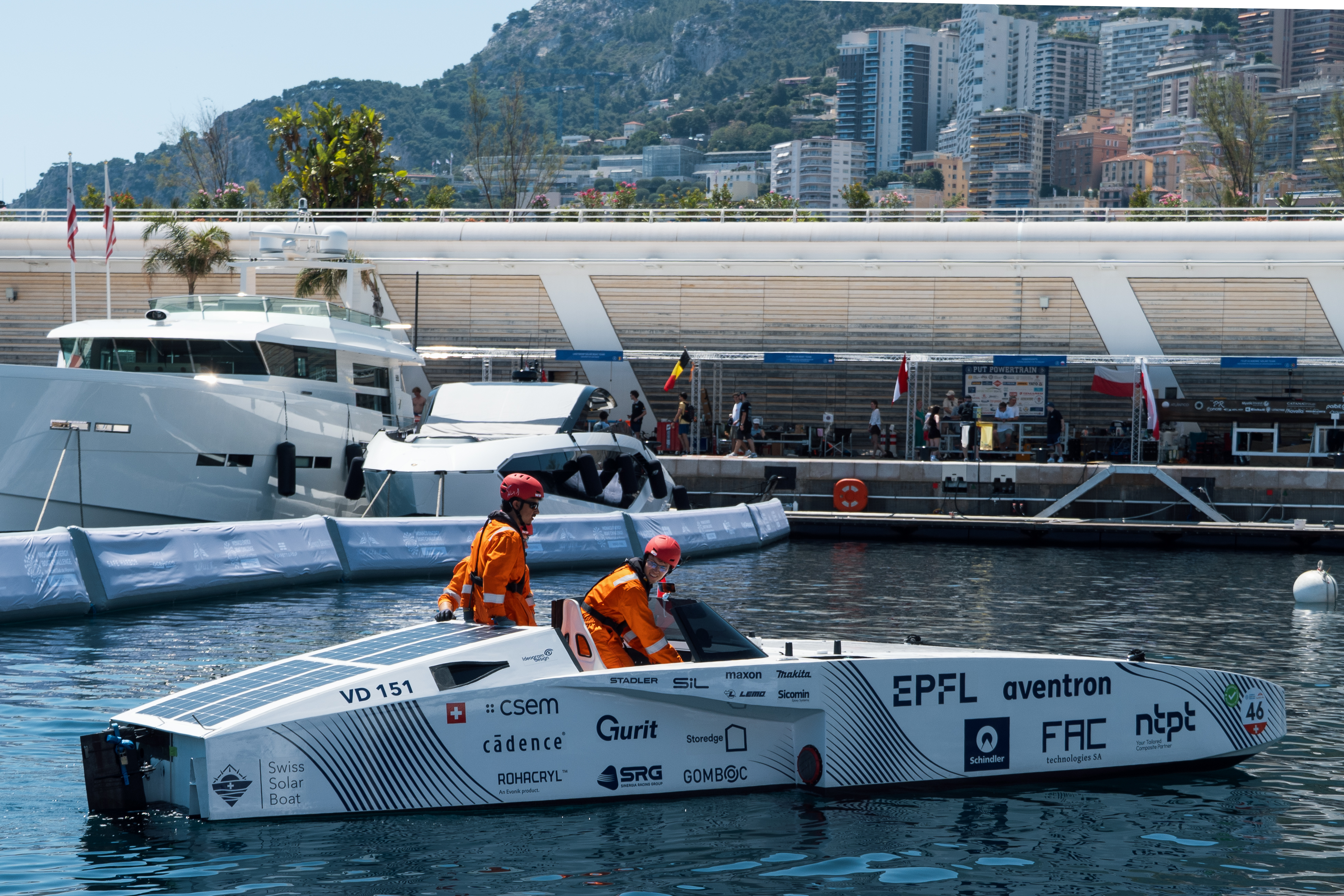
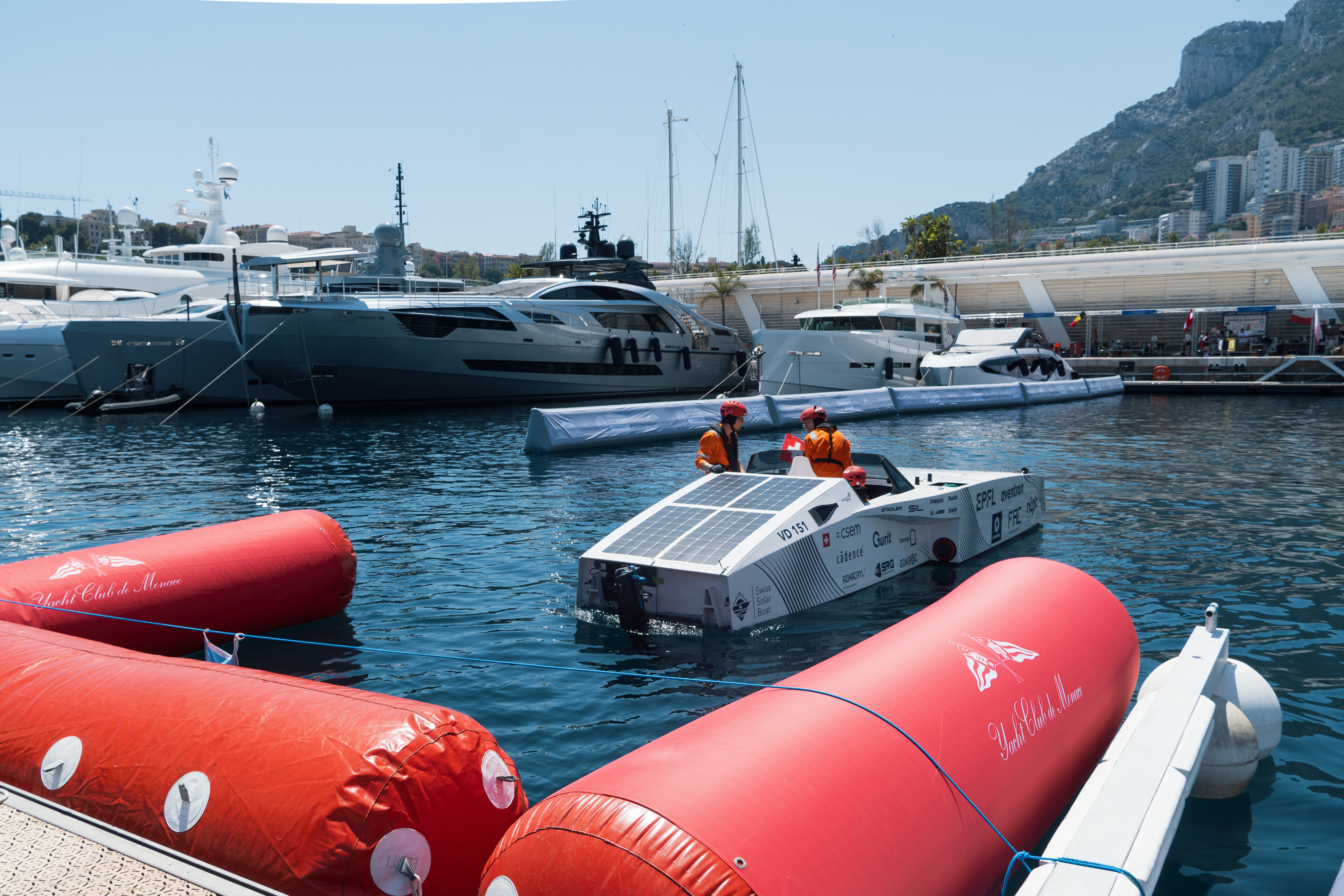
What a feeling it was to finally see the boat navigating in such an incredible setting. For about an hour, our pilots completed repeated runs between two buoys spaced 500 meters apart. This session wasn’t about chasing performance yet. Instead of attempting to foil, they focused on understanding the boat’s behaviour, validating the systems, and building confidence before the competition begins.
Back at the Yacht Club around 5:00 PM, the team immediately started analysing all the data collected during the session to prepare tomorrow’s strategy.
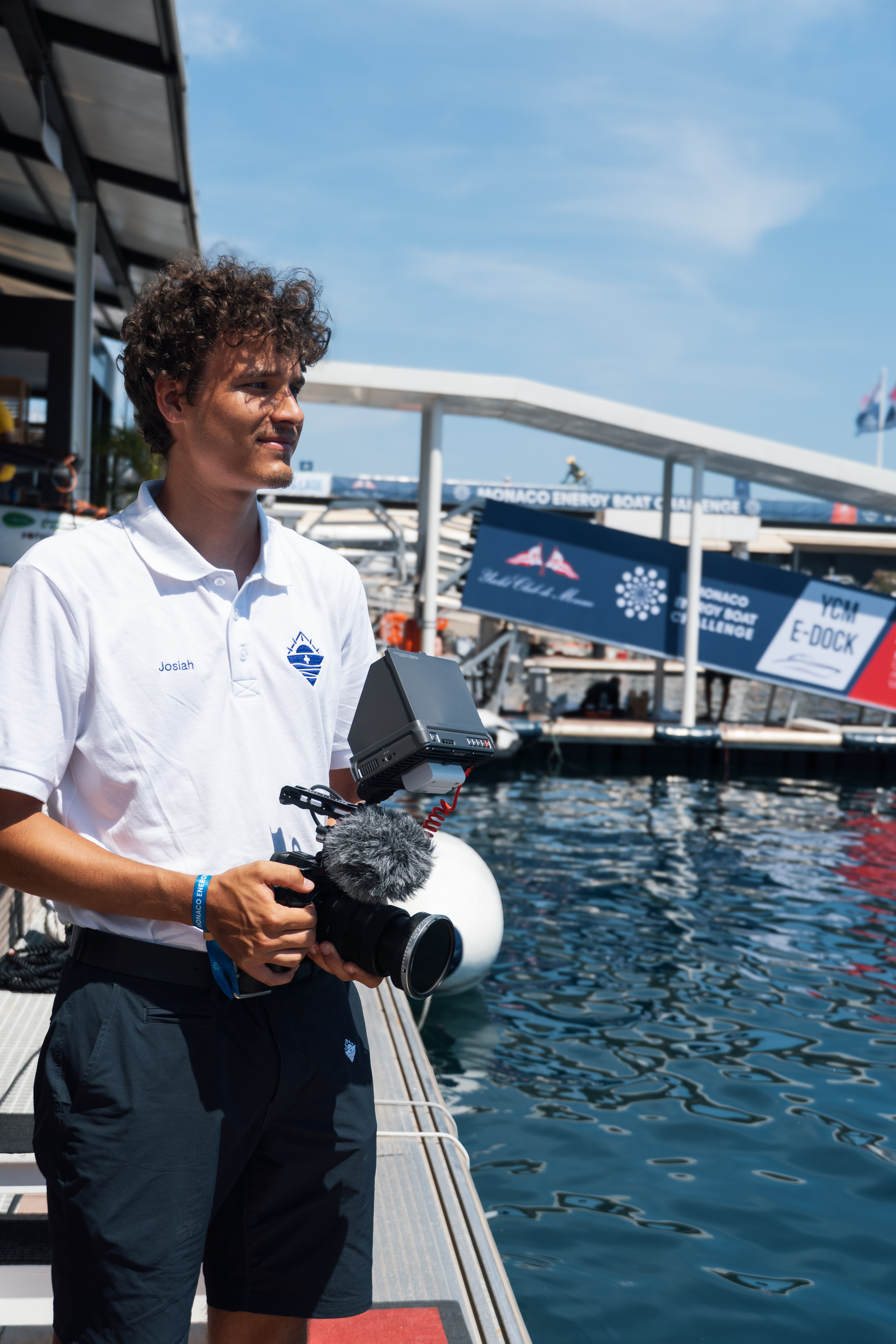
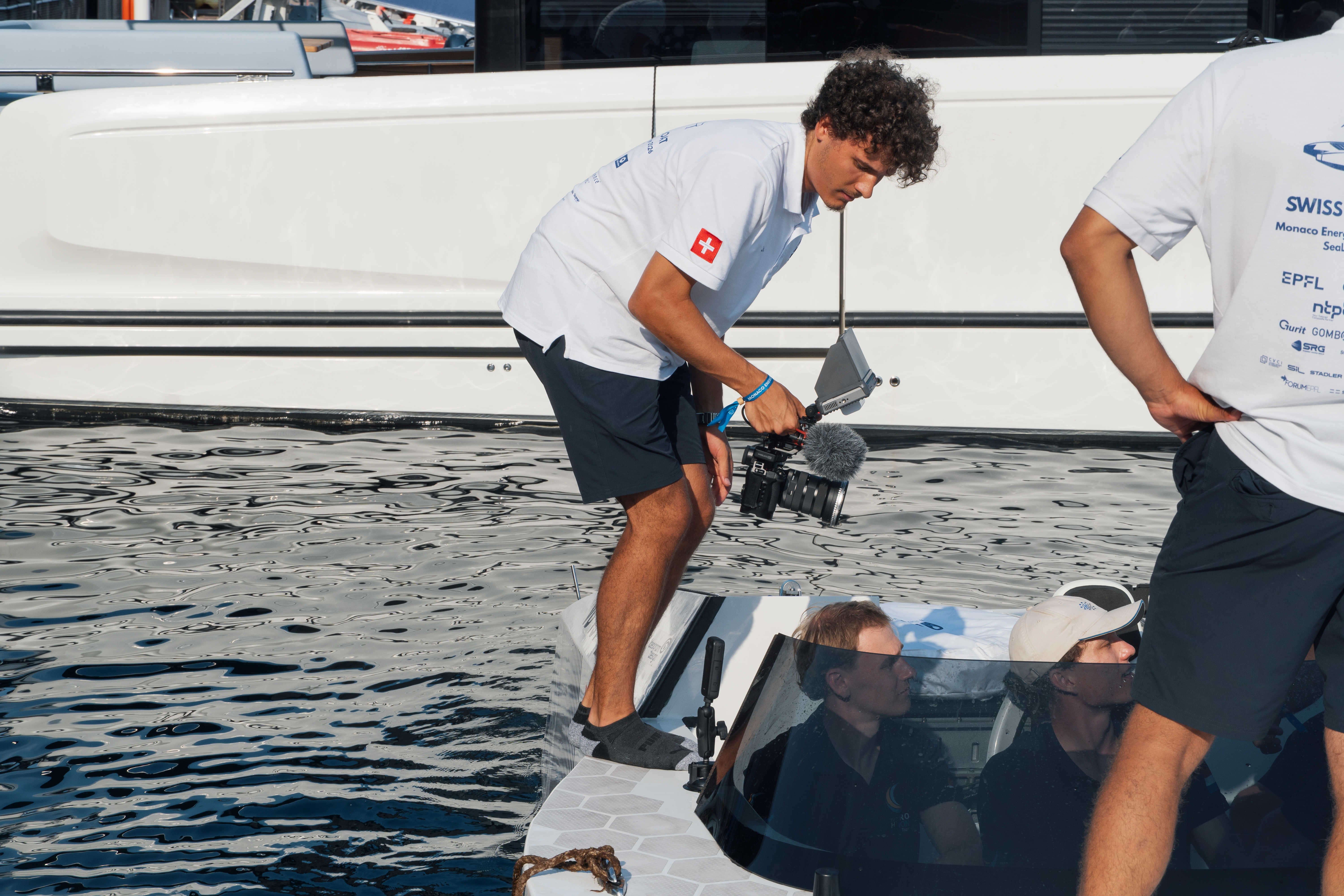
While the engineers were busy with the test on water and data analysis, the rest of the team kept everything running behind the scenes. Some prepared meals for the following day and did the laundry. Meanwhile, our video wizard Josiah managed to convince the Yacht Club media team to film our boat with their drones, since we don’t have permission to fly our own. Fingers crossed! At the same time, Adrien, our 13-year-old driver competing in the E-Championship simulator competition, spent the afternoon refining his strategy and racing against the rest of the team. At only 13 years old, he’s already faster than all of us, so we’re feeling pretty confident ahead of tomorrow’s qualifying session.
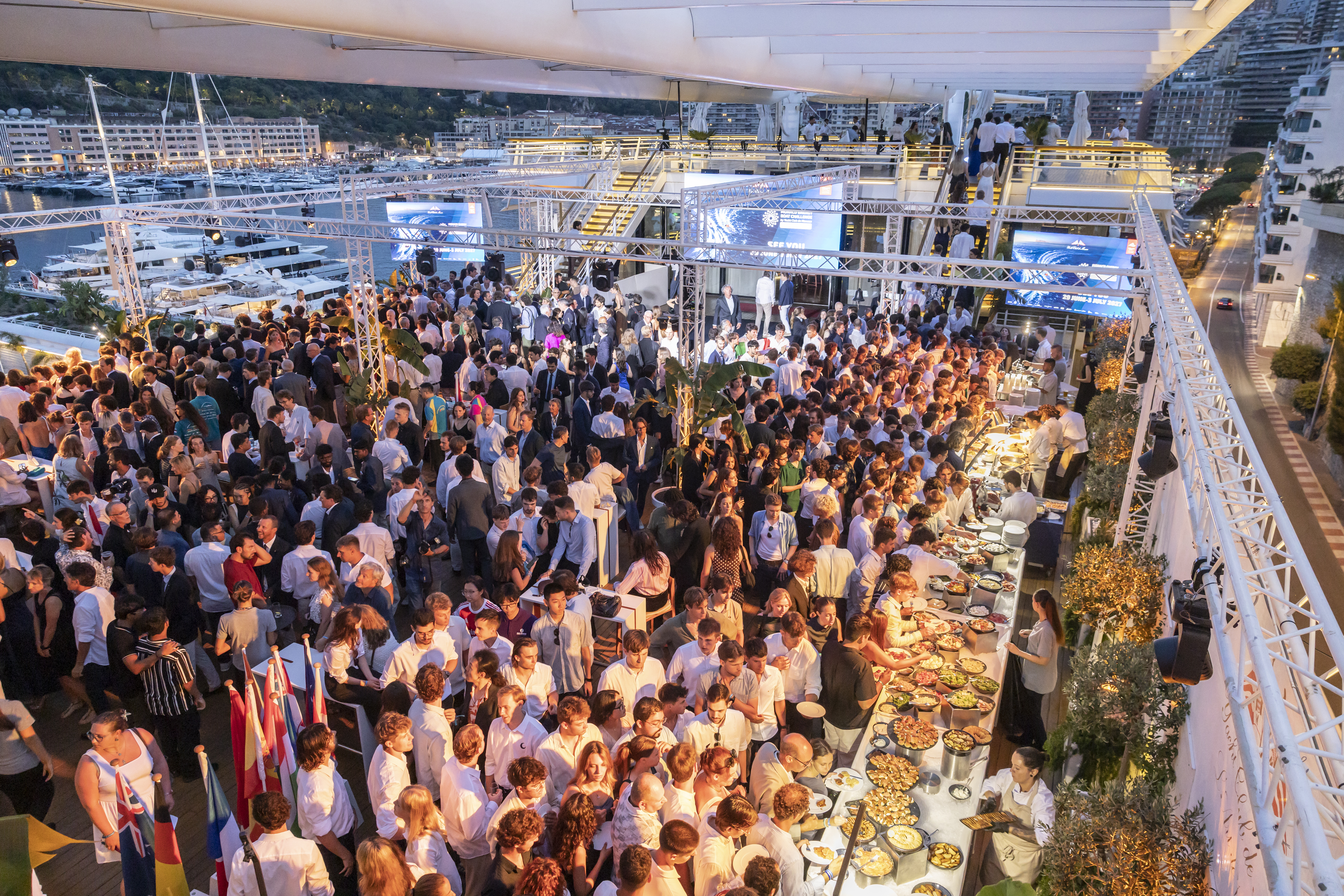
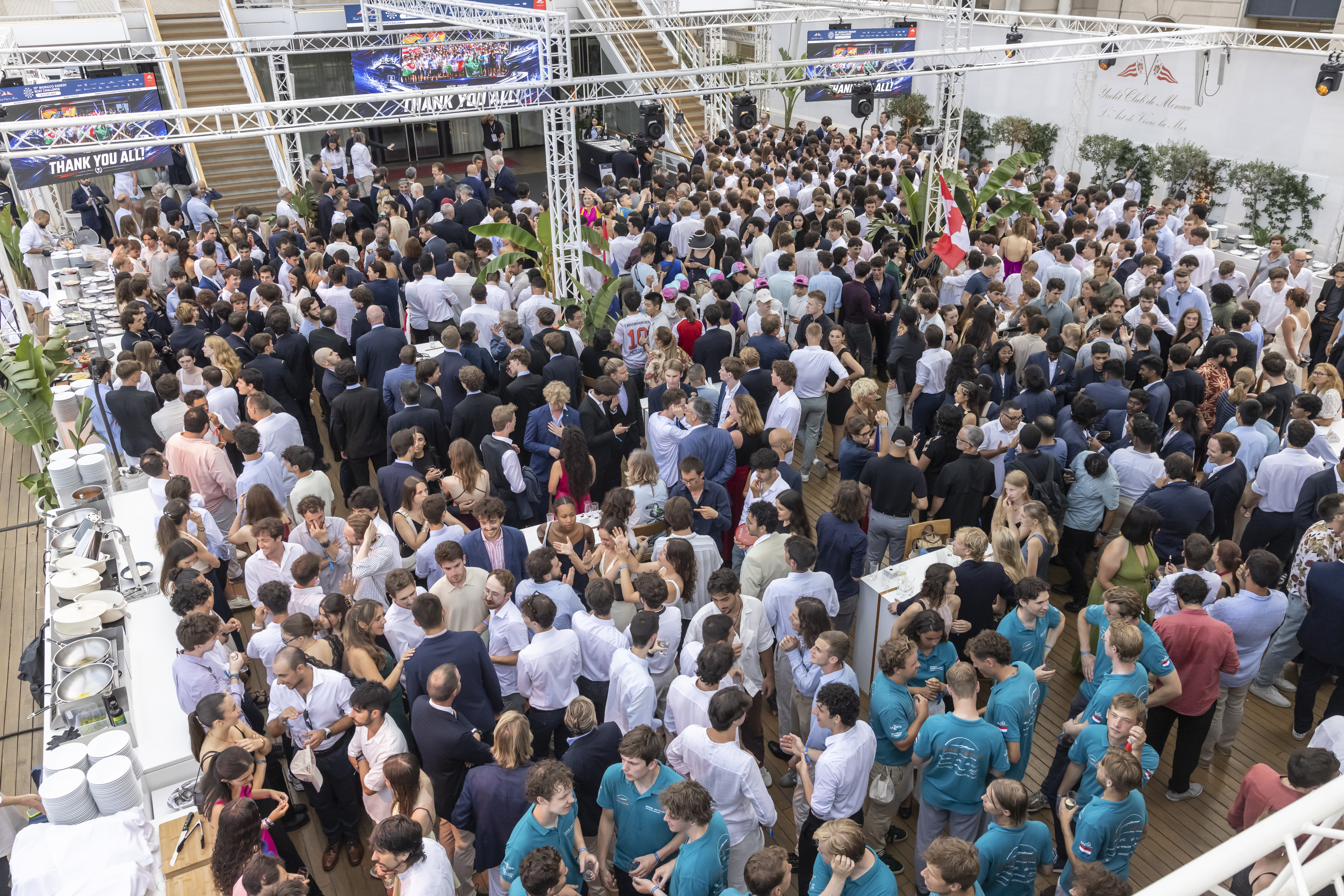
The day ended with the Monaco Energy Boat Challenge opening ceremony on the fifth floor of the Yacht Club, where all the teams gathered together. It was a real pleasure to discover that the ceremony was hosted by Juliette Pelissier, President of Swiss Solar Boat back in 2022. After almost making the stage collapse by arriving a little too enthusiastically, Team SSB certainly made sure everyone knew we were there! A few mini burgers, some delicious pissaladière, and one well-earned beer later, everyone headed back to the accommodation around 10:30 PM.
Just before going to bed, we received one final surprise: an additional testing slot from 9:00 to 10:00 AM before tomorrow’s parade.
Tomorrow is shaping up to be one of the biggest days of the week, with our first two competitive events: the maneuverability challenge and the speed record. After three years of work, it’s finally becoming real.
GO TEAM!
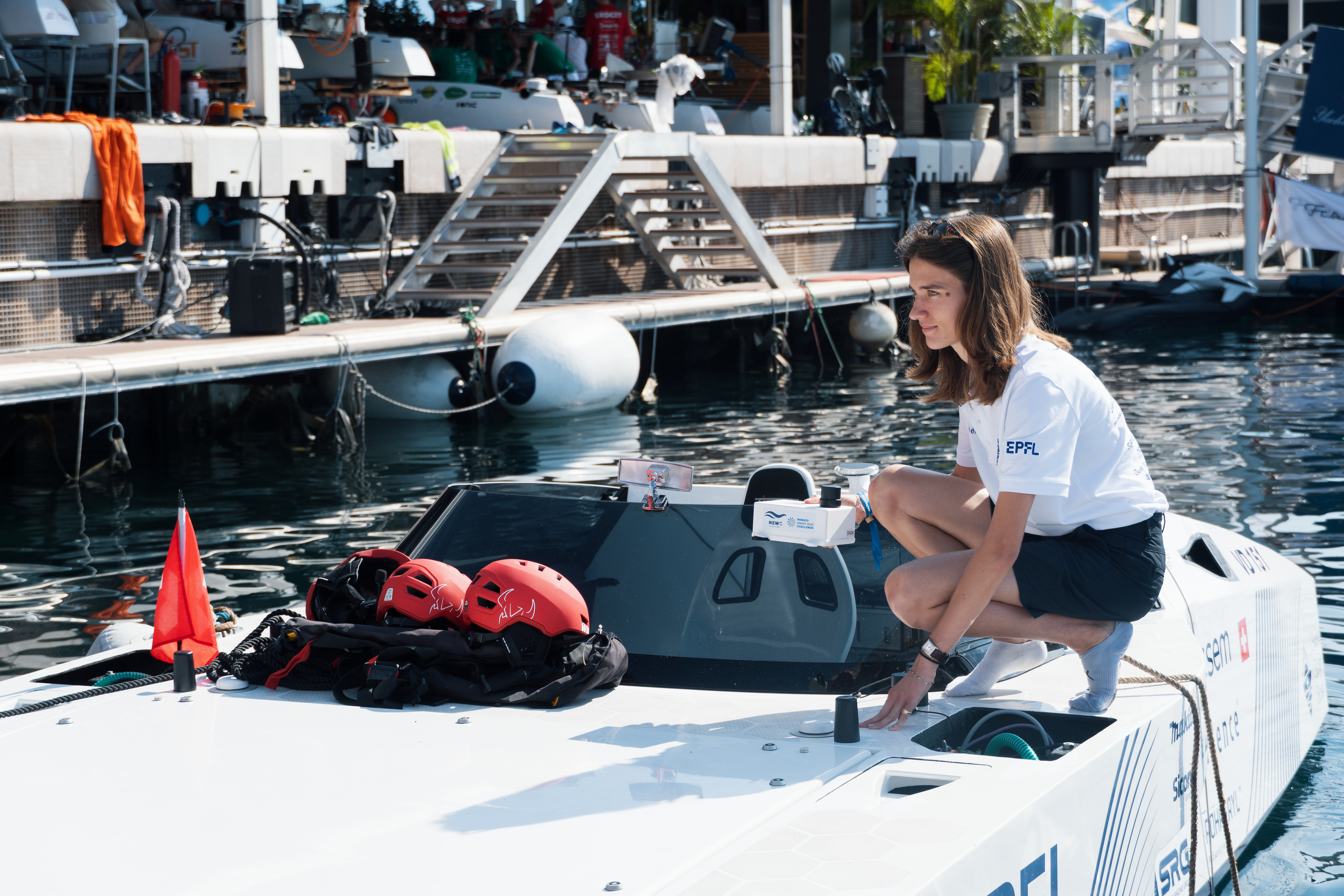
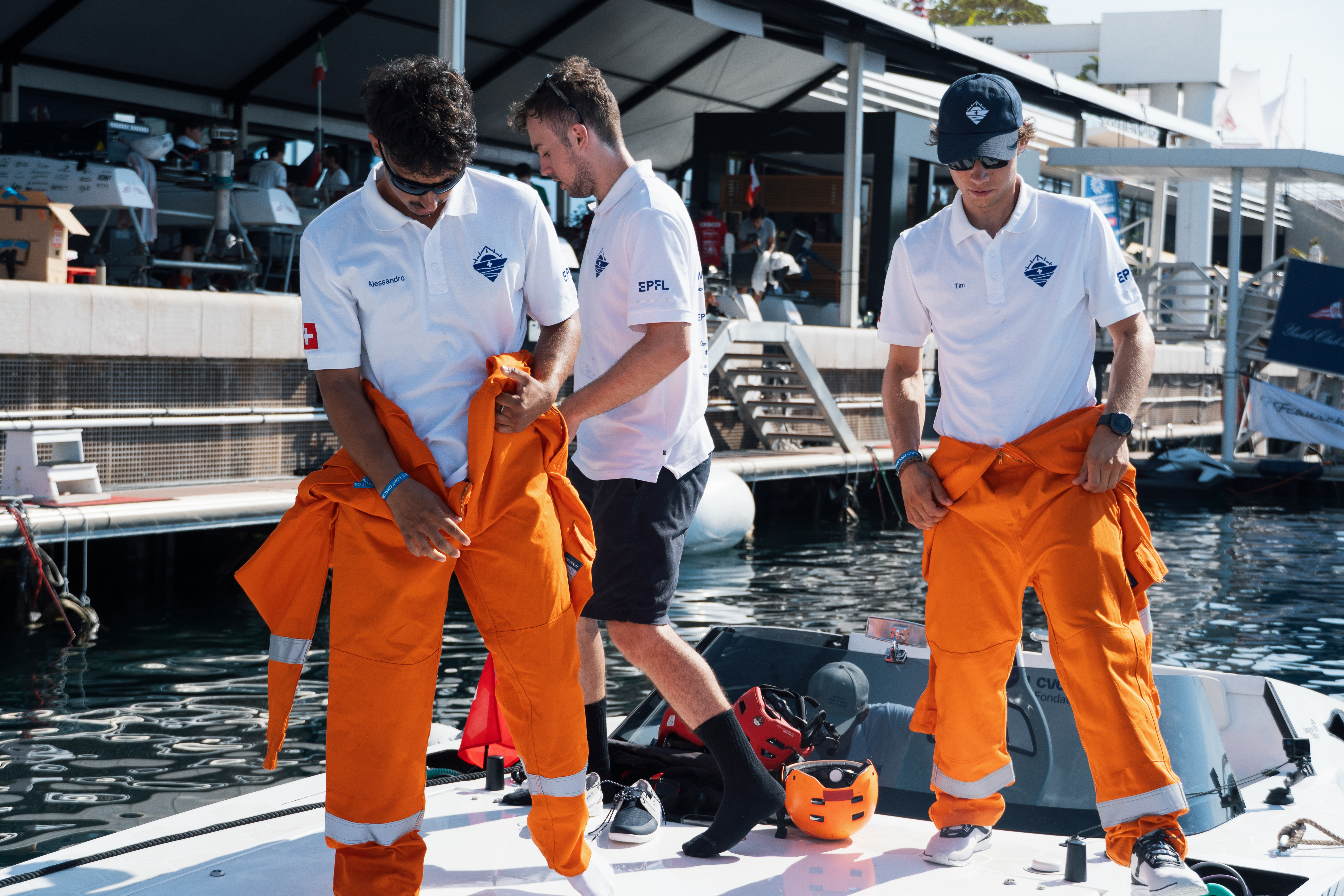
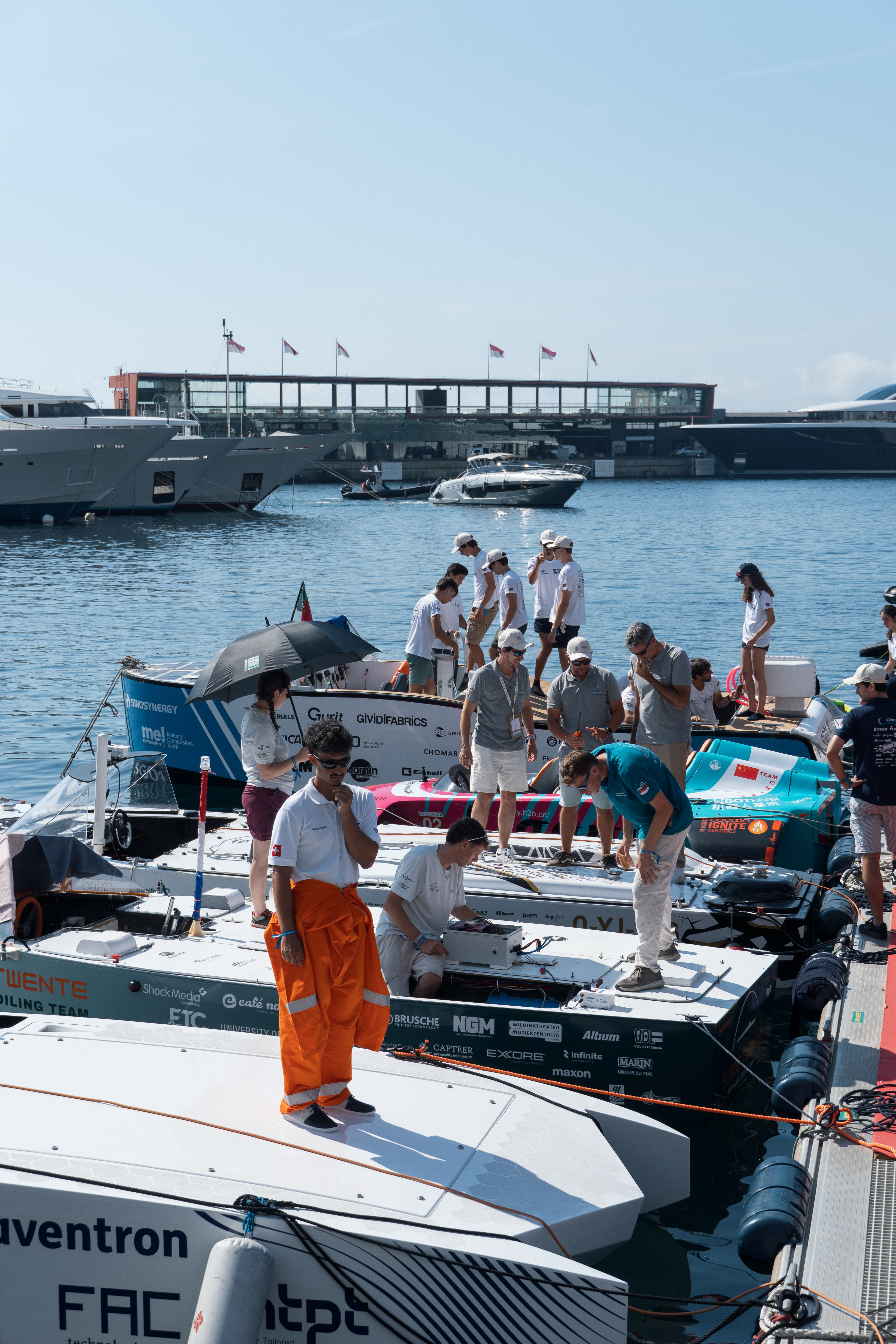
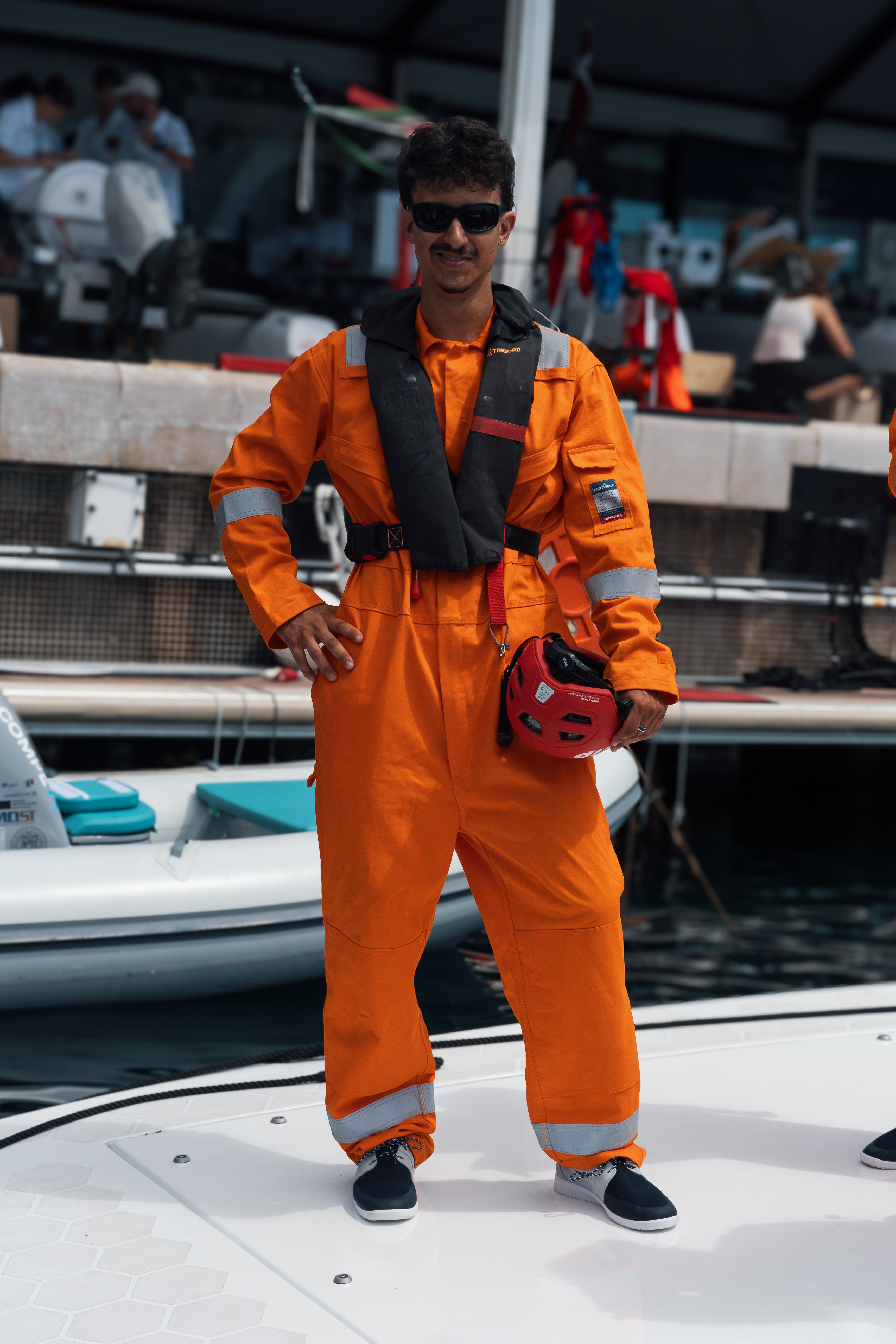
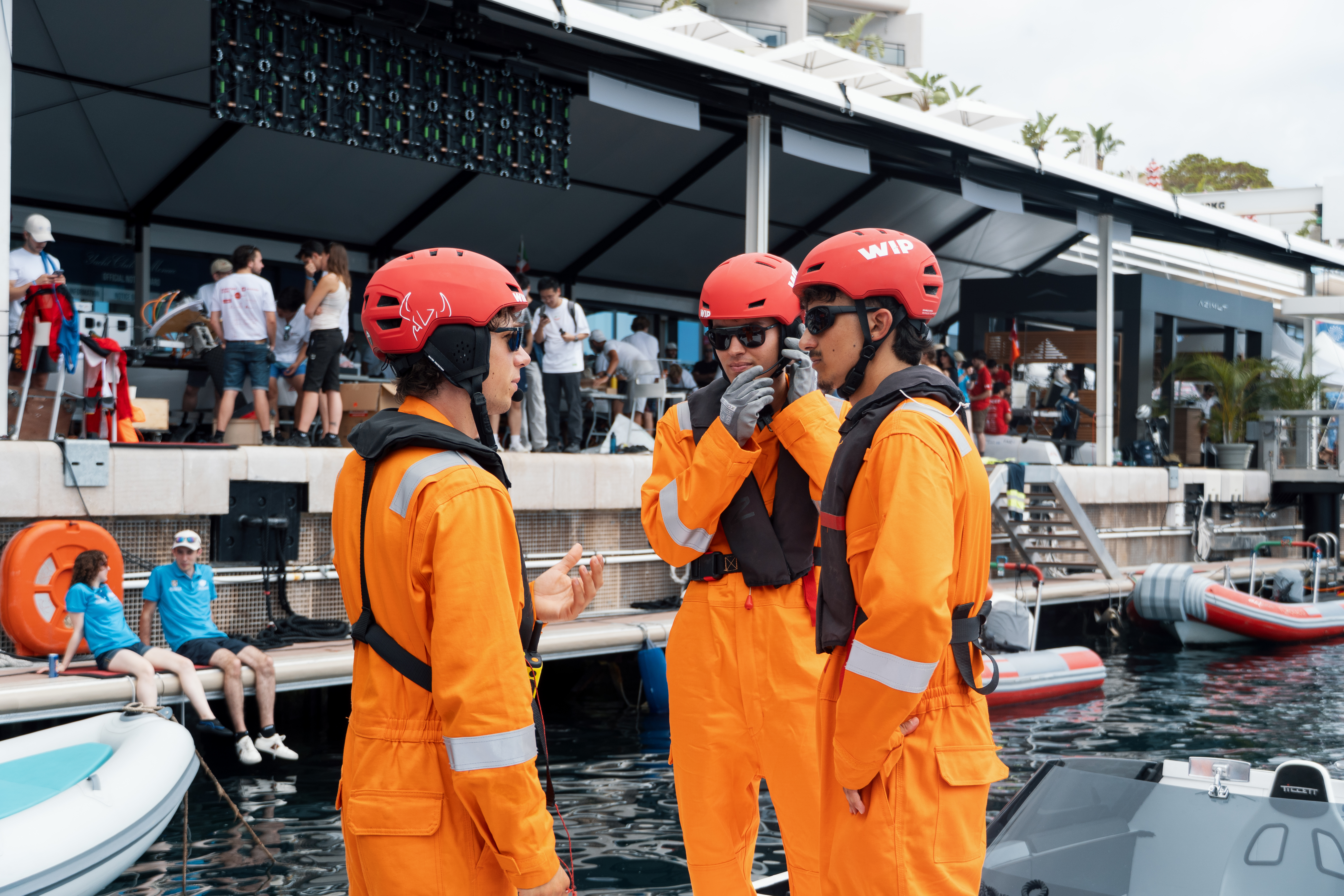
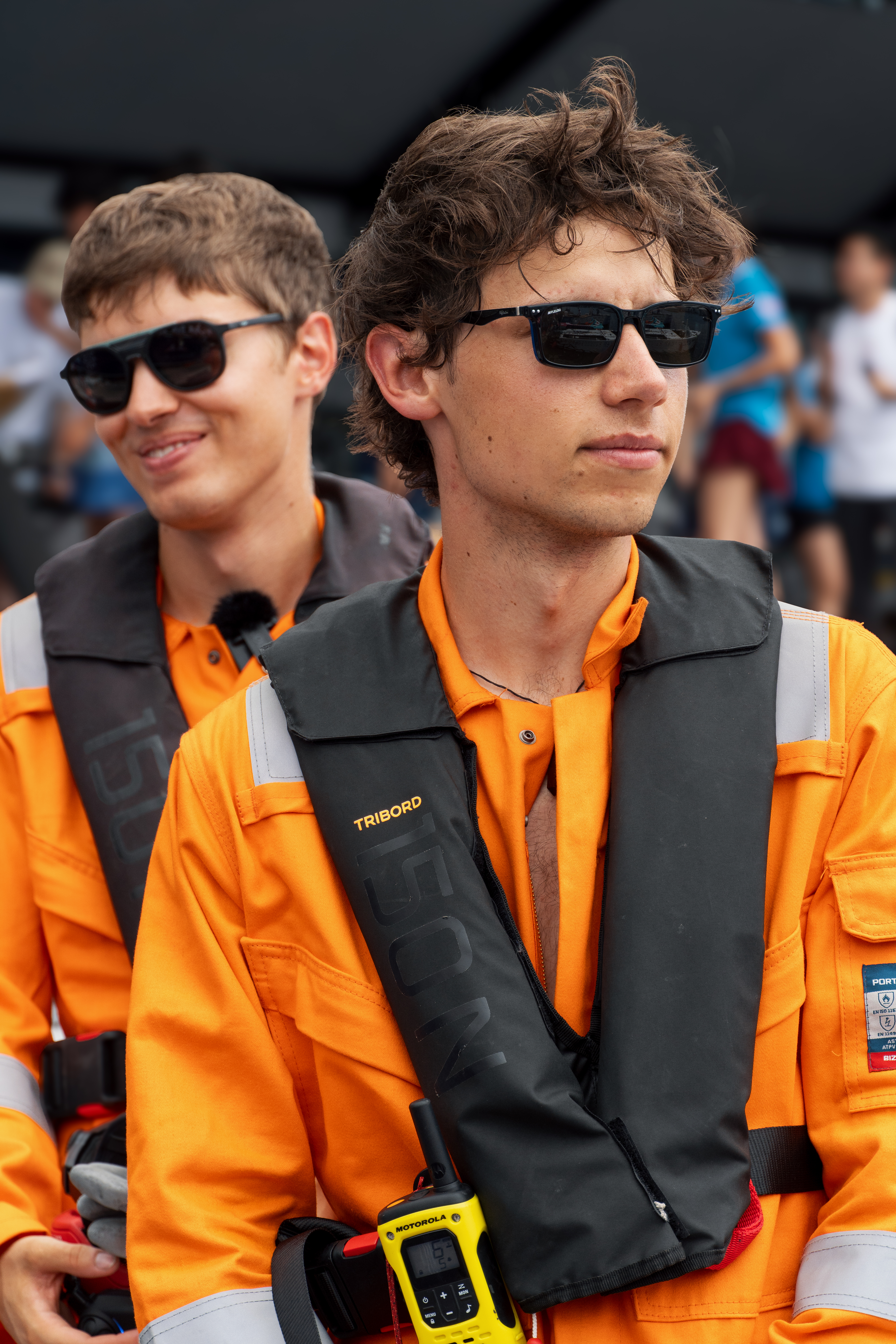
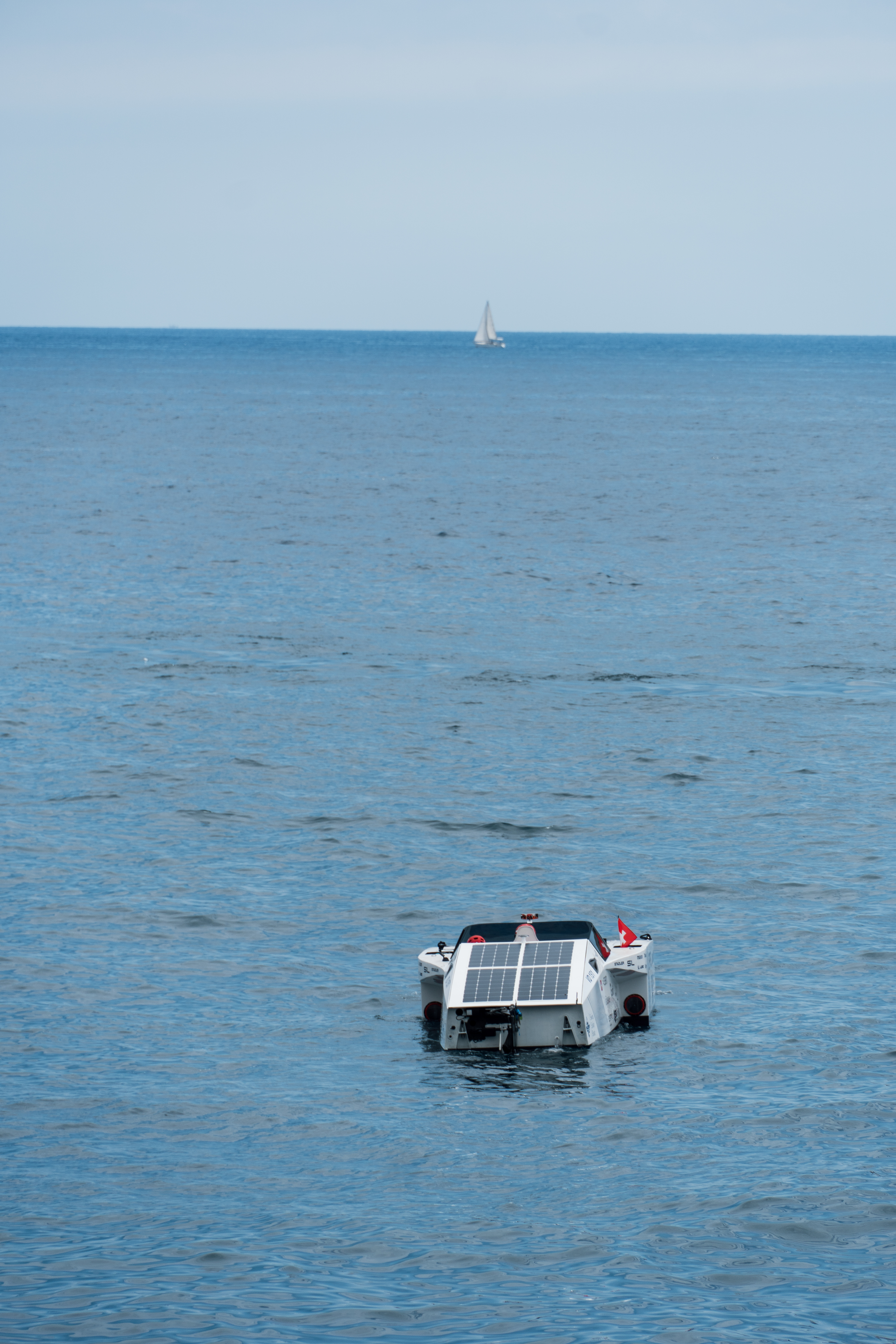
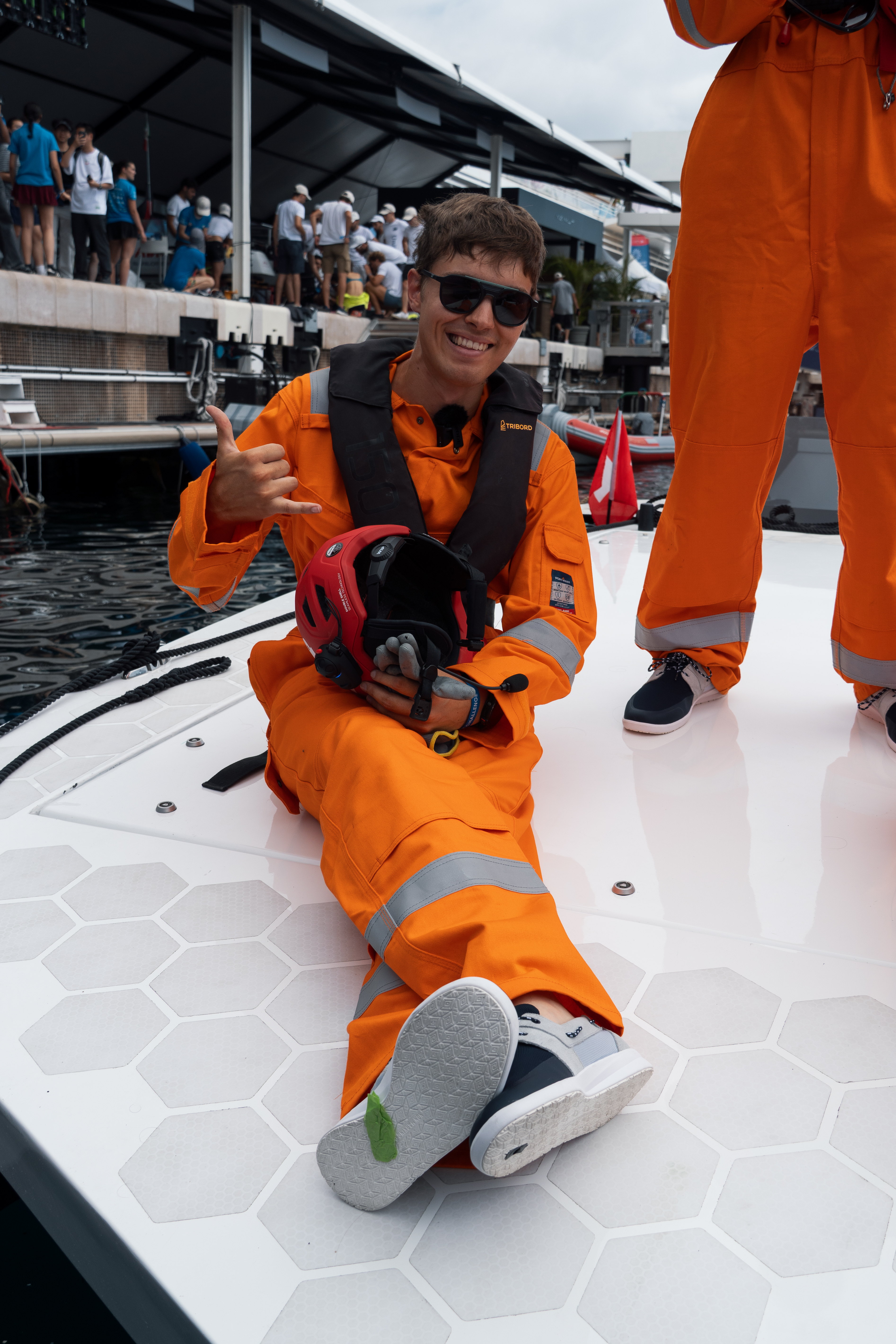
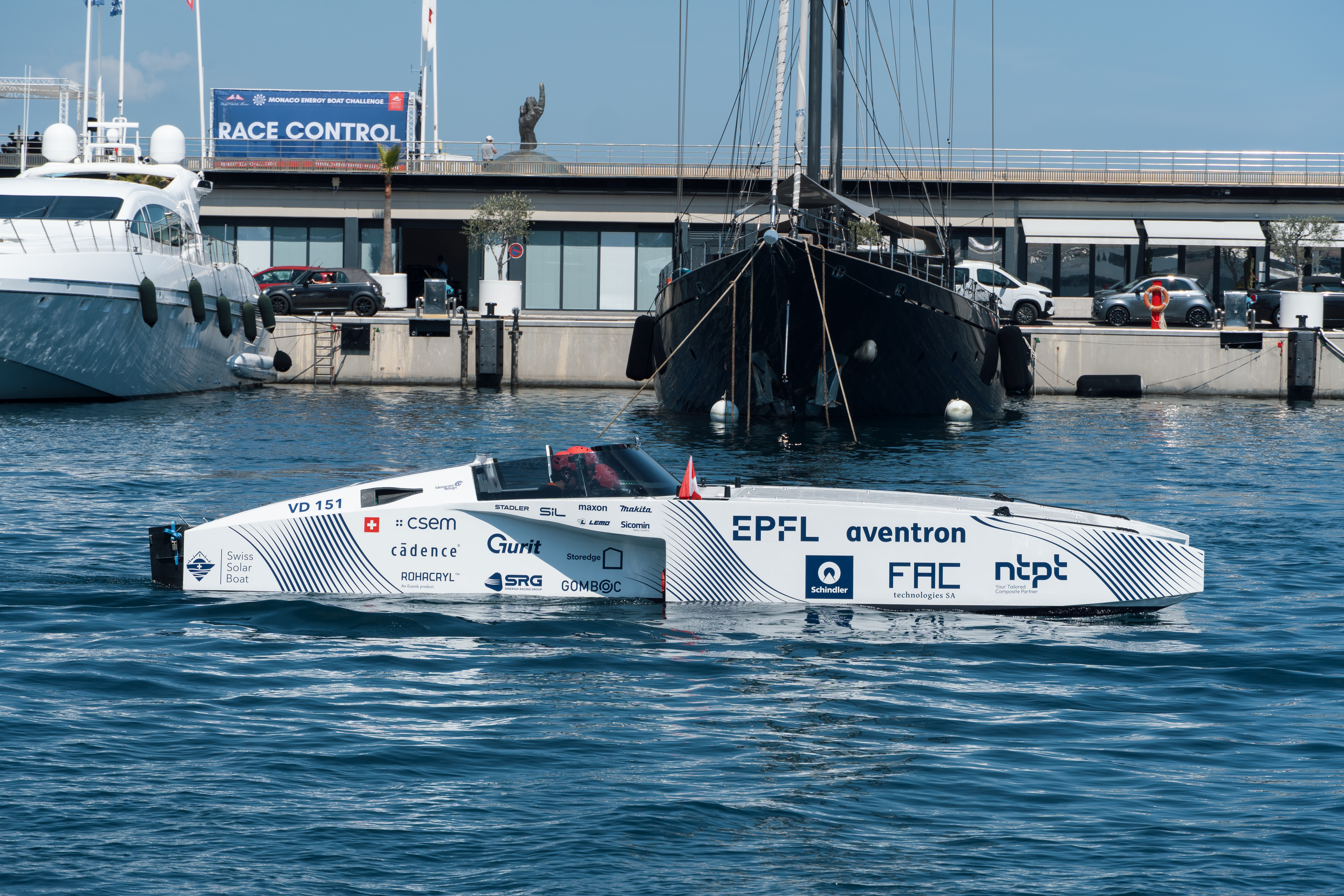
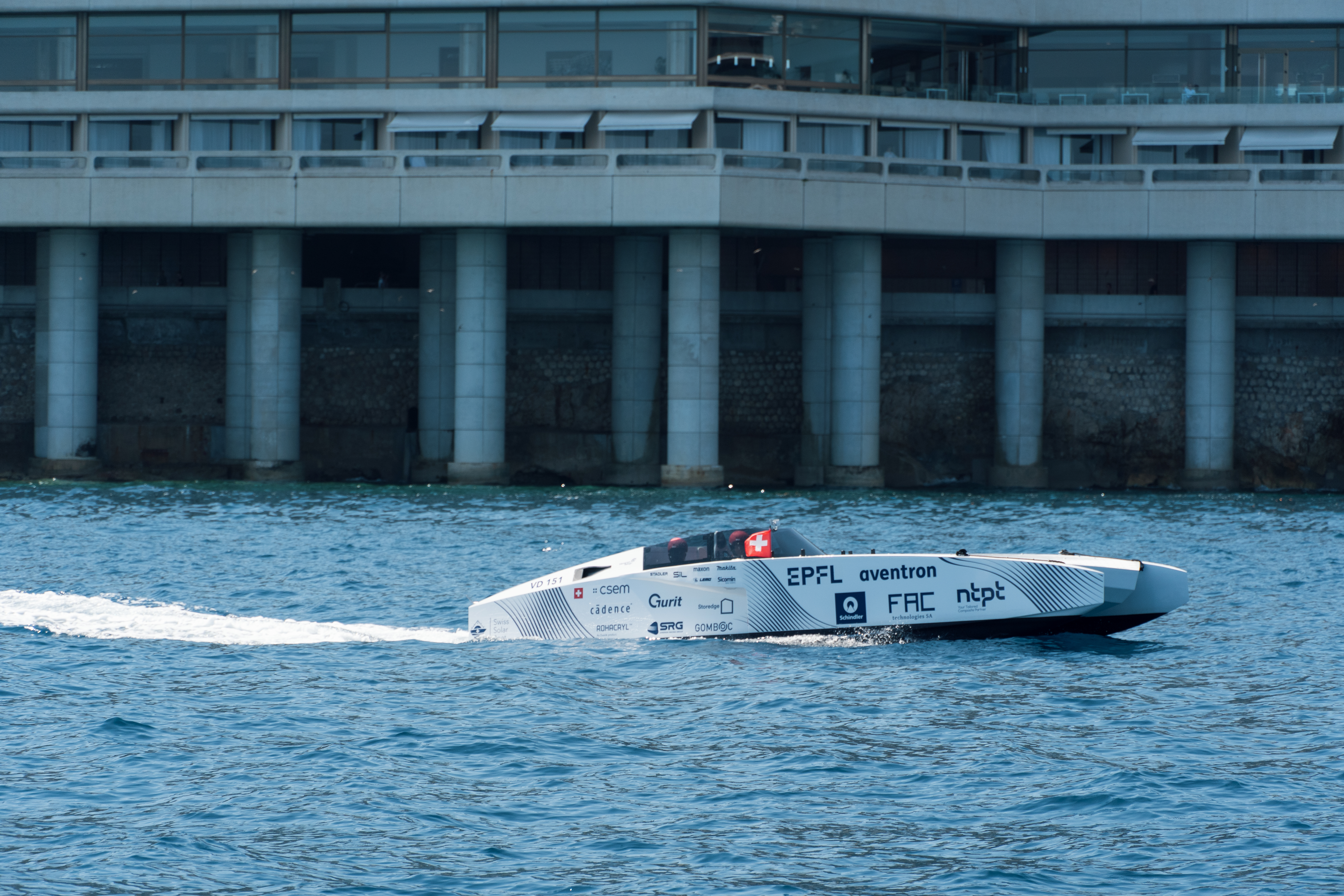
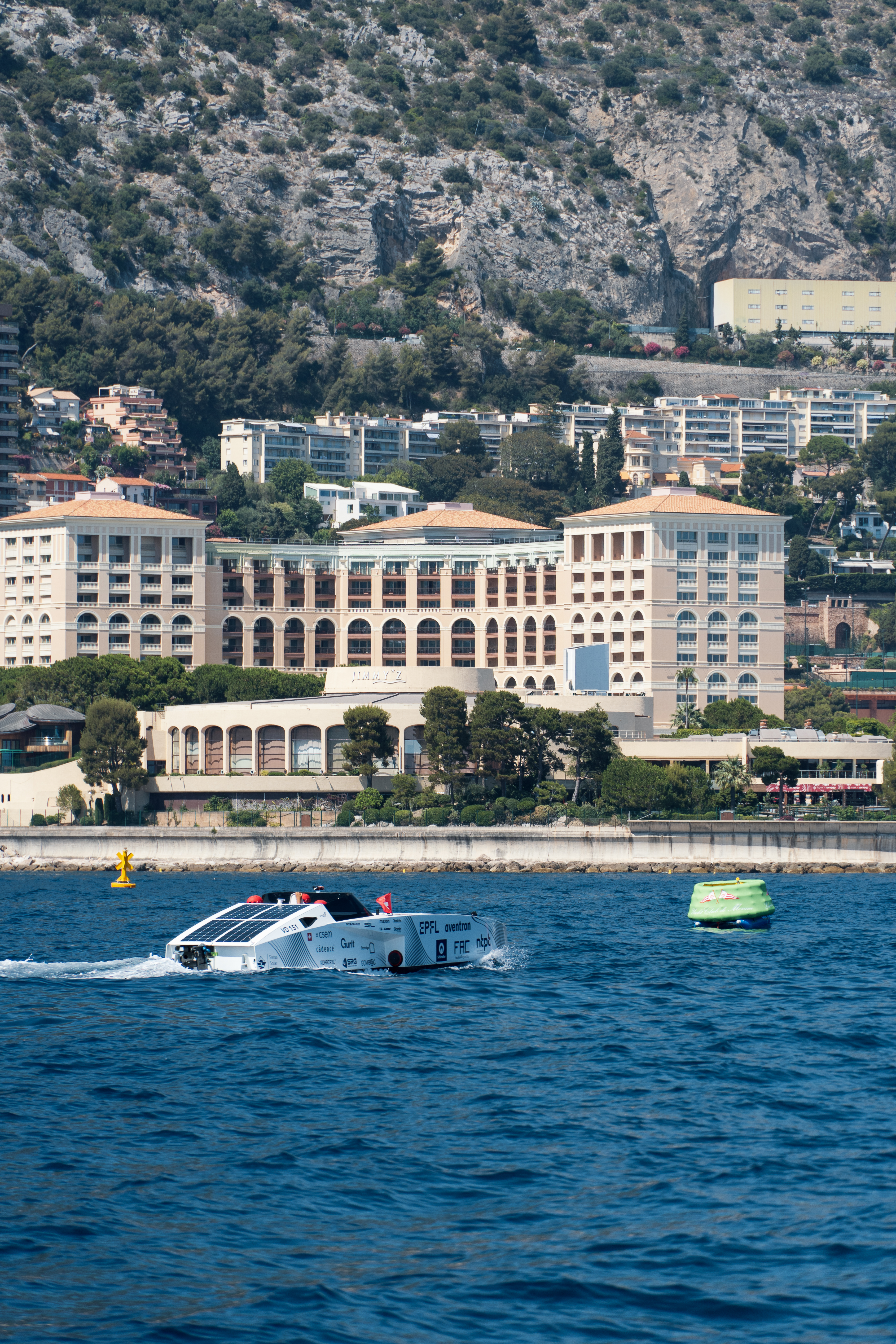
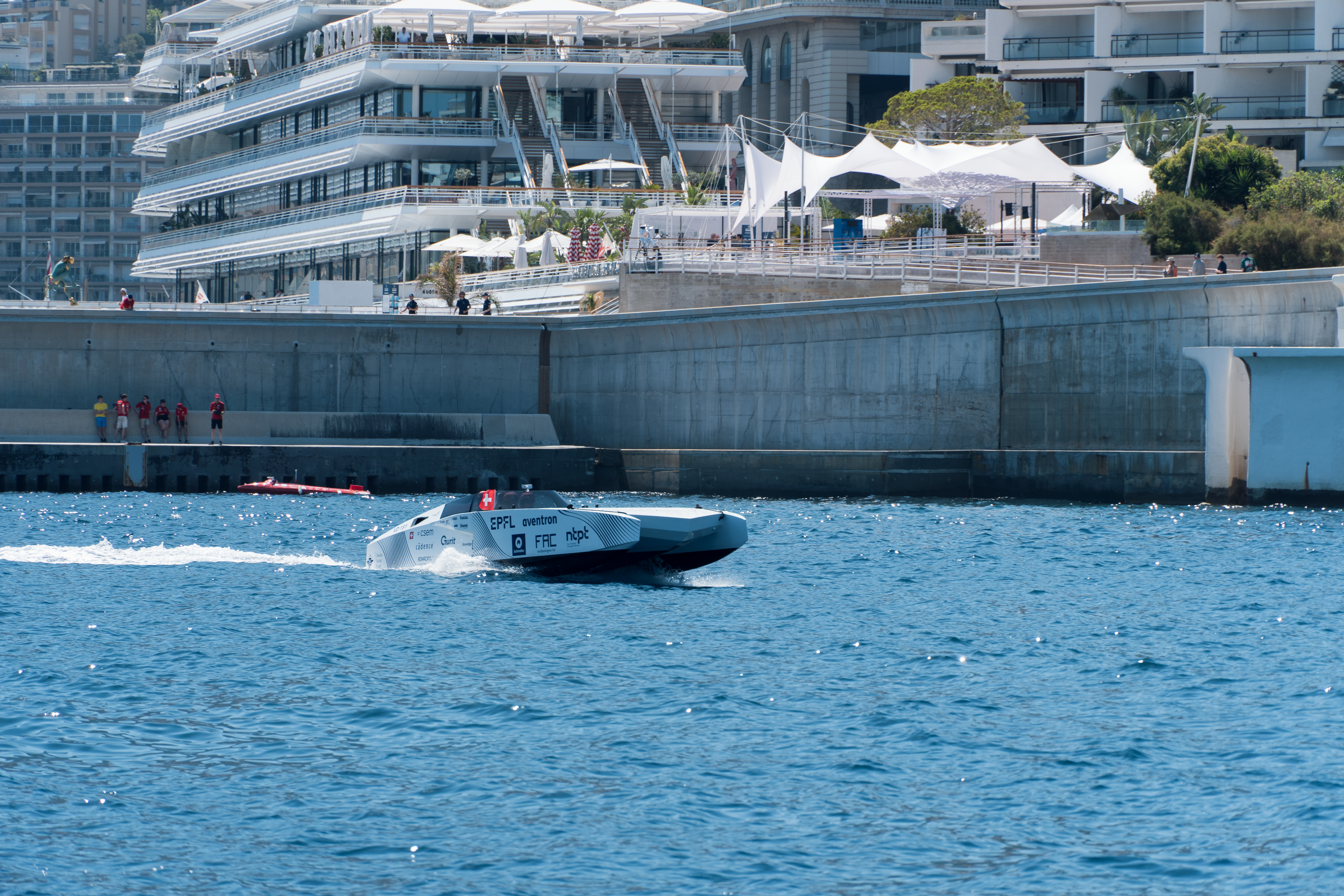
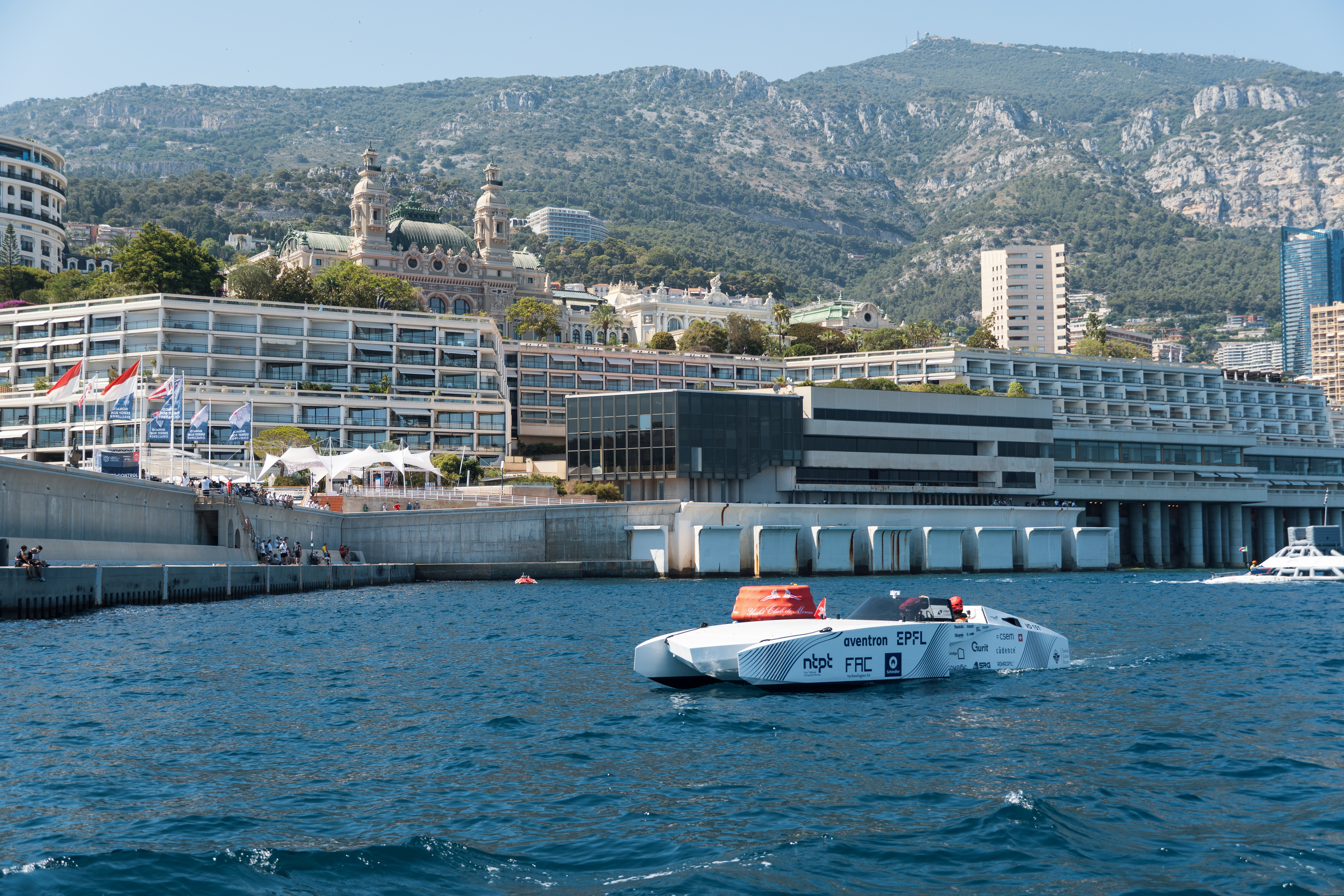
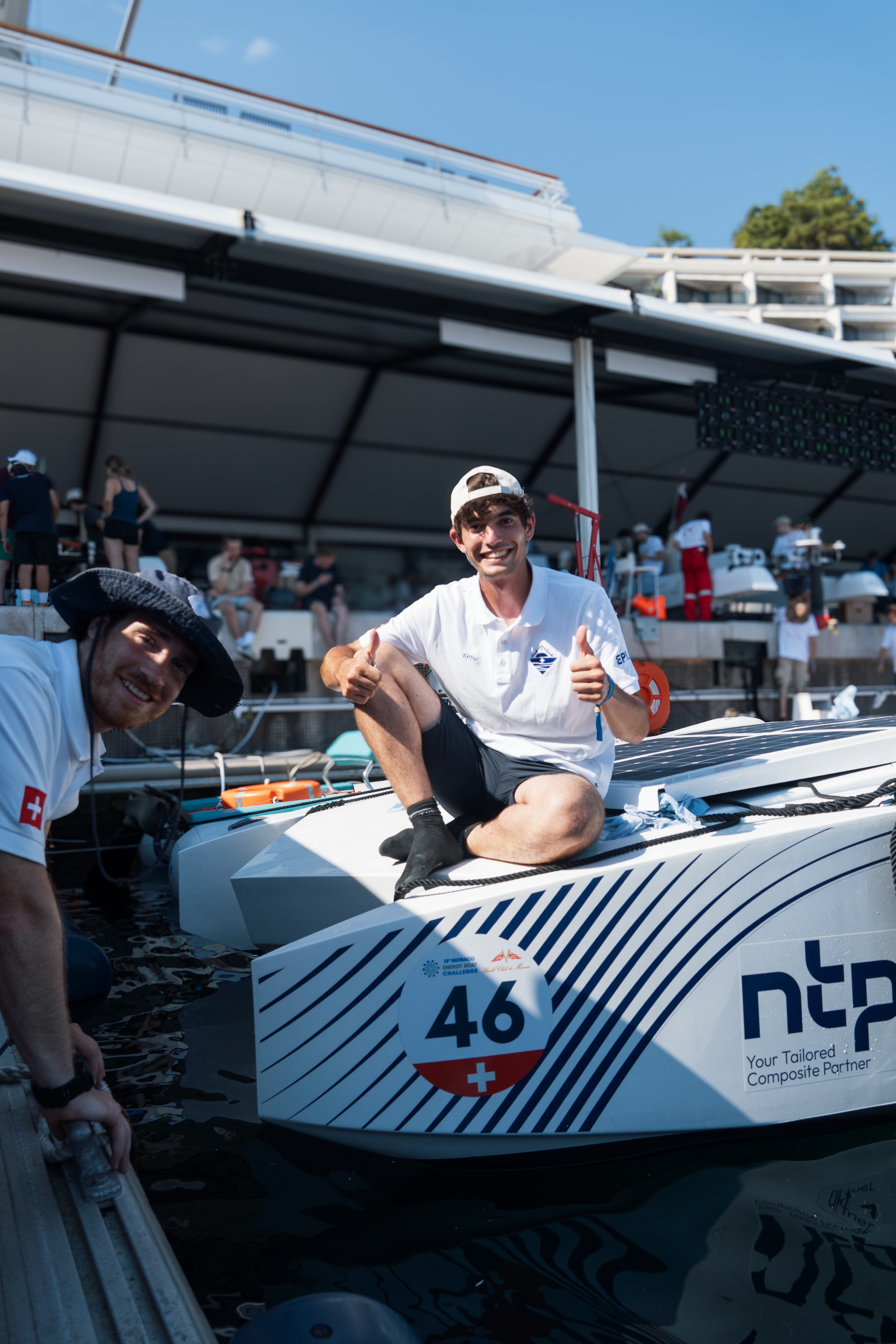
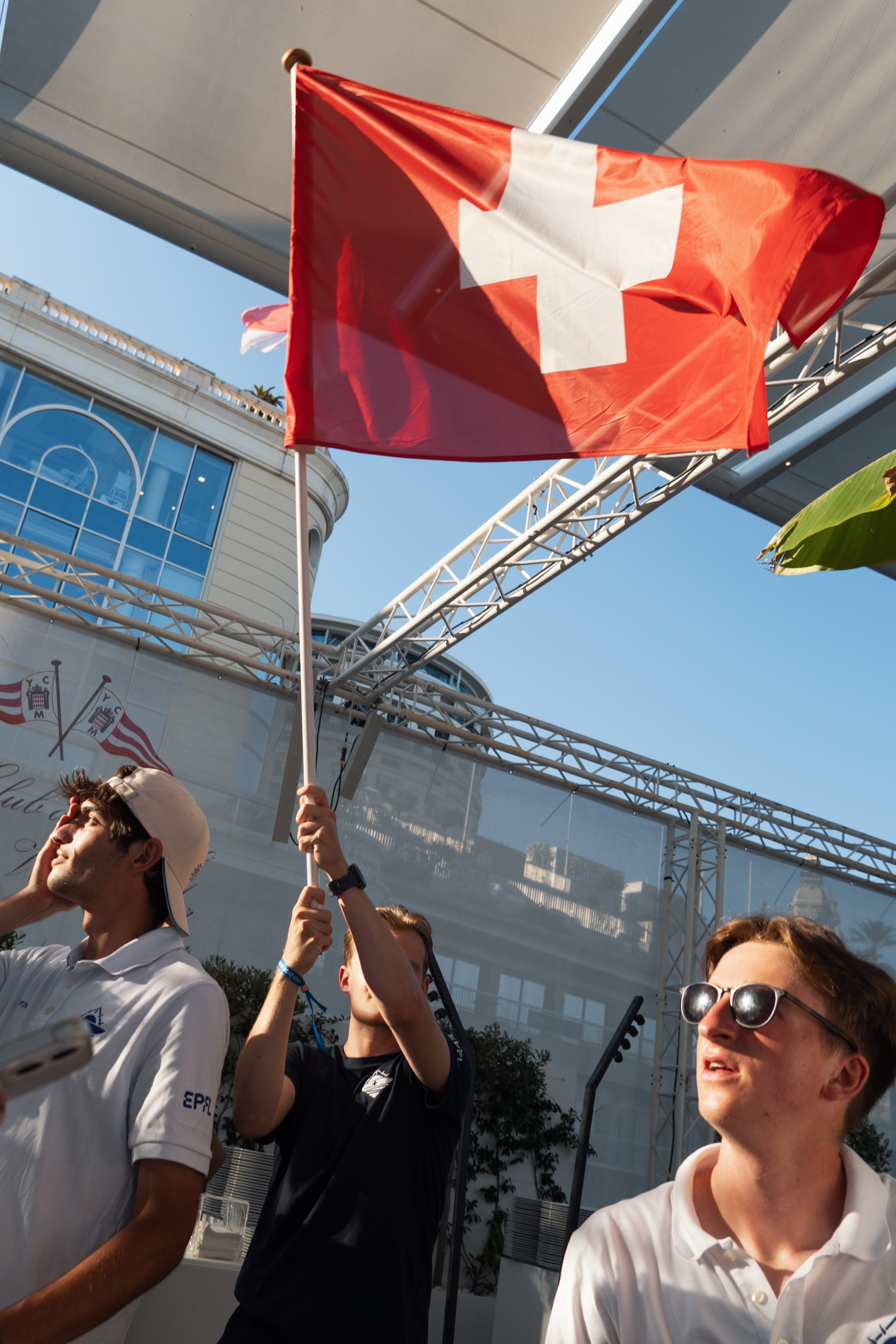
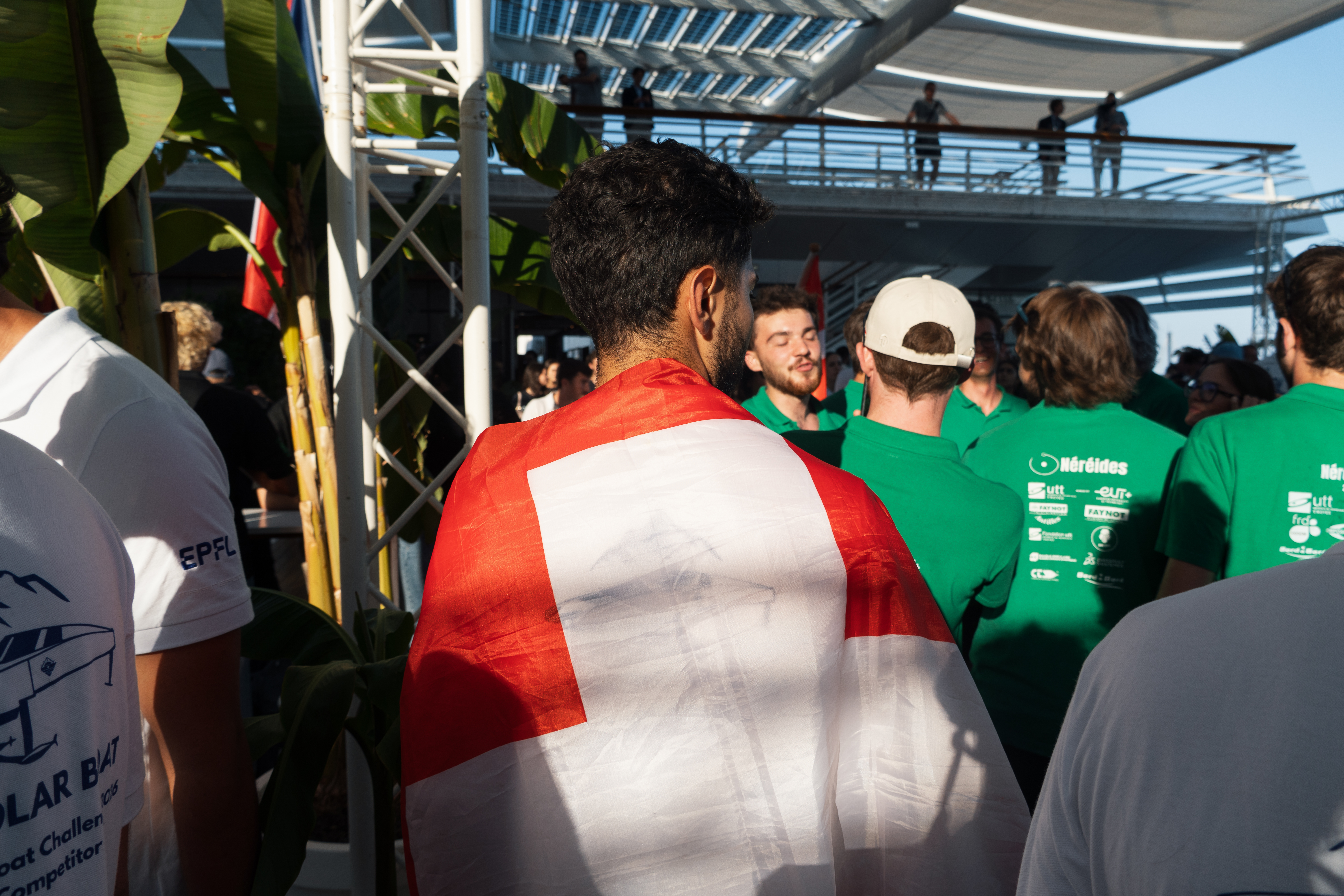
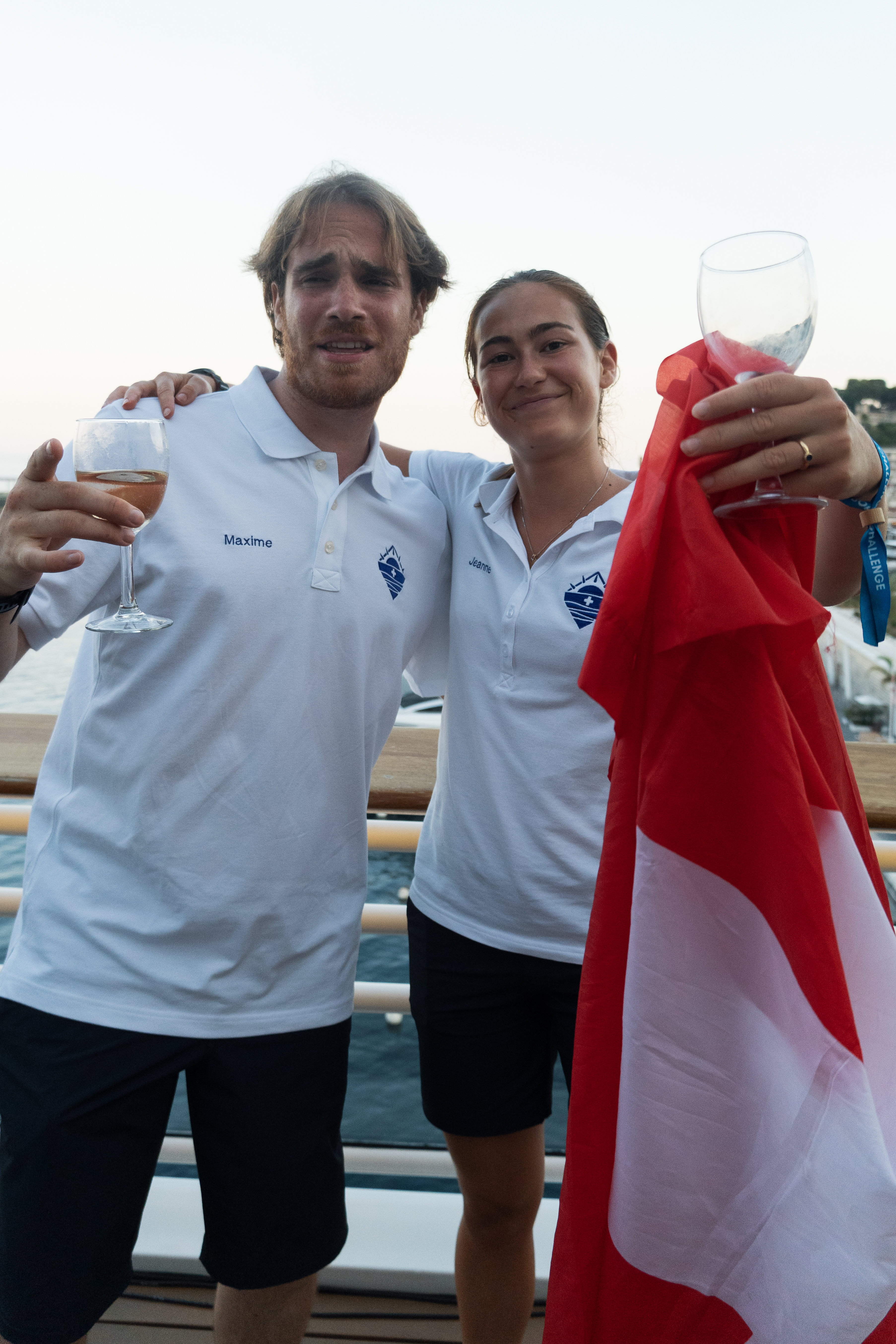
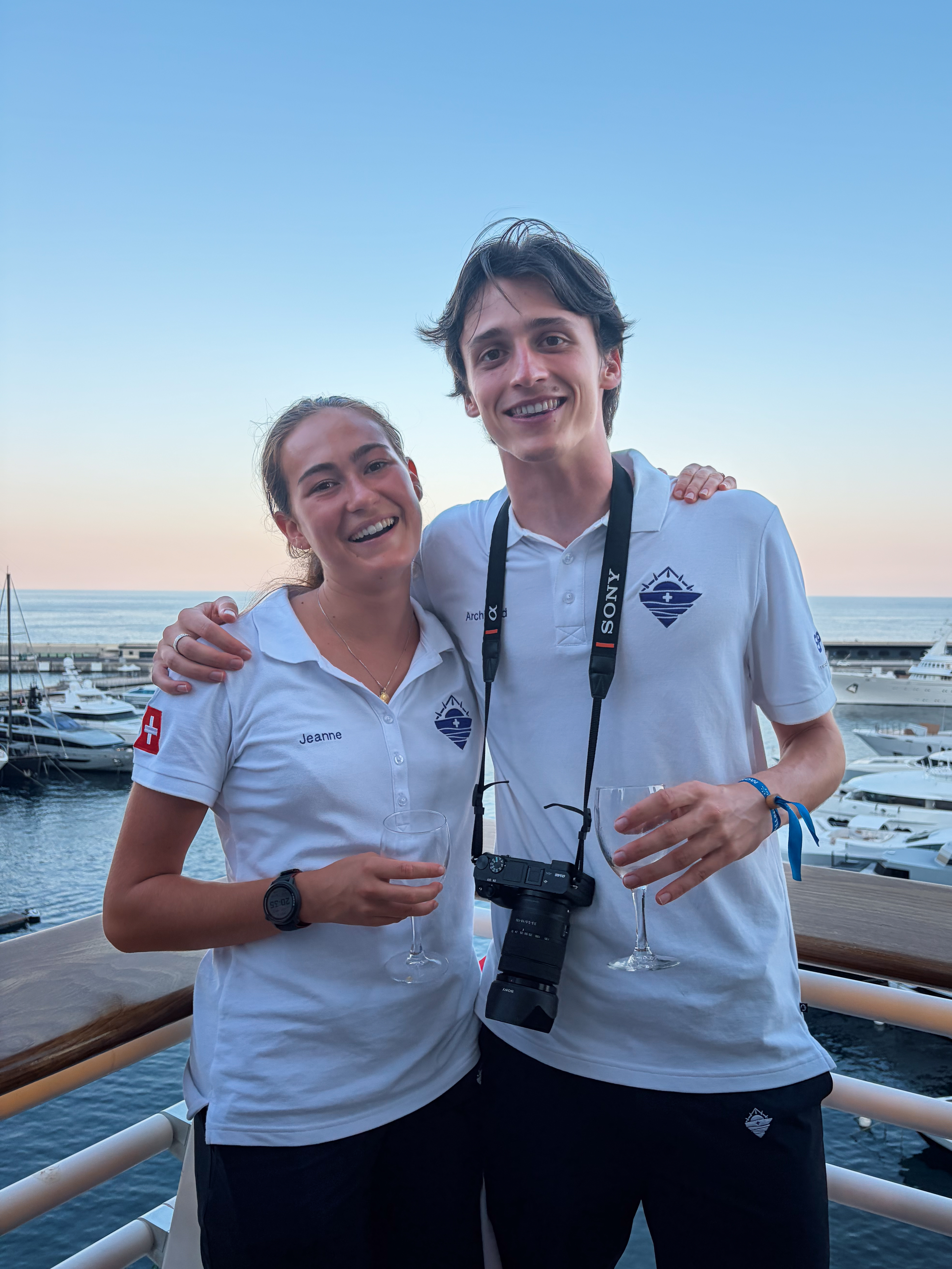
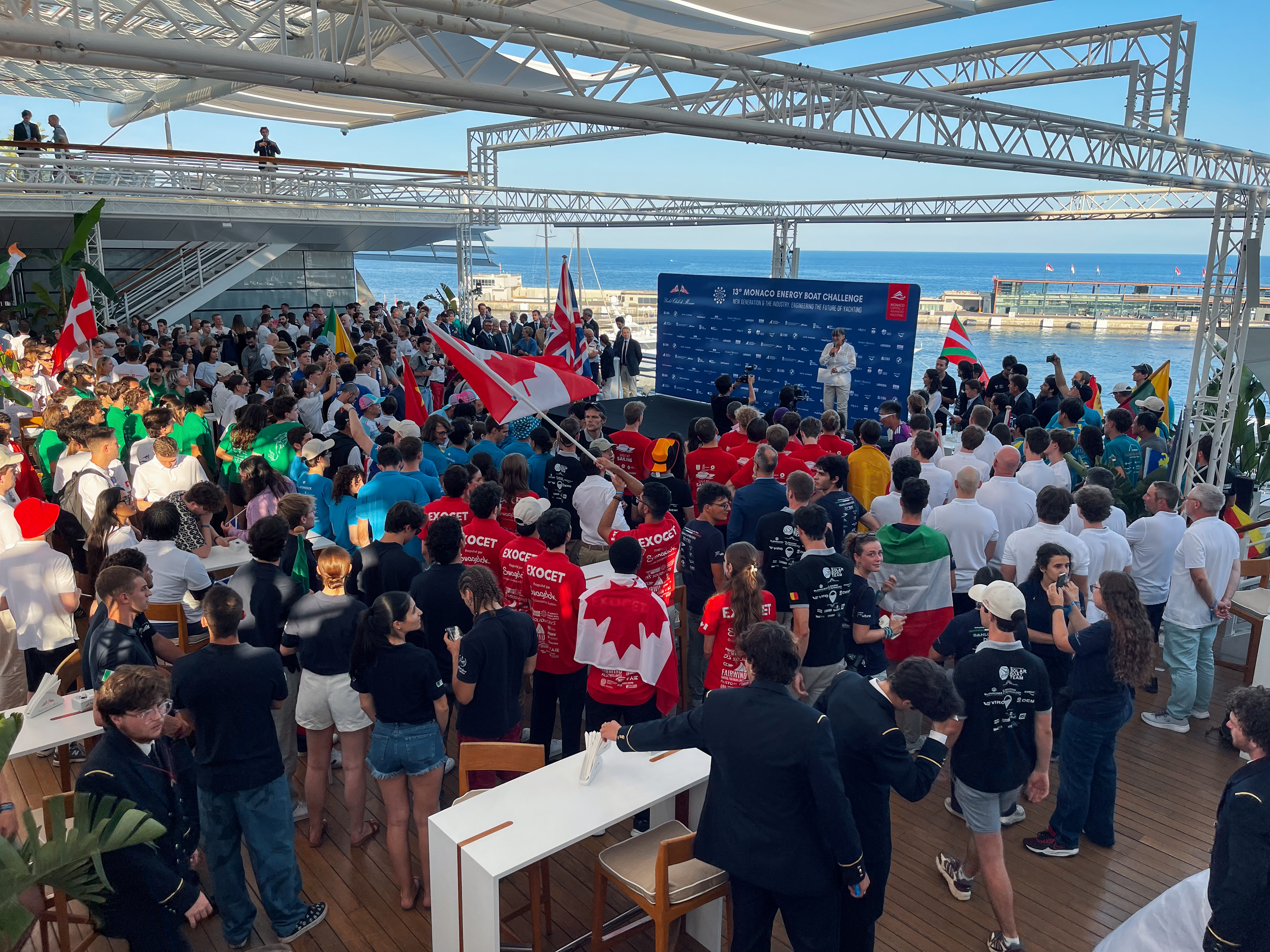
Day 4 — Thursday, July 9
Daily Recap #4 – The Competition Is On!
Day four marked the official start of the on-water competition at the Monaco Energy Boat Challenge.
Before the racing began, we were granted one final hour of testing between 9:00 and 10:00 AM. One last opportunity to fine-tune the boat and build confidence before the first events.
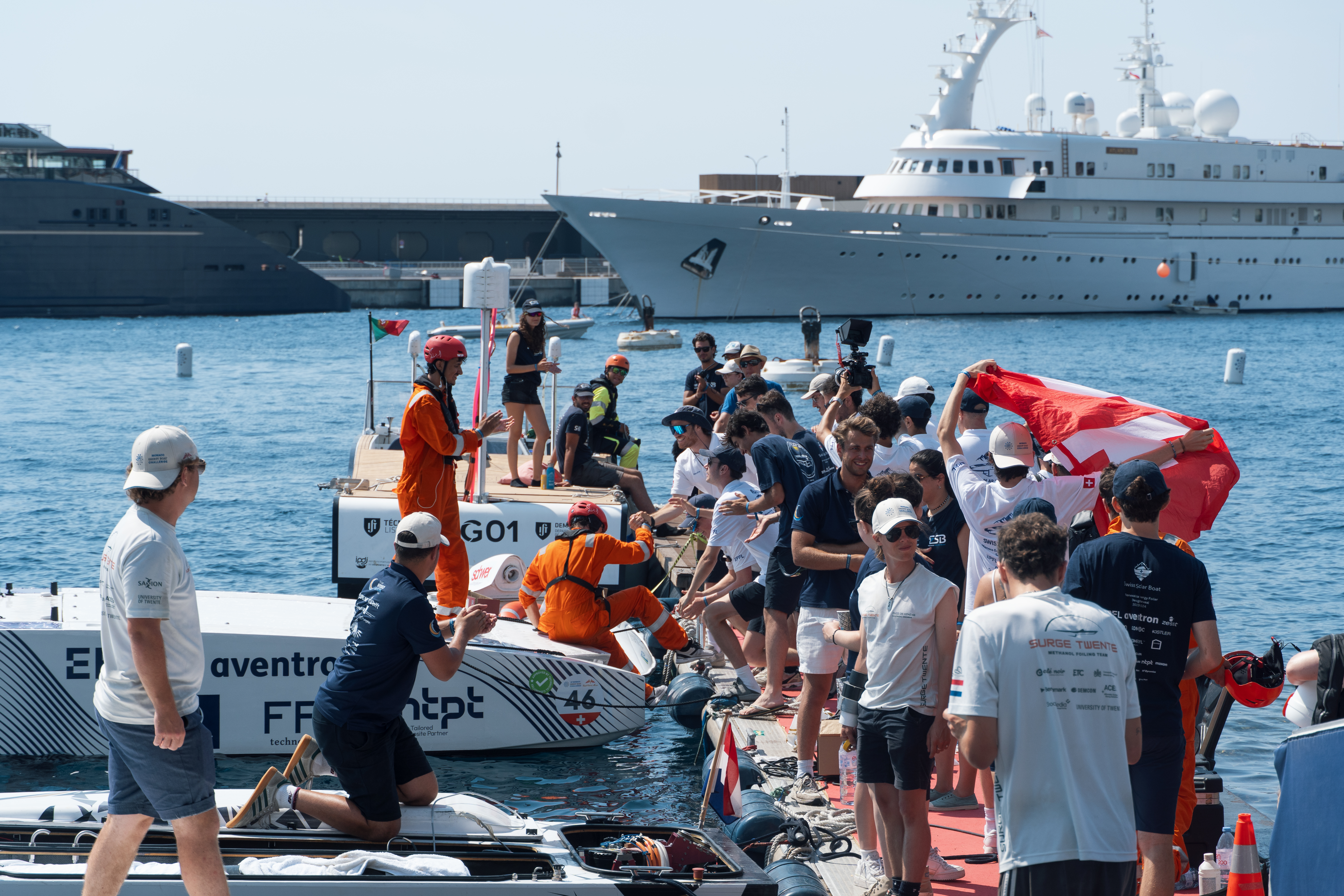
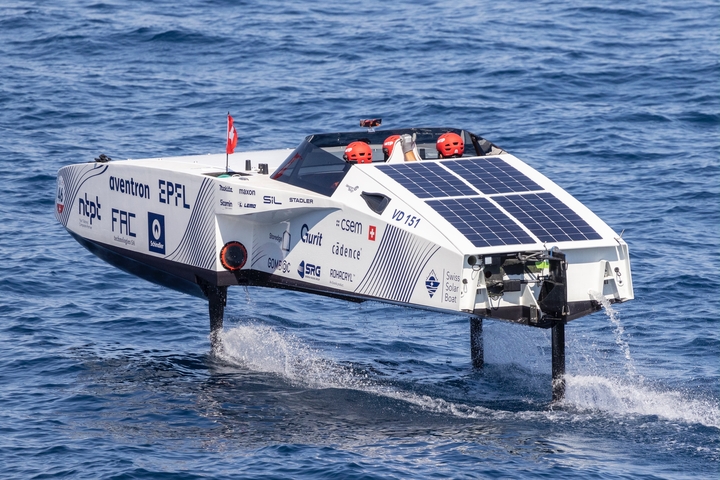
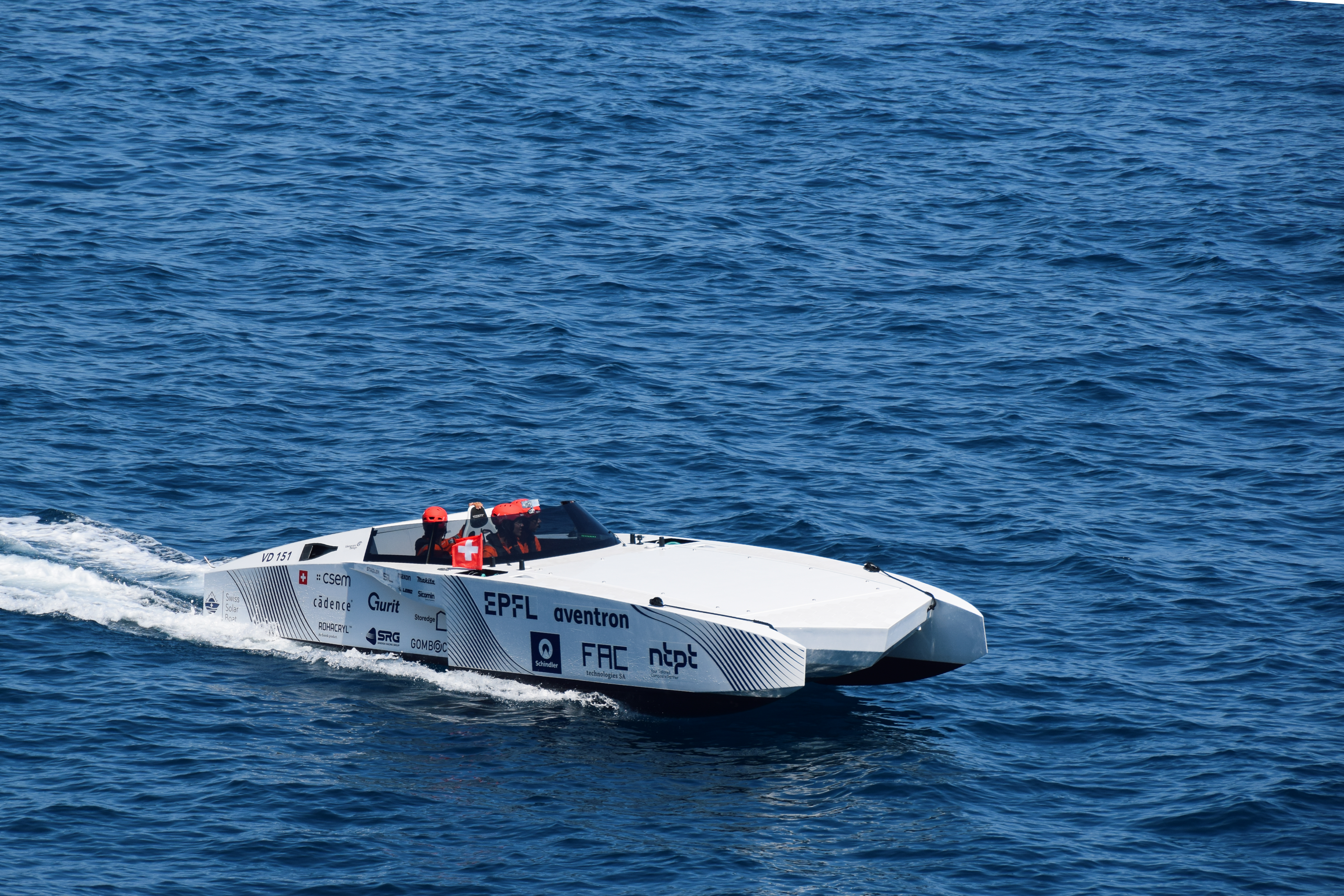
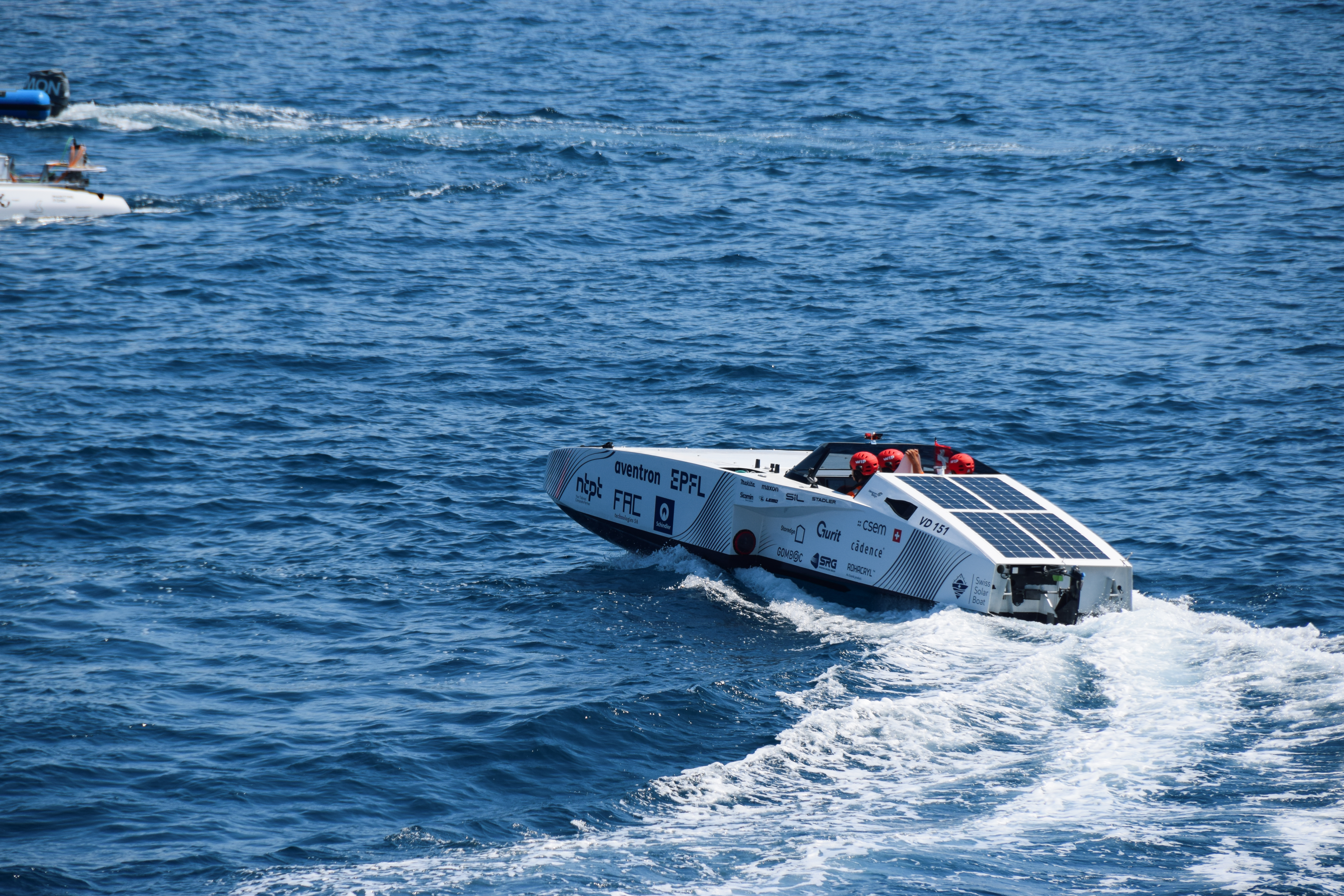
There was barely time to return to the dock before the traditional Boat Parade began. Every team gathered outside Monaco’s harbour to showcase their boats, creating one of the most iconic moments of the event. Seeing the Lobst’Air sailing alongside all the other prototypes was a proud moment, and we have to admit, she looked pretty good out there.
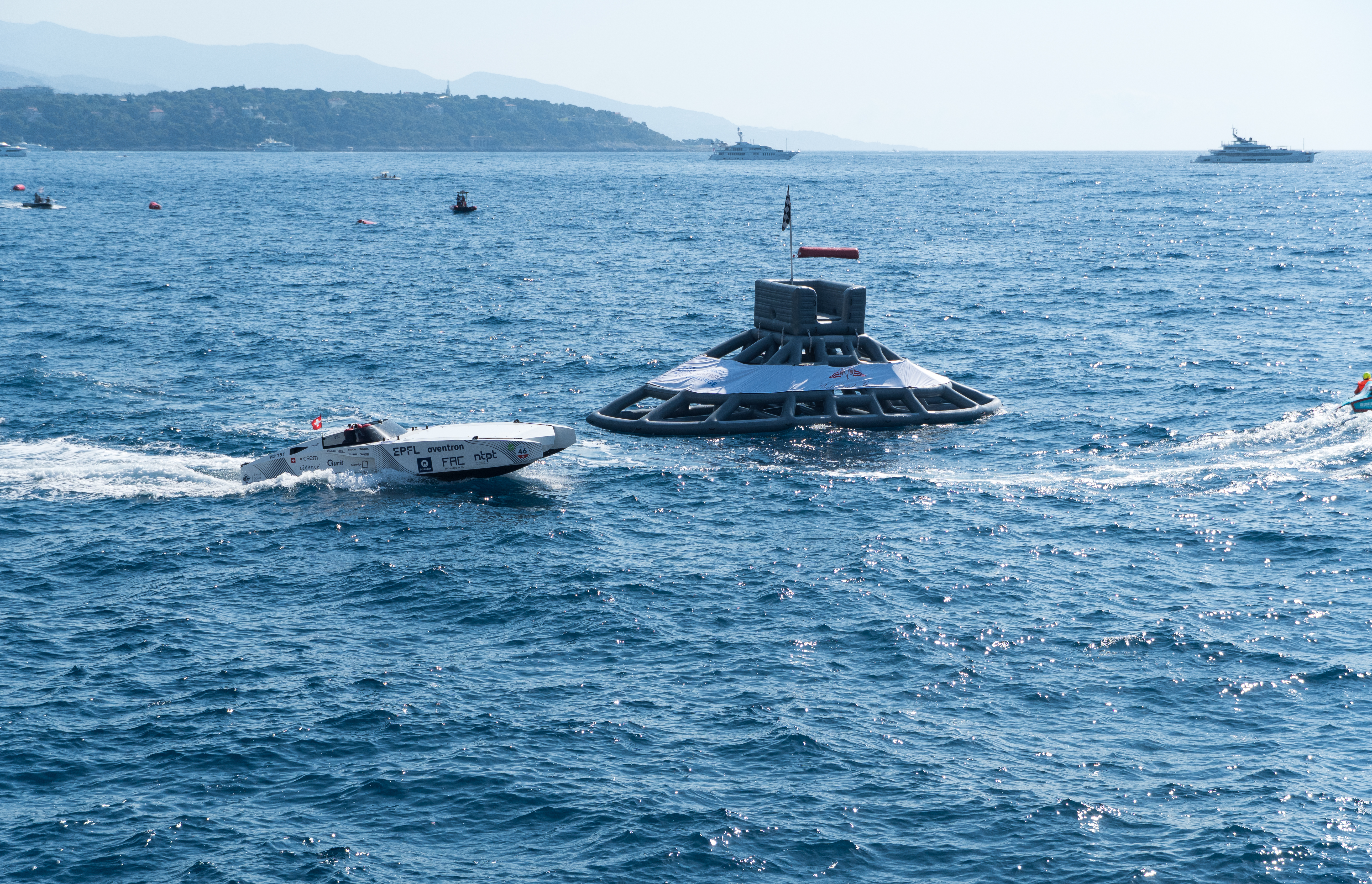
After lunch, it was finally time to race. Our first challenge was the Maneuverability Event, where precision is just as important as speed. The objective is simple on paper: complete a technical course through a series of buoys as quickly and accurately as possible. Our drivers delivered a very clean run, leaving us with a good feeling, but at that point, only the final rankings would tell us how competitive we really were.
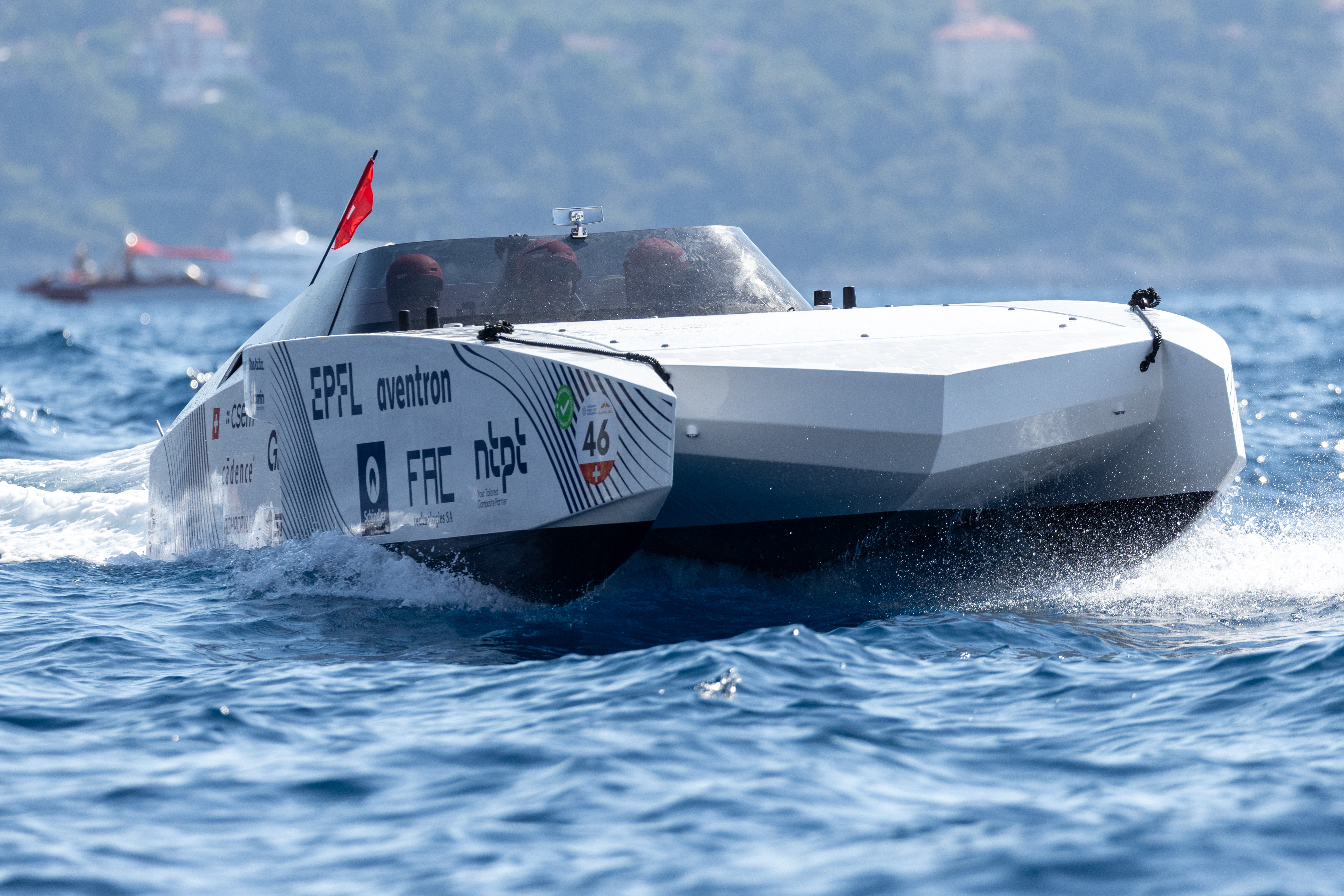
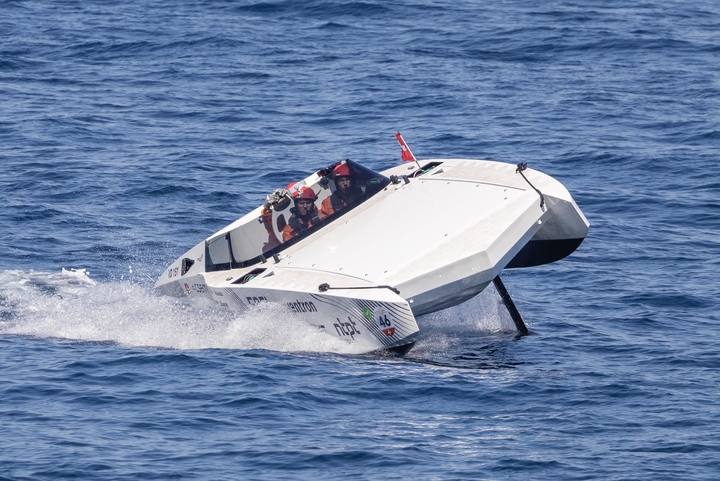
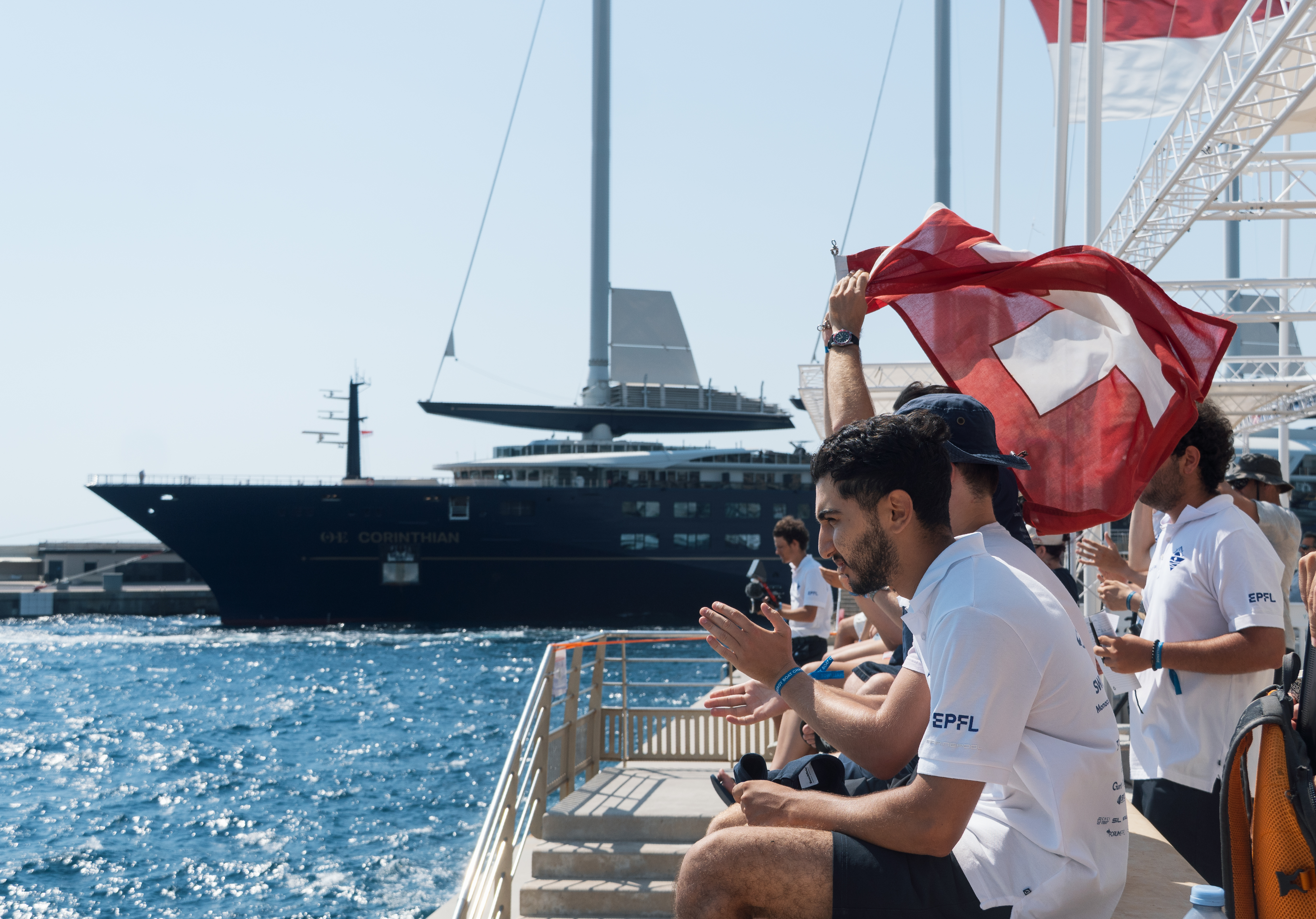
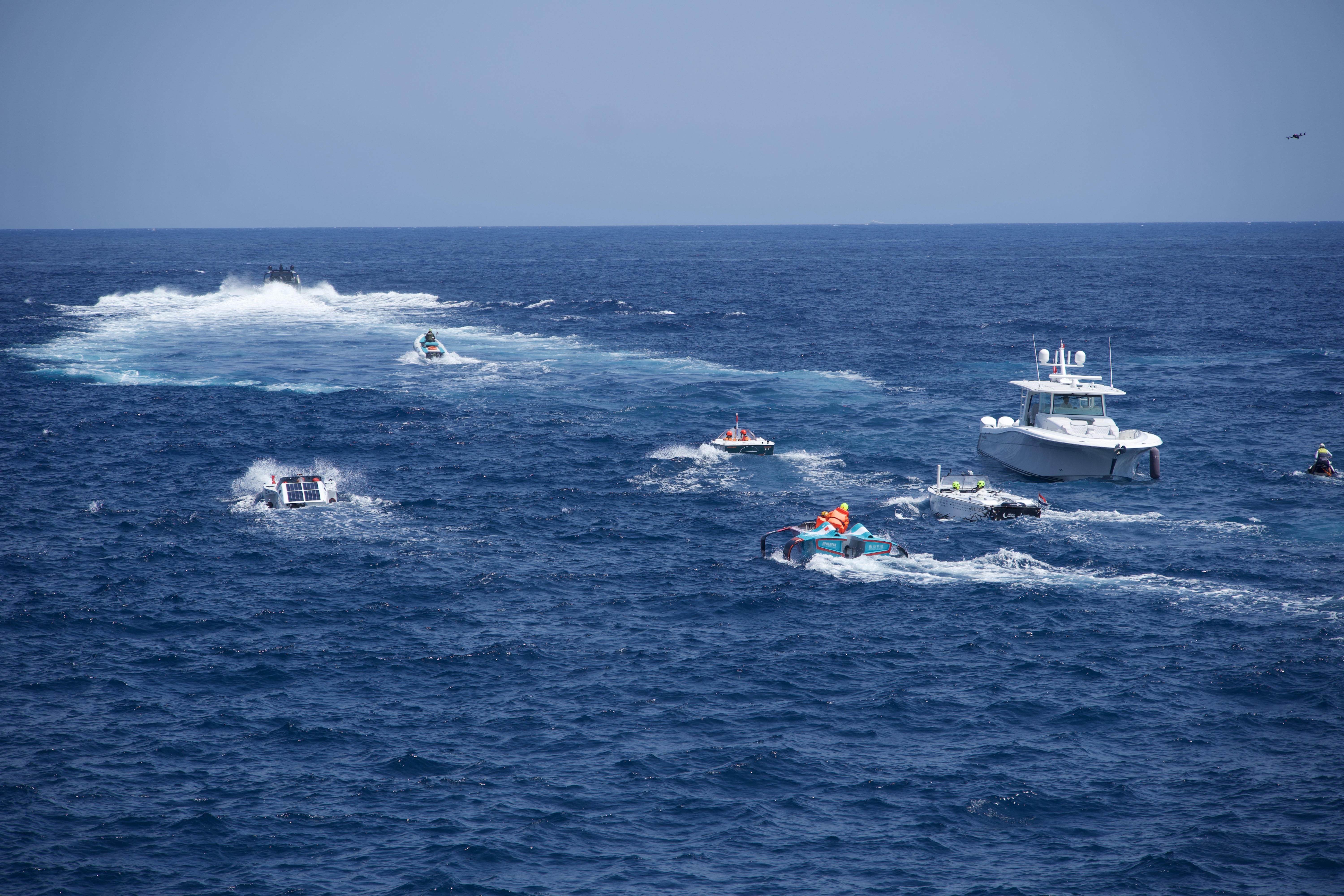
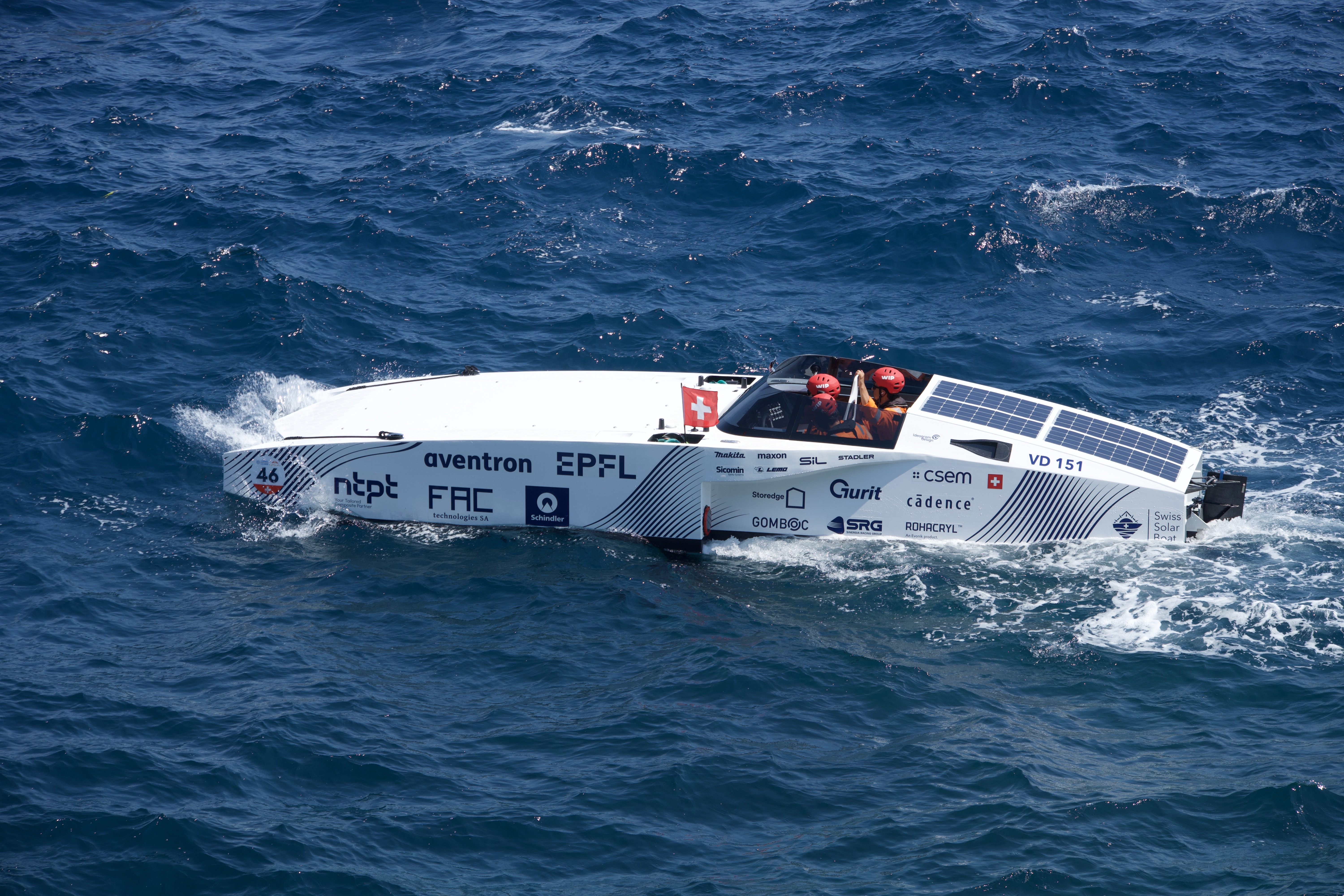
Shortly afterwards came the Speed Record. The course consists of two 500-metre straights between buoys, with two round trips allowed to set the fastest average speed. During the first run, the boat successfully lifted onto its foils several times before touching back down and losing precious seconds. The return run was much more consistent, although another unstable landing interrupted the flight. The waves in Monaco are a very different challenge compared to the calm waters of Lake Geneva, making stable foiling significantly more demanding.
As soon as the boat returned to the dock, the engineering team immediately got back to work, analysing the data and searching for every possible improvement before the next races.
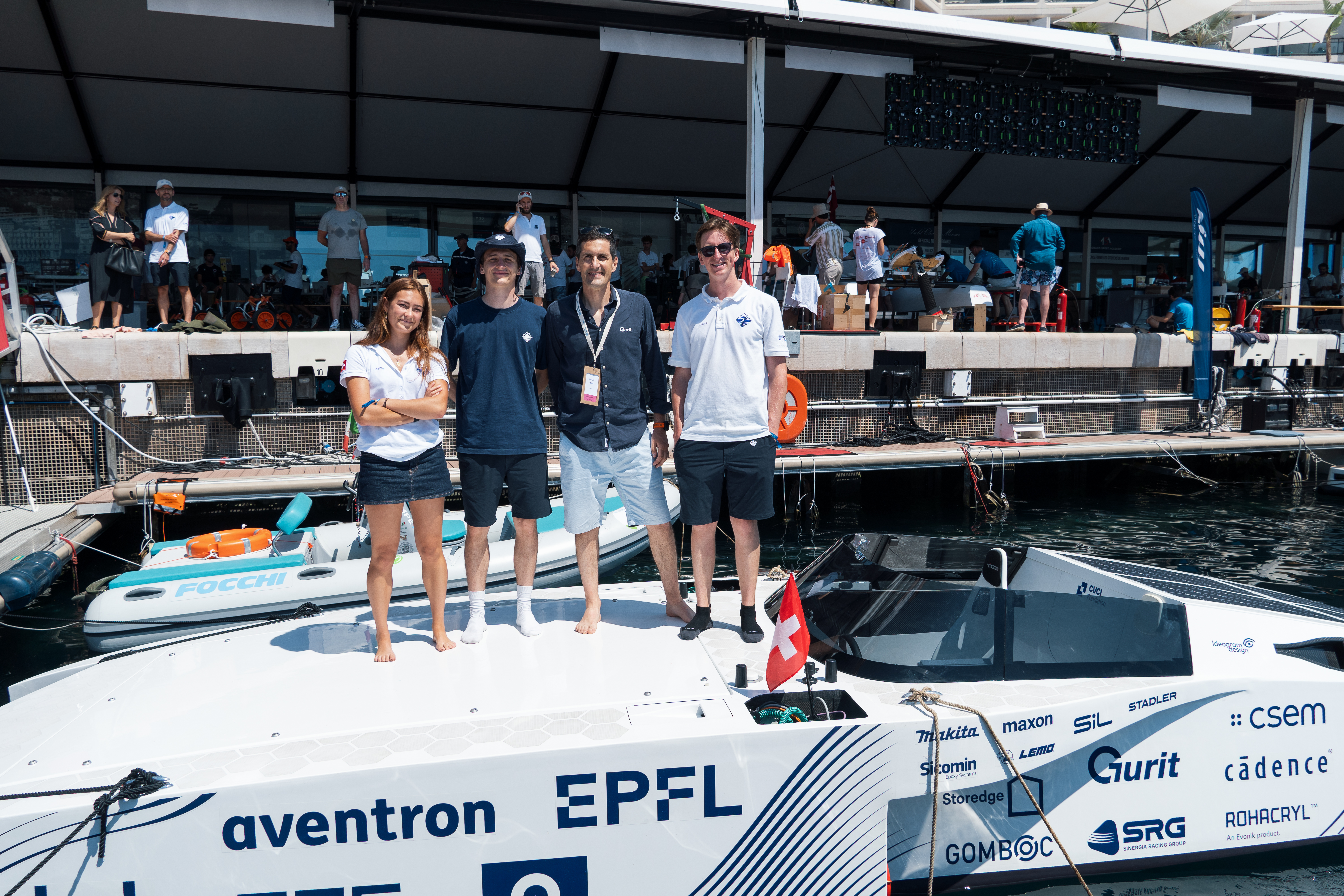
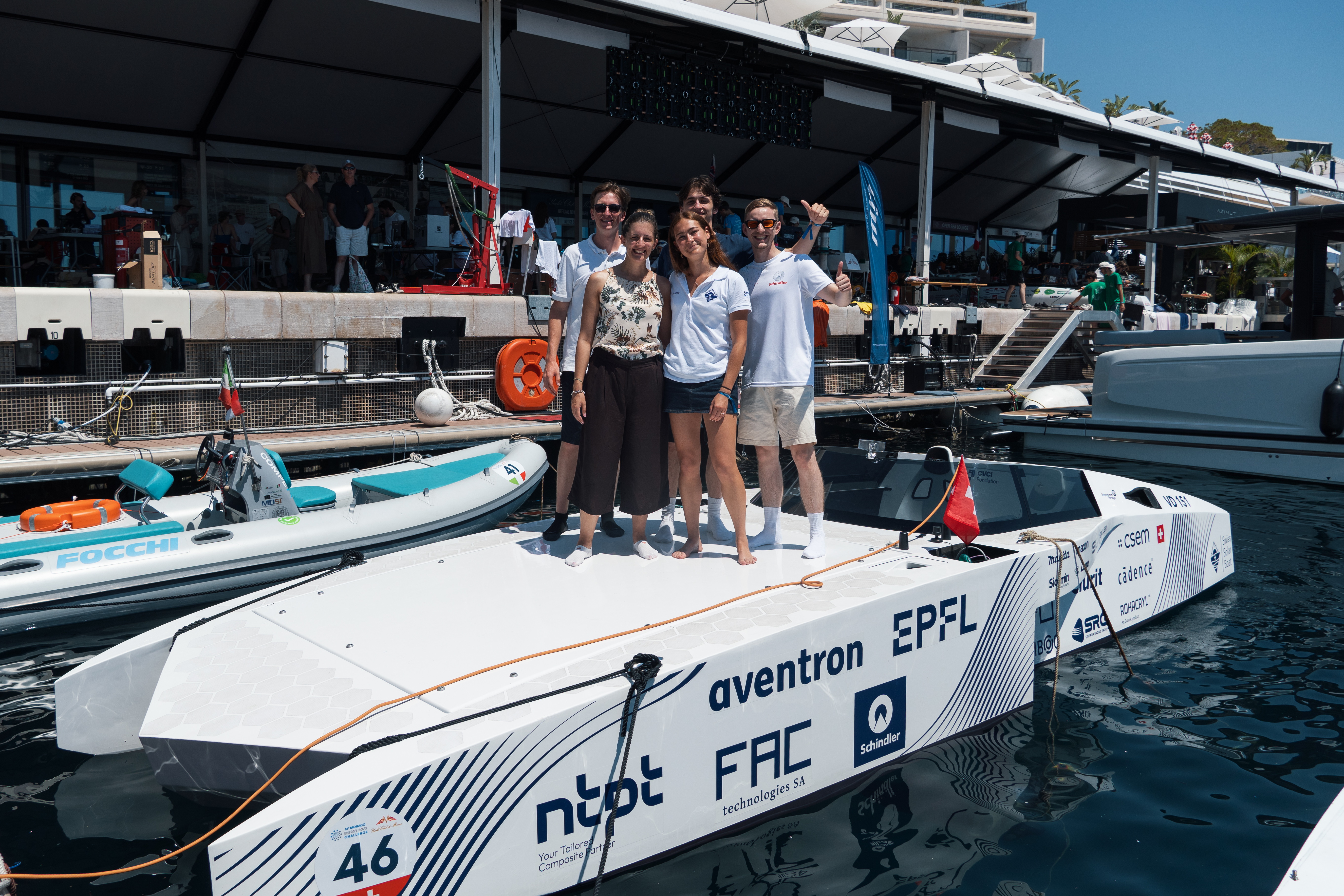
Throughout the day, we also had the pleasure of welcoming two of our partners, Gurit and Schindler, who came to Monaco to discover the project and watch the competition firsthand. It was a great opportunity to present the boat, share our work, and thank them personally for the support they have provided this season. We hope this is only the beginning of a long partnership—and that next time they’ll get to see the Lobst’Air flying even farther.
As evening arrived, the first official results were announced.
Second place in the Maneuverability Event! A fantastic way to begin the competition, finishing just behind Red Wave. The speed event rankings are still to come.
And then came one of the highlights of the week. This year, the Monaco Energy Boat Challenge introduced an E-Championship, where teams compete in a boat racing simulator. Before each race, every participant receives the same virtual budget to optimise their boat, forcing them to make strategic engineering decisions before taking to the virtual water. Representing Swiss Solar Boat was Adrien, only 14 years old. For the past six months, Adrien has been preparing meticulously for this competition alongside his father, our academic supervisor. Together, they analysed every race, developed strategies for each possible scenario, and even built an Excel optimiser to identify the best boat configuration.
The result?
Absolute domination.
Adrien won all four qualifying races, each by a comfortable margin, securing his place in tomorrow’s final in spectacular fashion. Watching a 14-year-old outperform competitors from universities around the world was a pure dinguerie as we say in French.
Tomorrow promises to be another huge day, with the long-distance race to Ventimiglia and two Technical Talks on Eco-Design and Boat Design, where we’ll present months of engineering work to the jury.
Some team members will finish the evening watching the France–Morocco football match… although there may be a small internal rivalry, as our teammate Ali is proudly supporting Morocco. Let’s just hope tomorrow morning everyone is still friends!
The competition has only just begun, and the biggest challenges are still ahead.
GO TEAM!
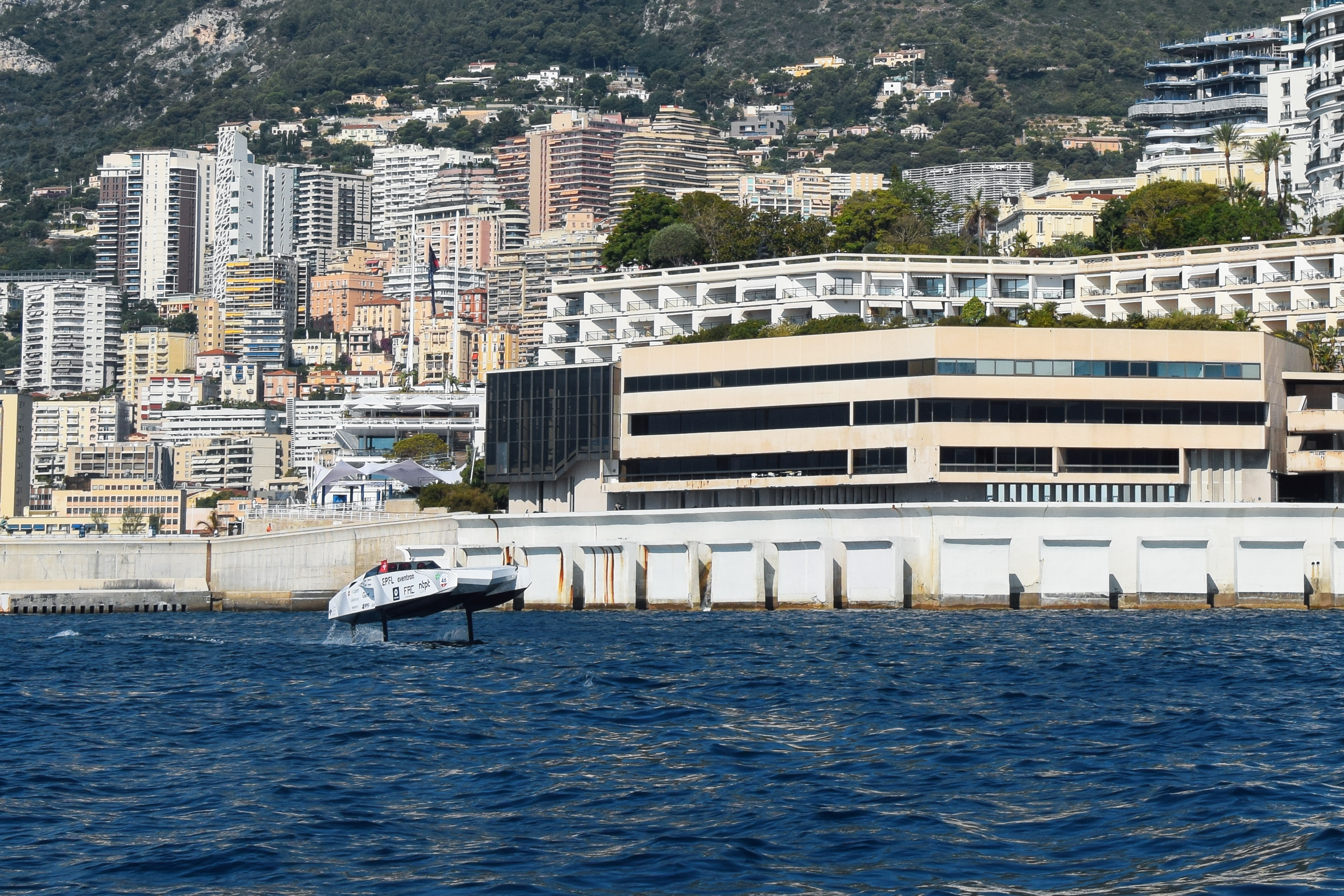
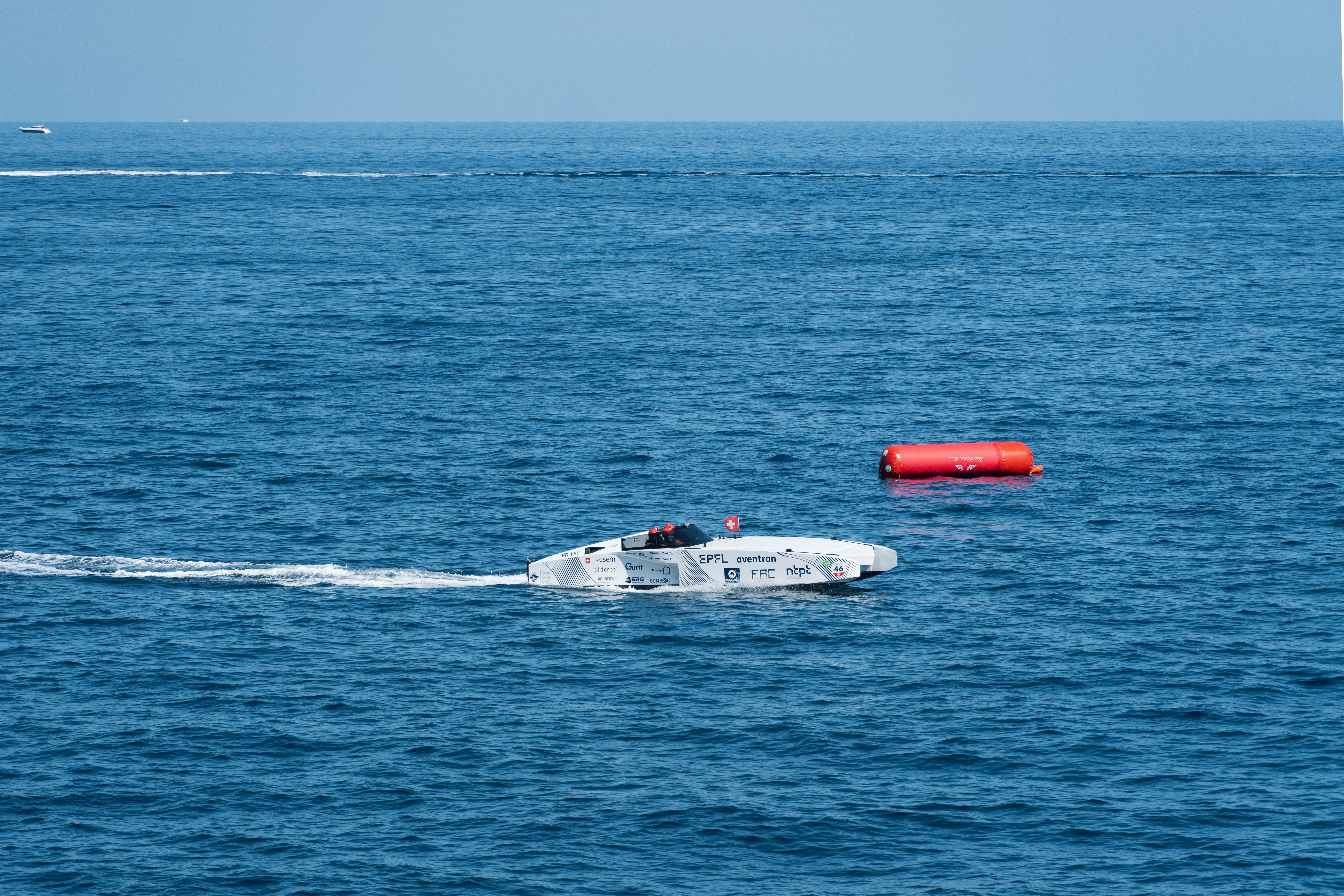
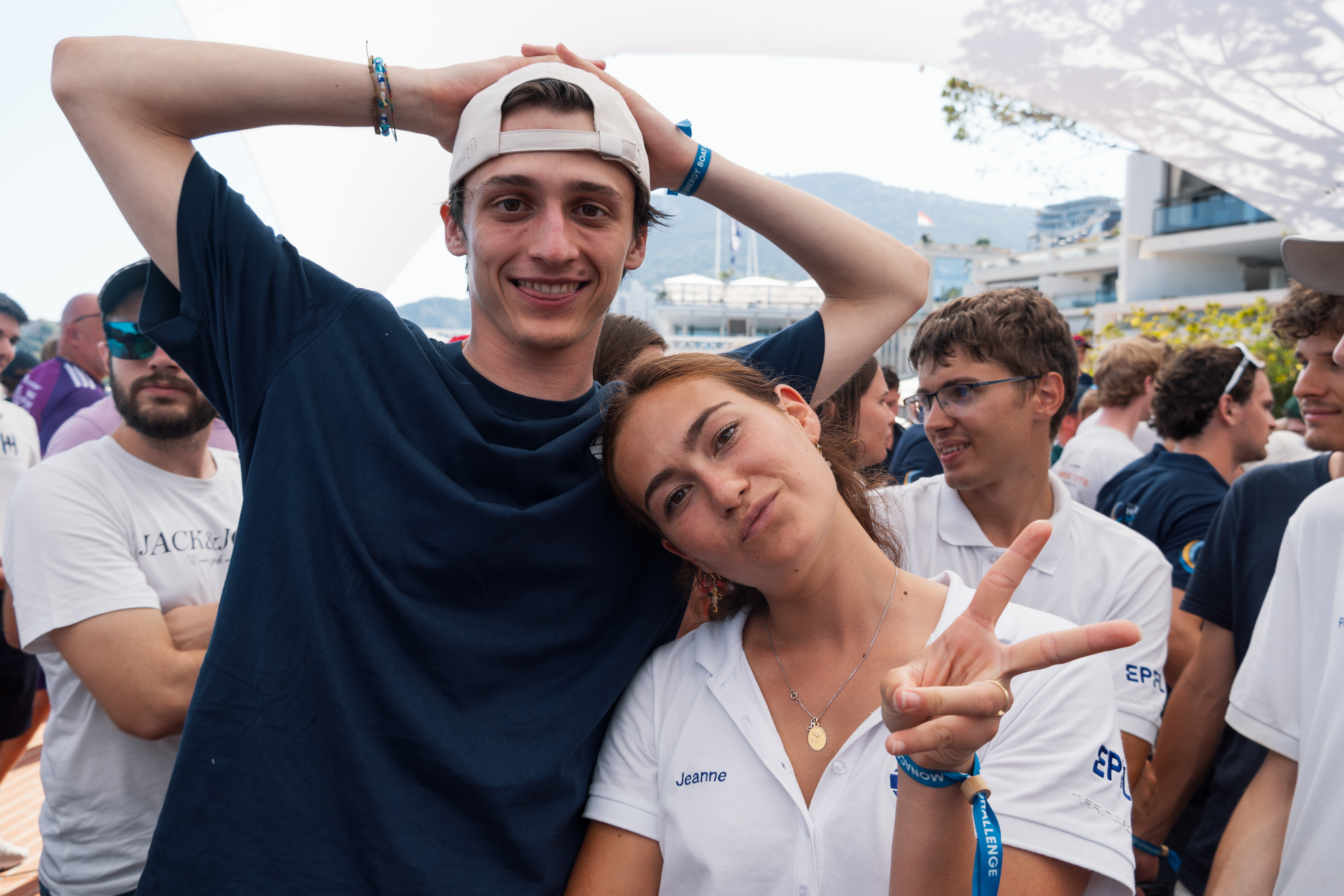
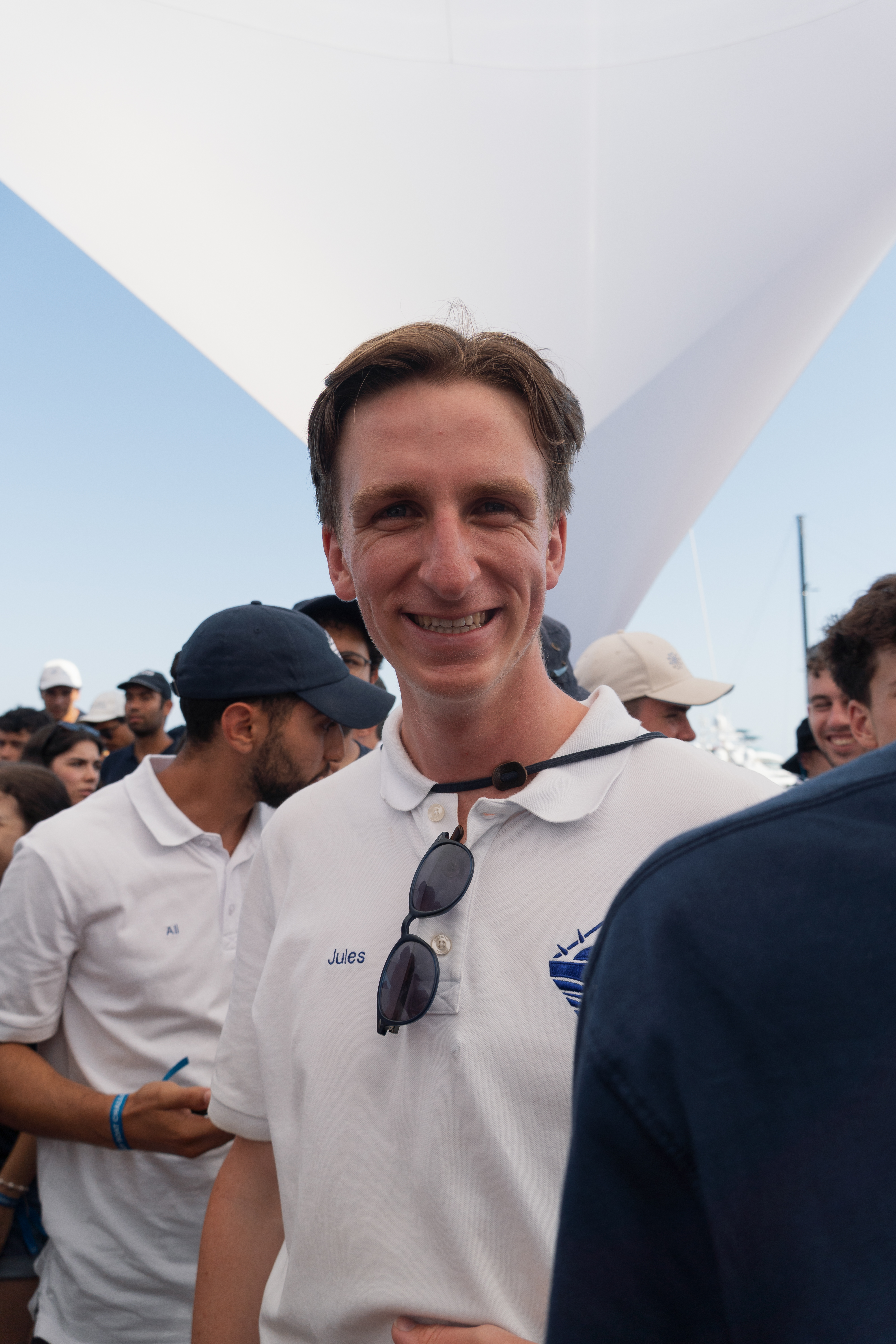
Day 5 — Friday, July 10
Daily Recap #5 – Engineering Never Stops
Compared to the previous days, this morning felt almost relaxing… at least for some of us. While most of the team enjoyed a slightly later start, a small group was already awake at 6:30 AM to refill our hydrogen tank. They even managed to squeeze in a few additional tests on the water, with the sunrise over Monaco providing an unforgettable backdrop.
Back at the Yacht Club around 9:00 AM, everyone focused on preparing for one of the most demanding events of the competition: the offshore race.
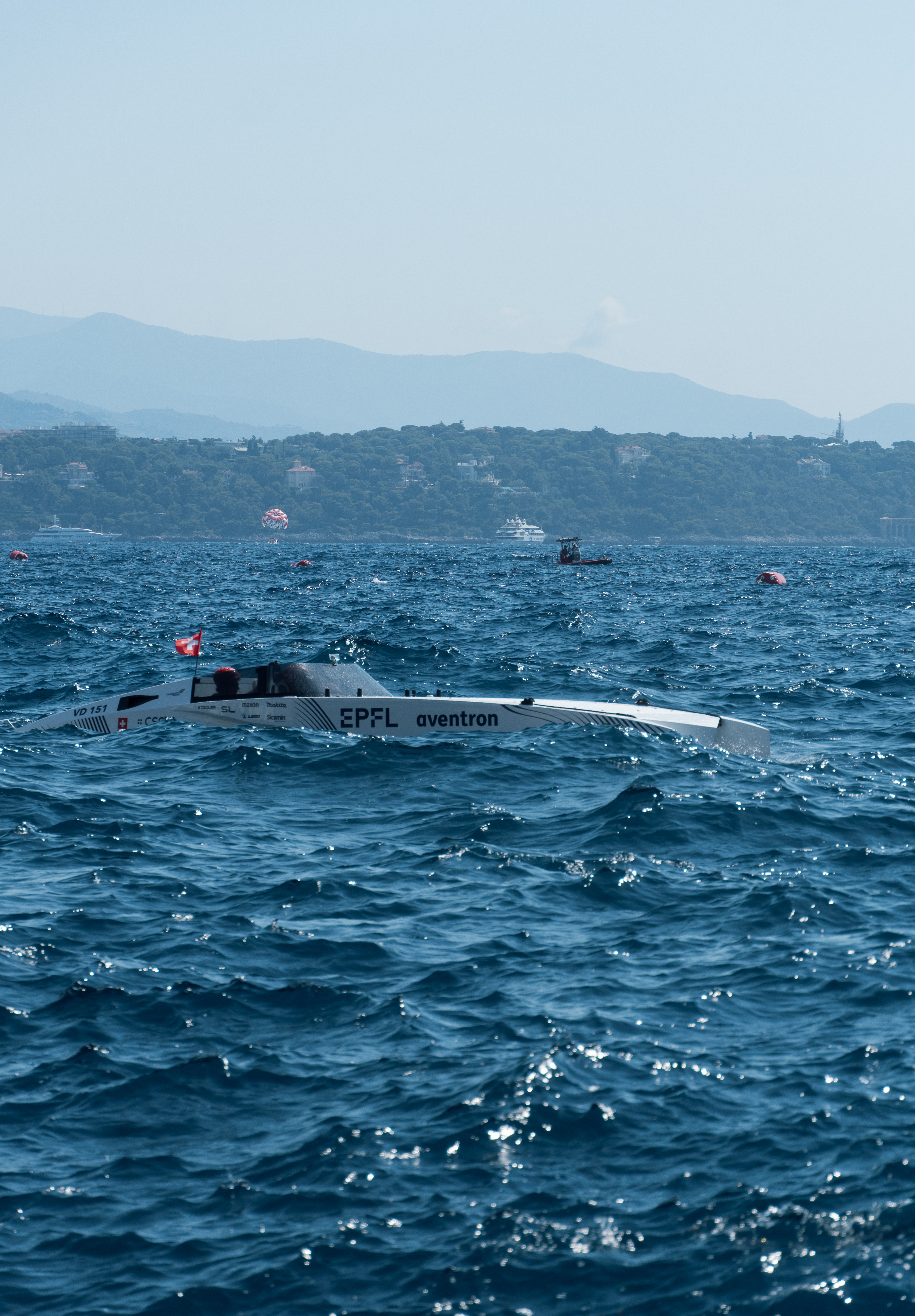
On paper, the challenge is simple : sail 16 nautical miles from Monaco to a buoy near Ventimiglia, on the Italian border, before returning to the harbour. Reality, however, was very different. Strong waves had transformed the Mediterranean into a much tougher environment than our usual testing conditions on Lake Geneva. Shortly after the start, our boat triggered an emergency shutdown and immediately stopped. Safety always comes first, so the boat was towed back to the harbour before the race could continue. It was a disappointing moment for the whole team, but that’s part of engineering competitions.
The afternoon quickly turned into a technical investigation. The onboard system had detected an insulation fault between the high-voltage battery and ground, a potentially serious issue. Yet once back in the harbour, every measurement looked perfectly normal. Was the sensor affected by the violent sea conditions? Had water entered somewhere it shouldn’t? The team carefully checked every component, taking no shortcuts despite the time pressure. Eventually, the source of the problem was identified. A damaged cable on one of the starboard motors had created an intermittent short circuit, most likely caused by vibrations combined with repeated exposure to salt water. Once the faulty cable was replaced, the issue disappeared.
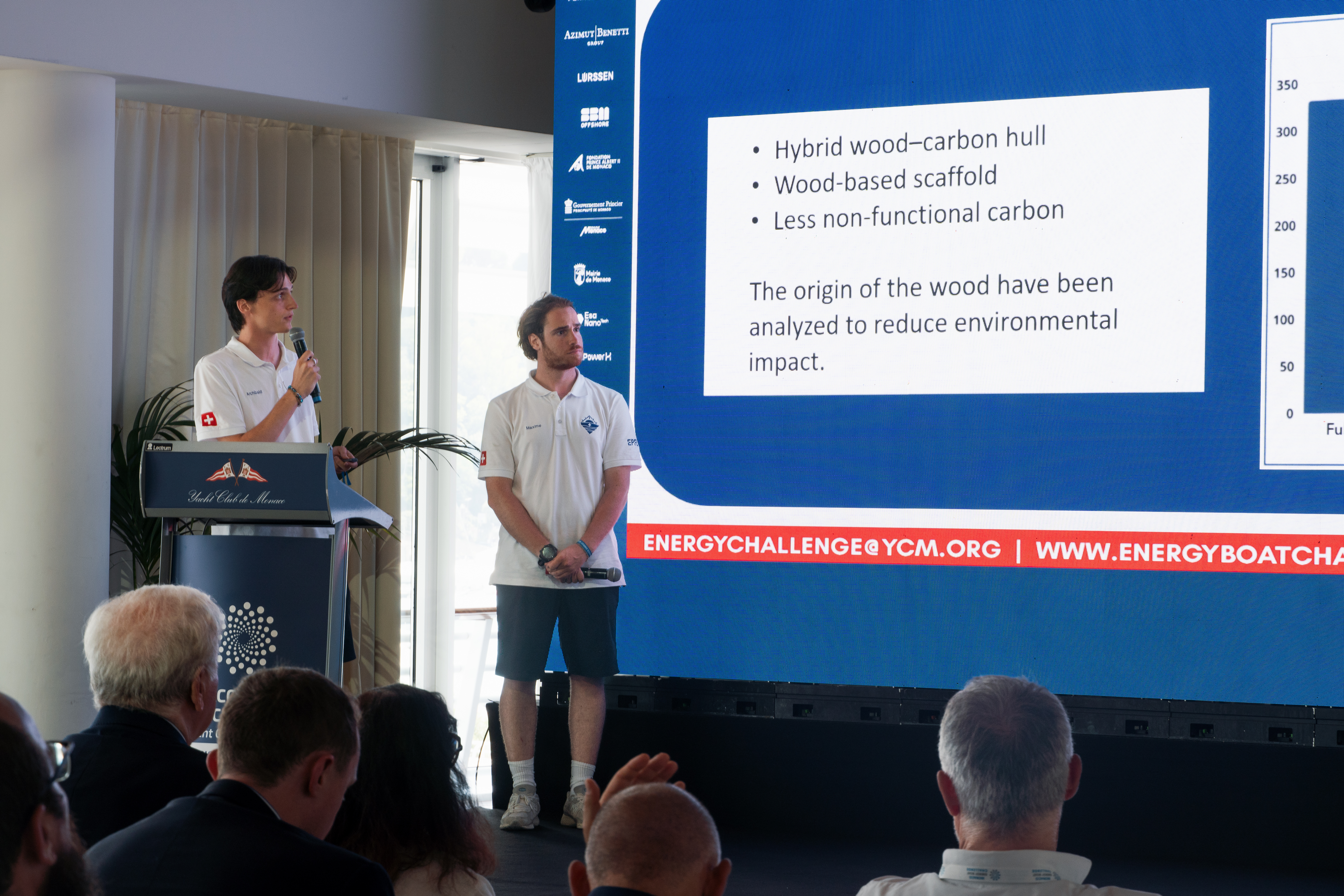
While one part of the team focused on troubleshooting, another represented Swiss Solar Boat during two of the competition’s Technical Talks. The first presentation showcased our approach to eco-design, explaining the innovative manufacturing process developed for the hull. Instead of producing a carbon-fibre mould, we built a wooden scaffold, attached thin marine plywood (Okoumé) directly onto it to define the hull shape, and then completed the composite infusion. This significantly reduced both material use and the environmental footprint of the manufacturing process. The jury seemed interested, and we’re looking forward to the results. The second presentation focused on the boat’s design journey, retracing more than three years of development, from the very first sketches to the successful water tests completed only a few weeks ago. We also shared one of our long-term ambitions: organising a future crossing between Monaco and Calvi, a challenge we hope will inspire the next generations of Swiss Solar Boat students.
The evening brought one more highlight. Our 14-year-old simulator specialist Adrien returned for the final stages of the Monaco Energy Boat Challenge e-Championship. After comfortably winning his semi-final, he reached the Grand Final against the three best remaining competitors. The atmosphere was electric, with races even having to be restarted several times because the software struggled to keep up with the intensity of the competition.
The final result?
Third place out of 22 competitors! An incredible achievement for someone only 14 years old. We’re already looking forward to seeing what he’ll accomplish in the coming years… and perhaps one day as a member of Swiss Solar Boat.
The day ended in a much calmer atmosphere, sharing burgers on the harbour before everyone headed back around 11:00 PM.
Tomorrow will be the final endurance race of the competition.
We’ll be back on the water, determined to finish this incredible week on a high.
GO TEAM!
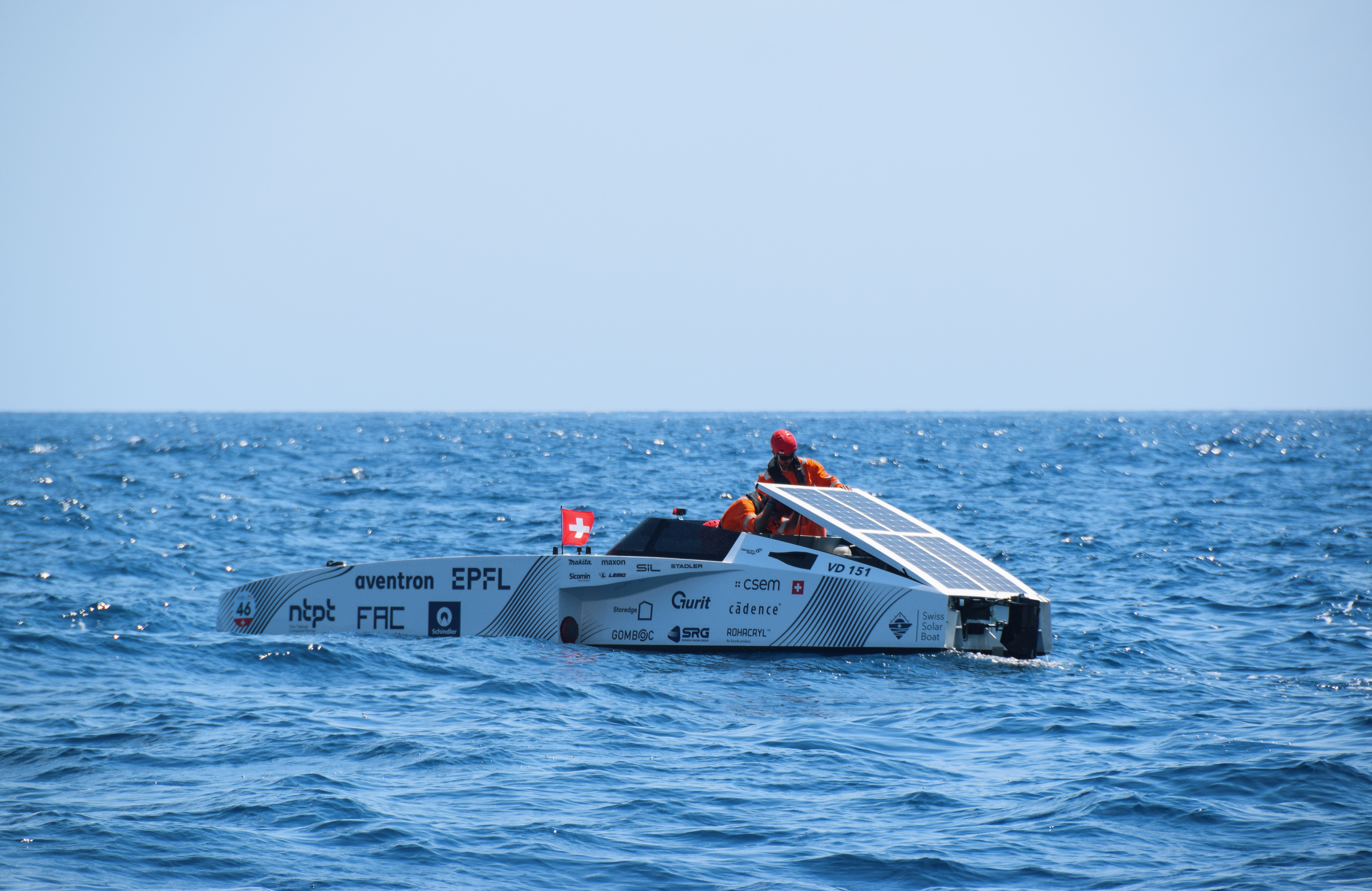
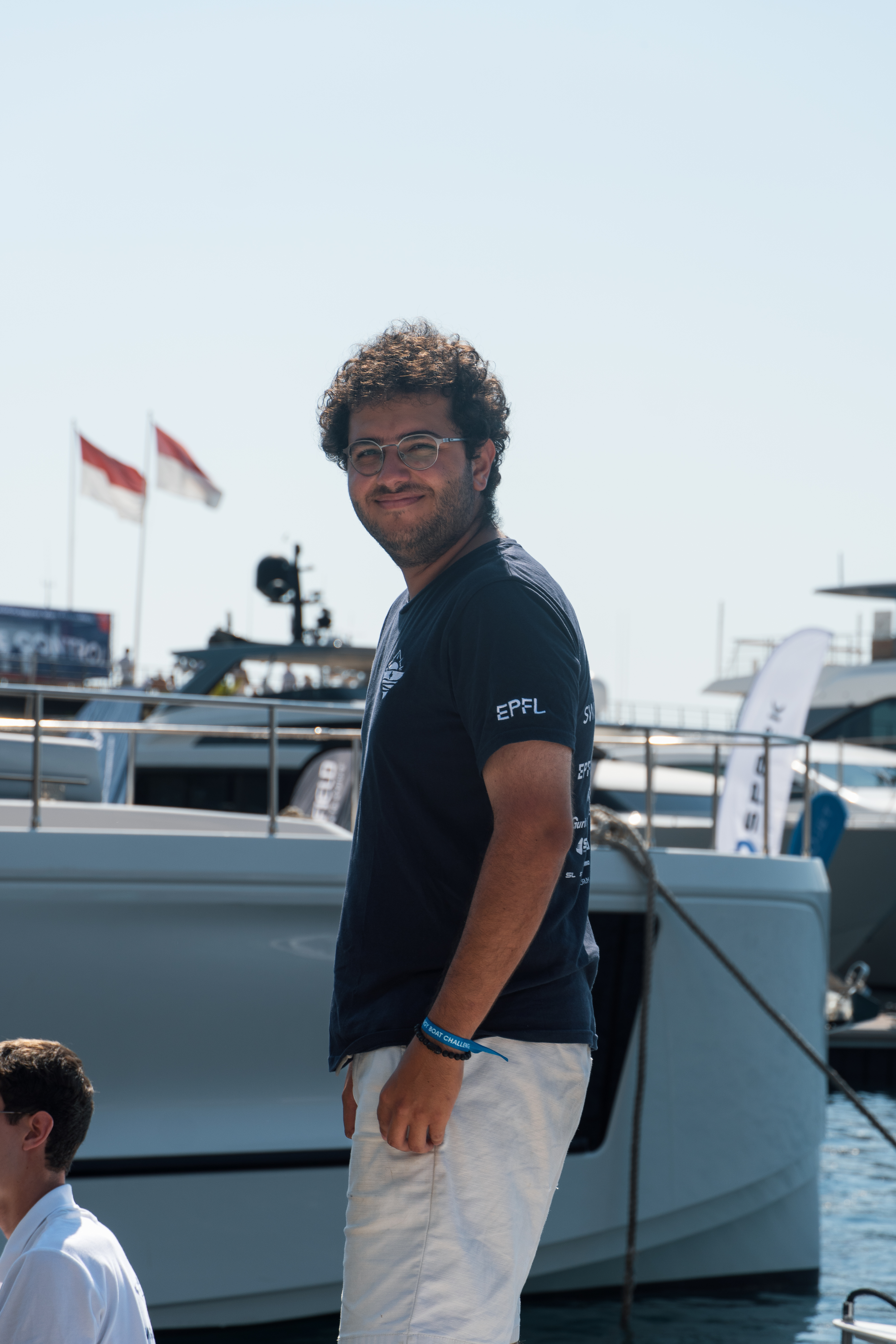
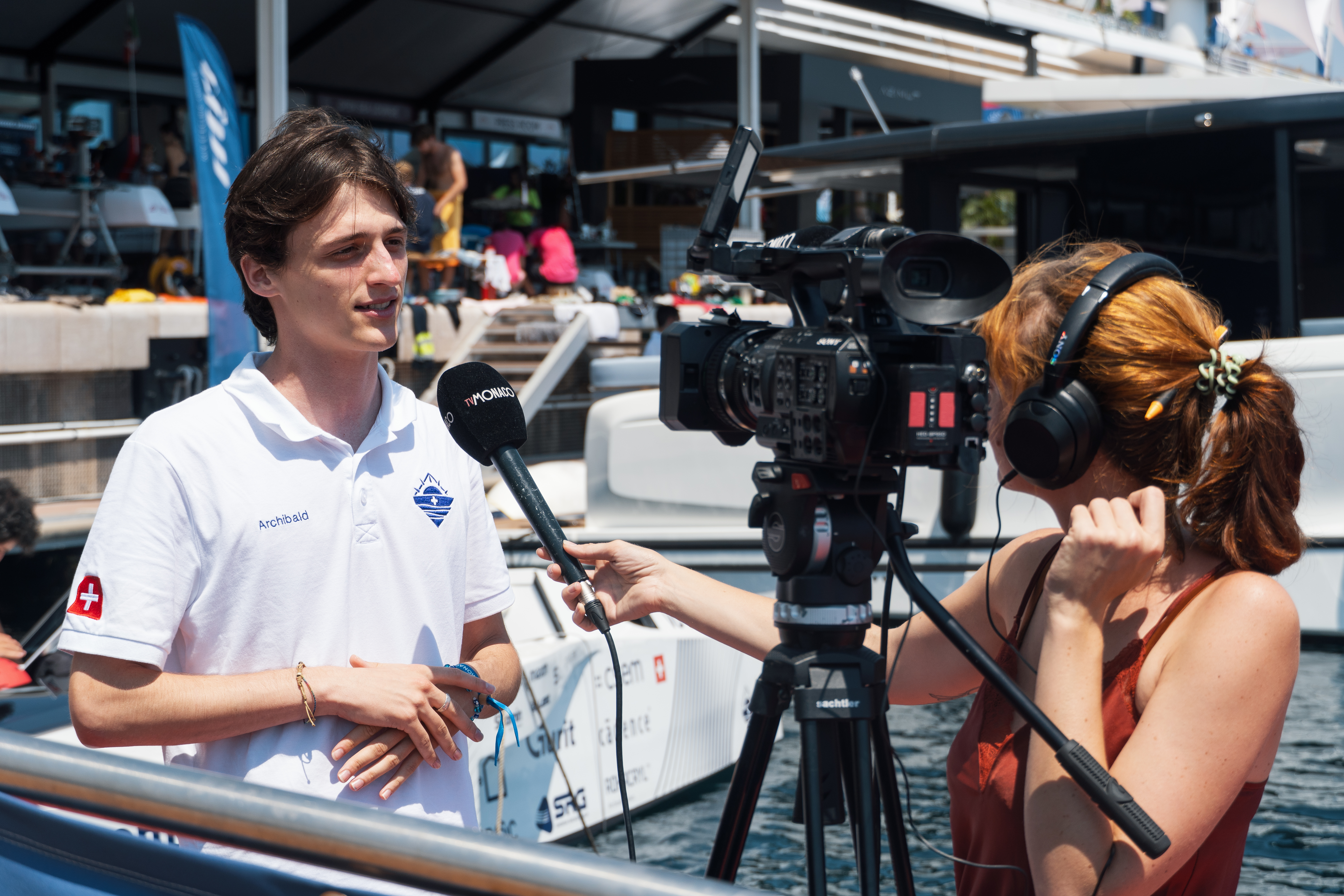
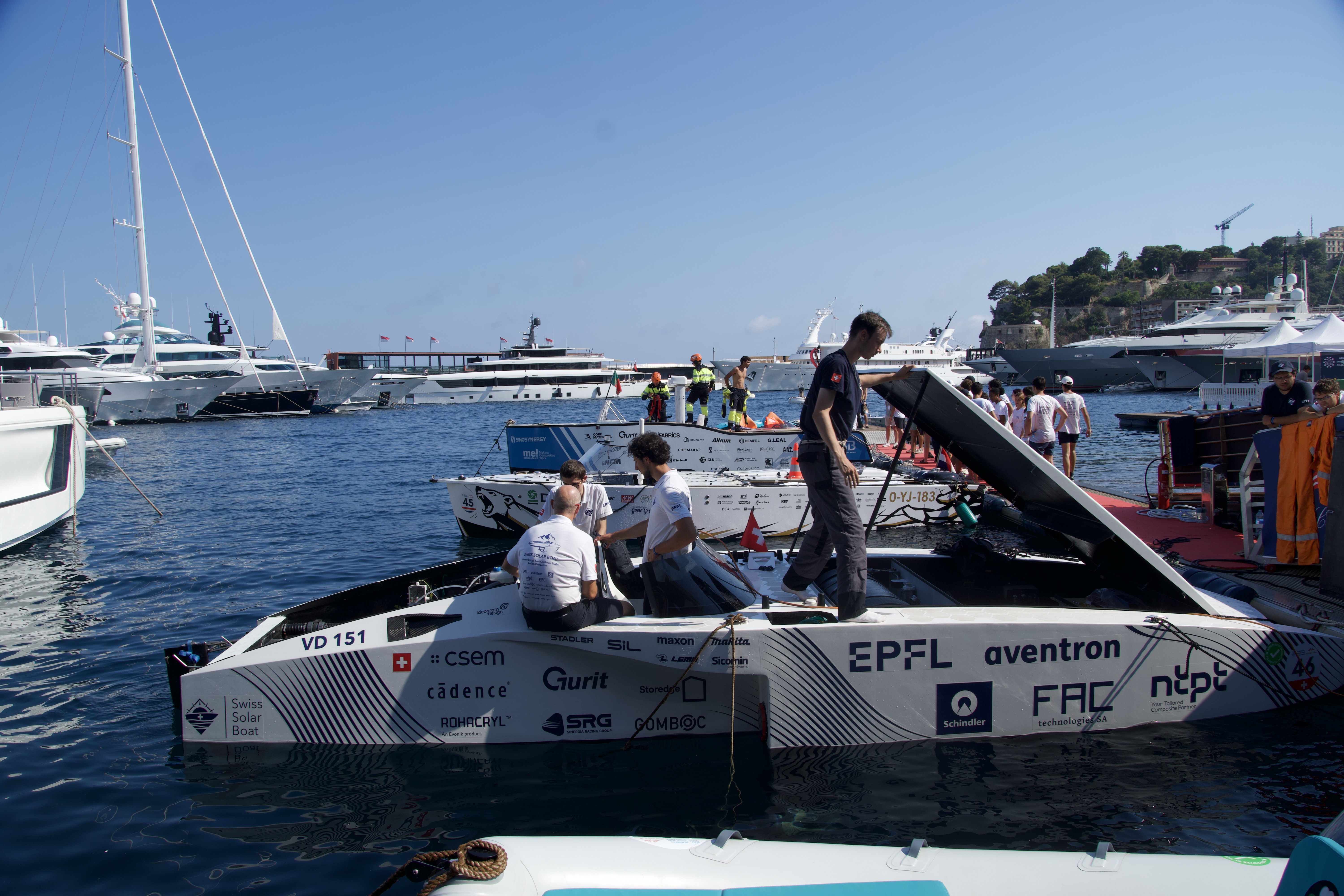
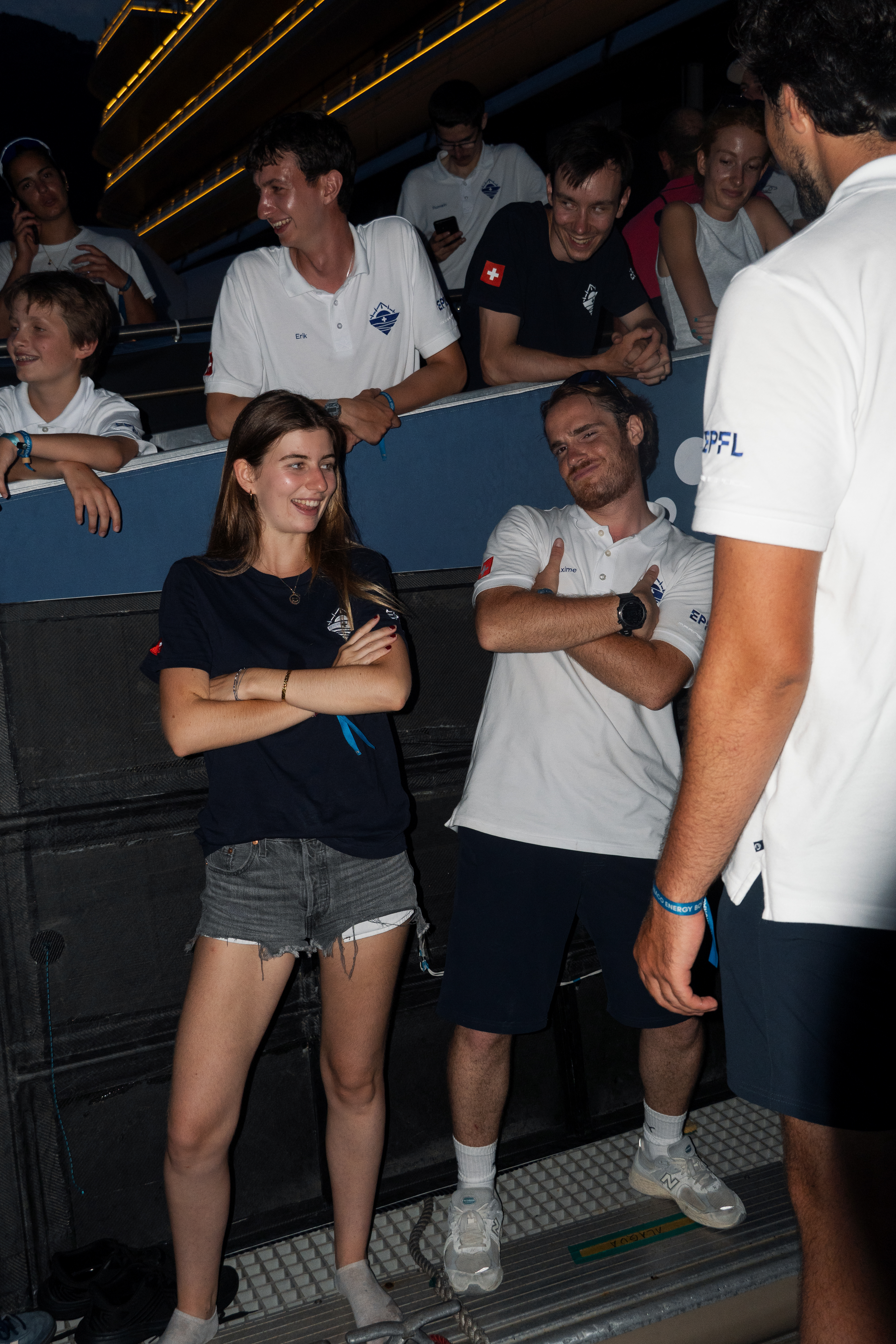
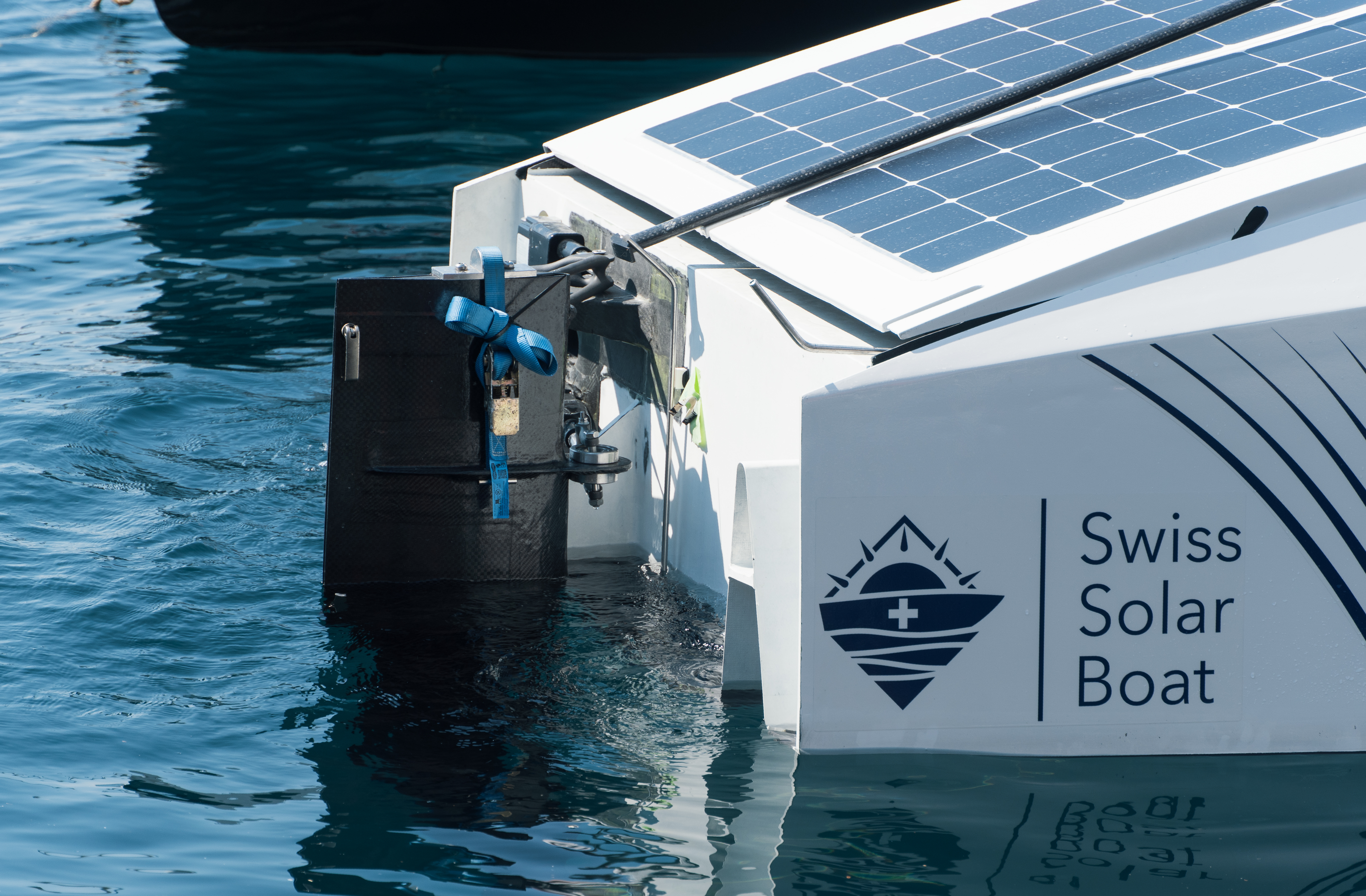
Day 6 — Saturday, July 11
Daily Recap #6 – Champions of the Monaco Energy Boat Challenge 2026!
Saturday marked the final day of the Monaco Energy Boat Challenge, and without a doubt, the most important one.
The previous day, our boat had been forced to retire from the offshore race because of a technical issue. We knew that today had to be different.
The final event was the legendary 3-hour Endurance Race, worth double points in the overall ranking. With the teams extremely close in the standings, today’s result would almost certainly decide the podium in the SeaLab category. The Italian team leading the championship was already out of reach, but second place was still very much within our grasp.
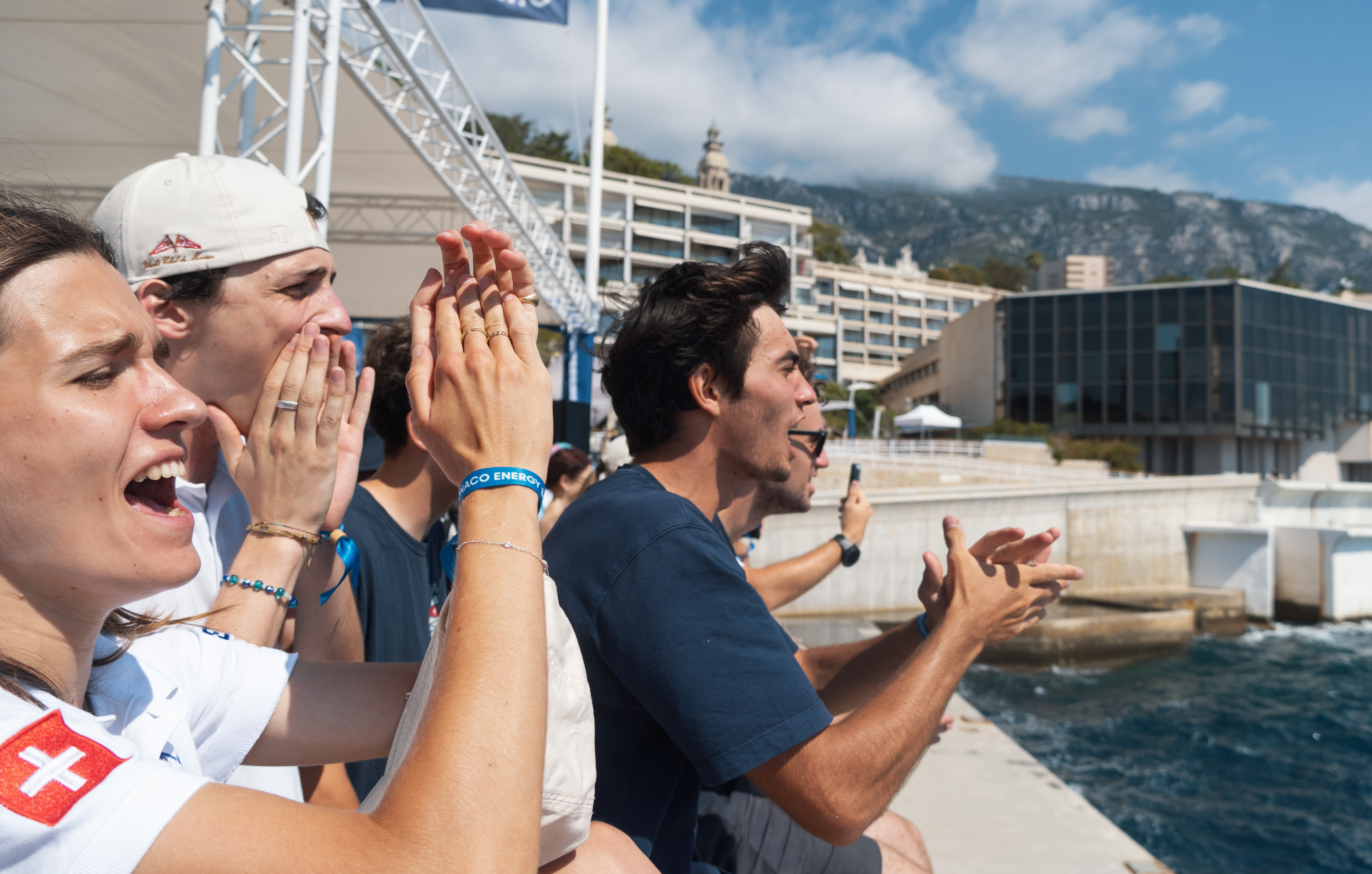
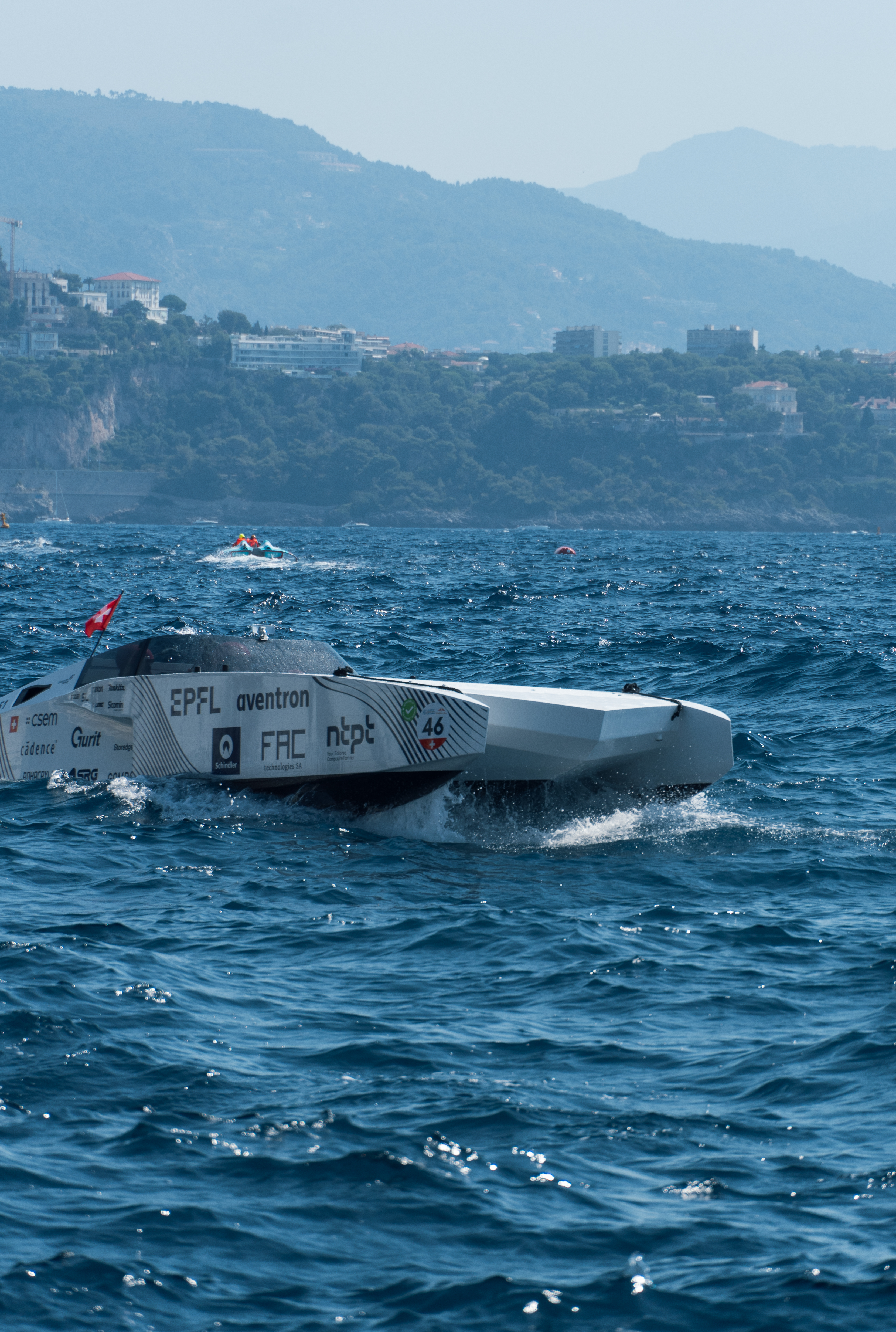
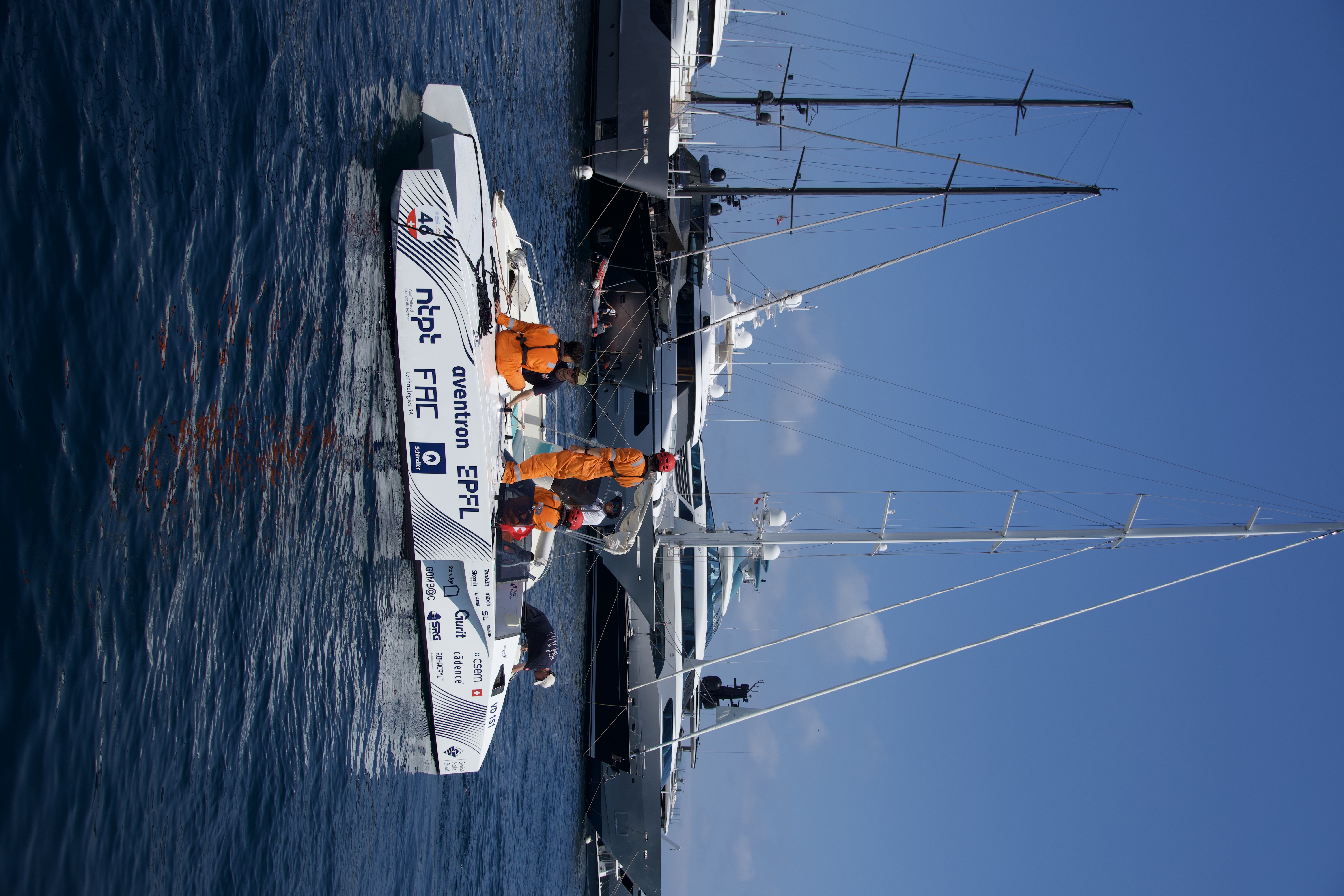
At 9:55 AM, the Lobst’Air lined up on the starting line. After everything that had happened the day before, being there was already a relief for the team. The challenge was straightforward: complete as many laps as possible over three hours on a 500-metre course. The Mediterranean was rough that morning, with powerful waves making every lap a challenge. The boat started strongly, maintaining a speed of around 13 knots, but after about 45 minutes, every supporter held their breath as the Lobst’Air suddenly stopped. The diagnosis came quickly: one motor was no longer responding. Retirement seemed possible once again. Fortunately, our pilot and co-pilots kept their composure. After a short intervention, they managed to continue the race using only a single motor. Progress was slower, and waves were now crashing over the windshield, leaving the entire crew soaked, but they remained focused and determined to keep going. After approximately 1 hour and 15 minutes, the organisers made the difficult but responsible decision to stop the race early as sea conditions had become unsafe. For us, this was actually good news. Our crew could return safely without risking unnecessary damage to the boat, and according to the preliminary rankings, we had finished second in the Endurance Race! With the racing over, it was finally time to look at the bigger picture.
During the Monaco Energy Boat Challenge, four different boat categories compete throughout the week, each with its own rankings. But to become the overall Monaco Energy Boat Challenge Champion, teams must also excel in Technical Talks, communication, and the E-Championship simulator competition. As we ran our own calculations before the awards ceremony, we realised something incredible: we actually had a chance. But so did several other teams, including the defending overall champions from the University of Bologna, who had delivered outstanding performances throughout the week.
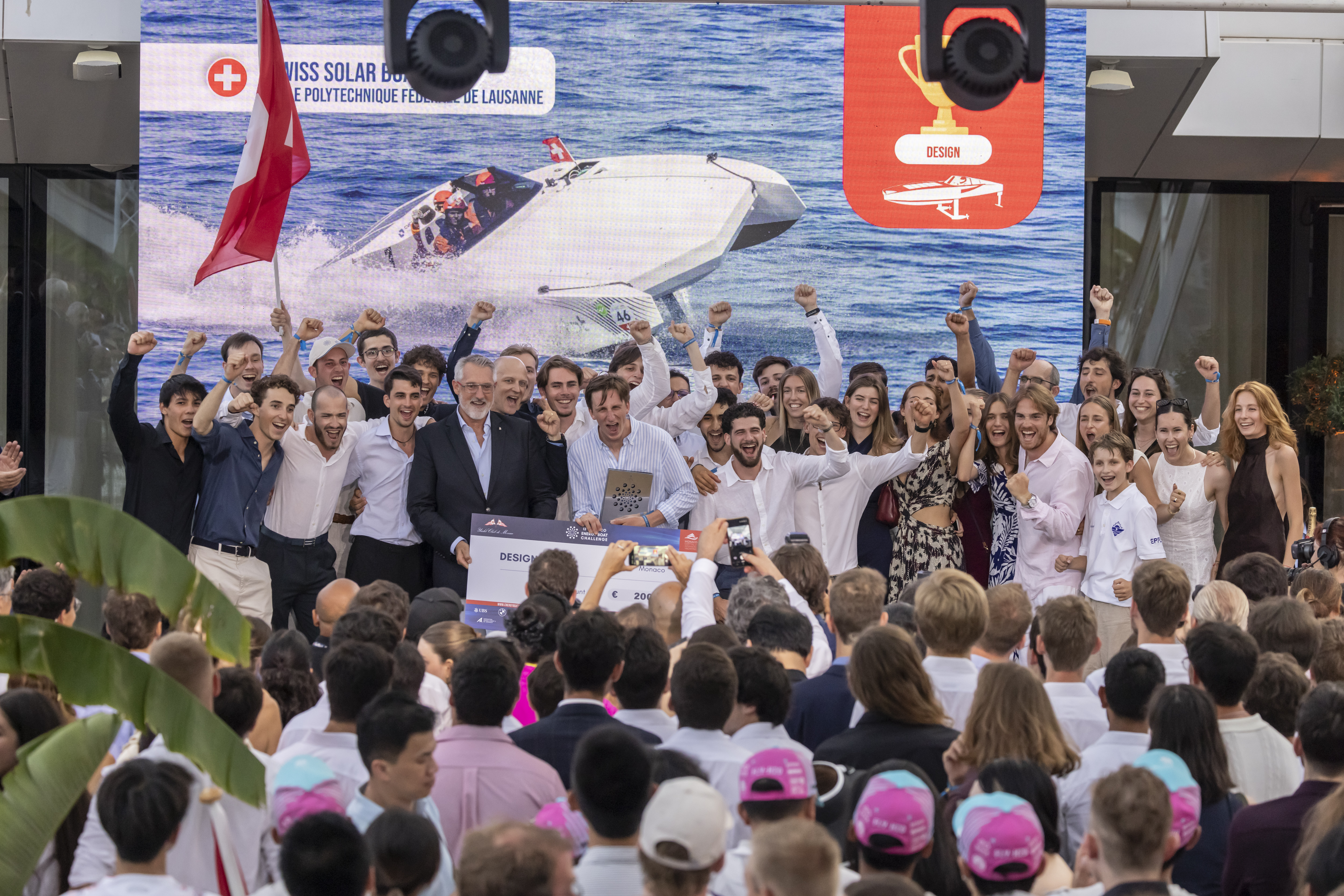
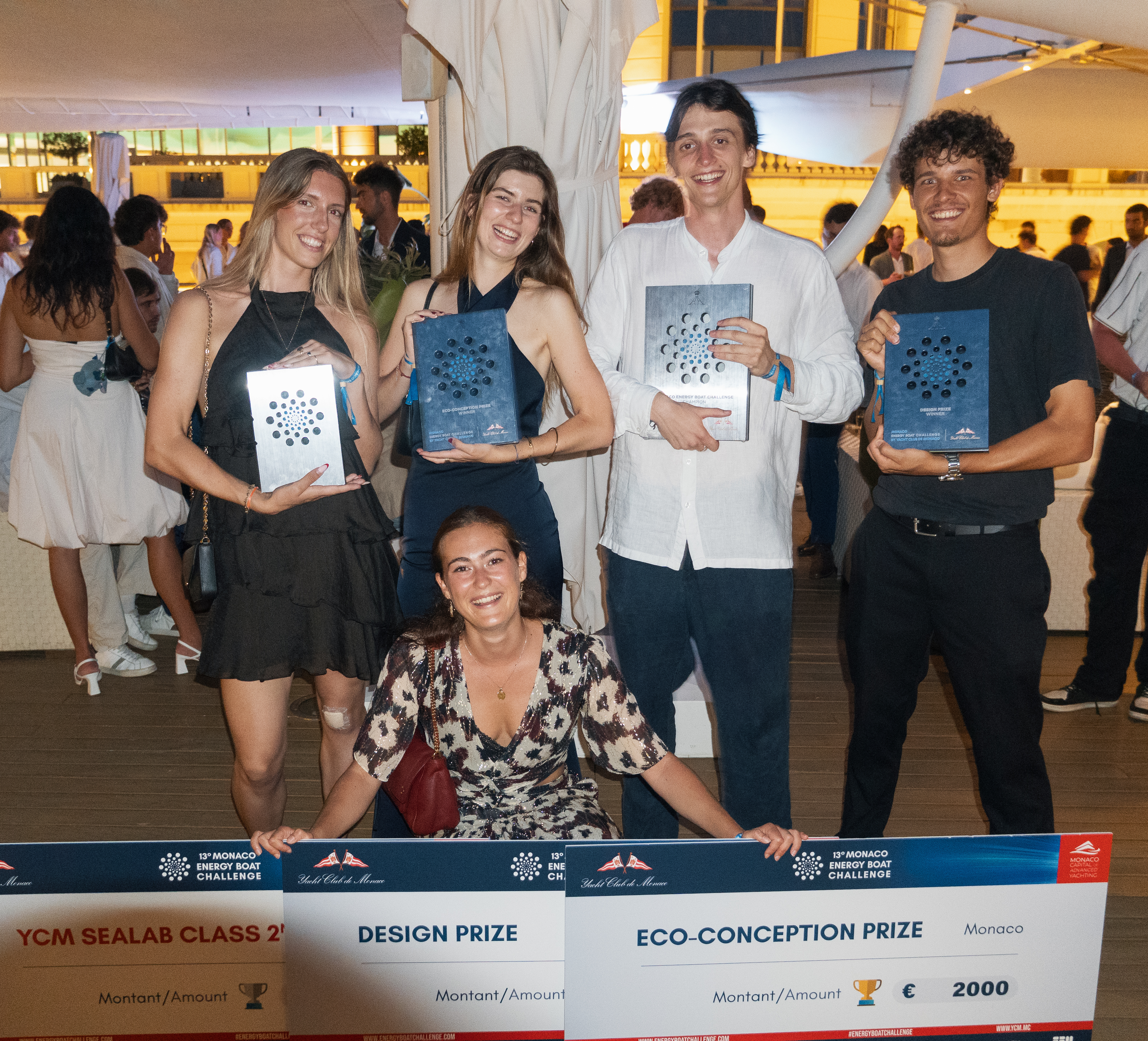
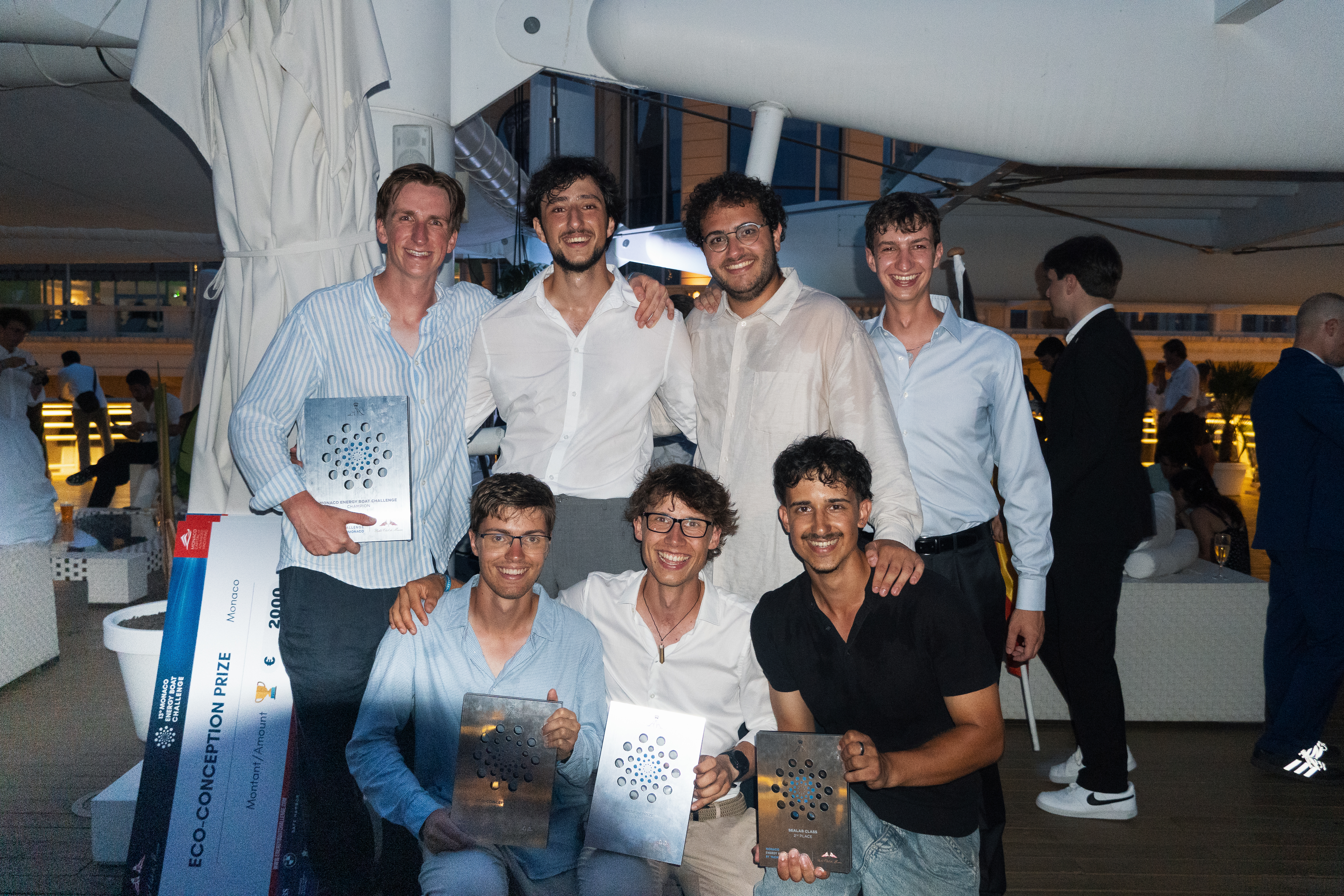
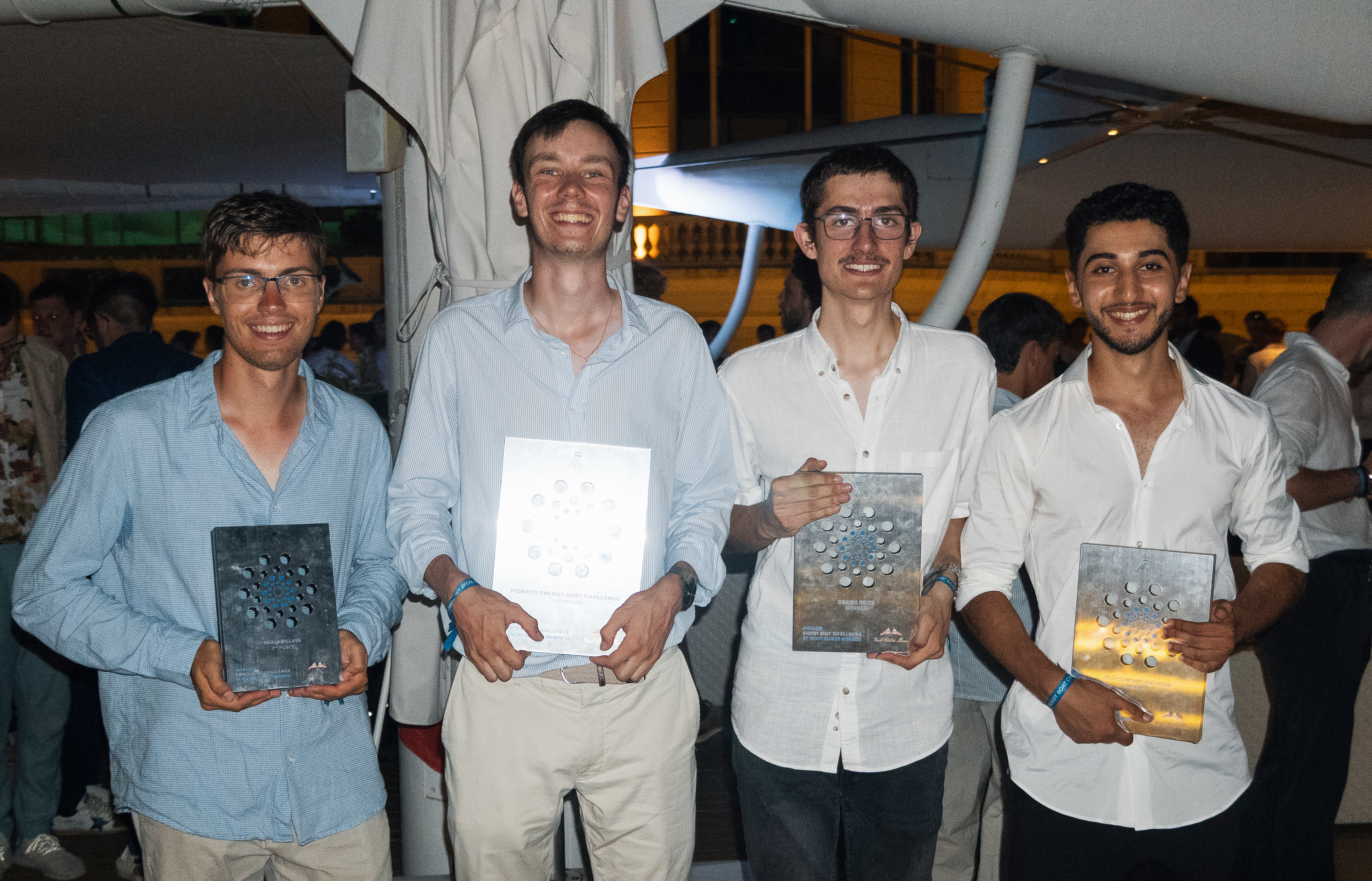
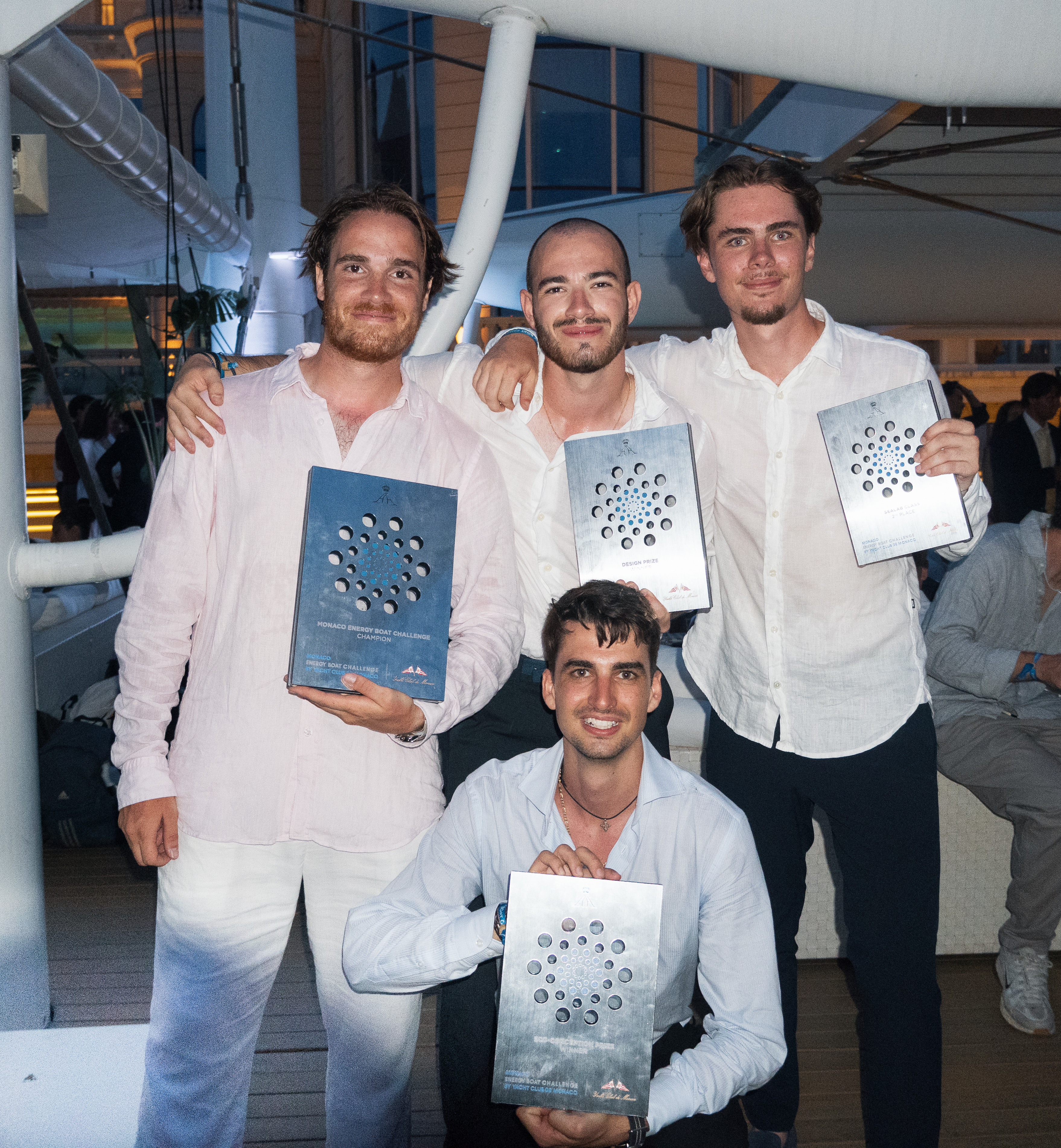
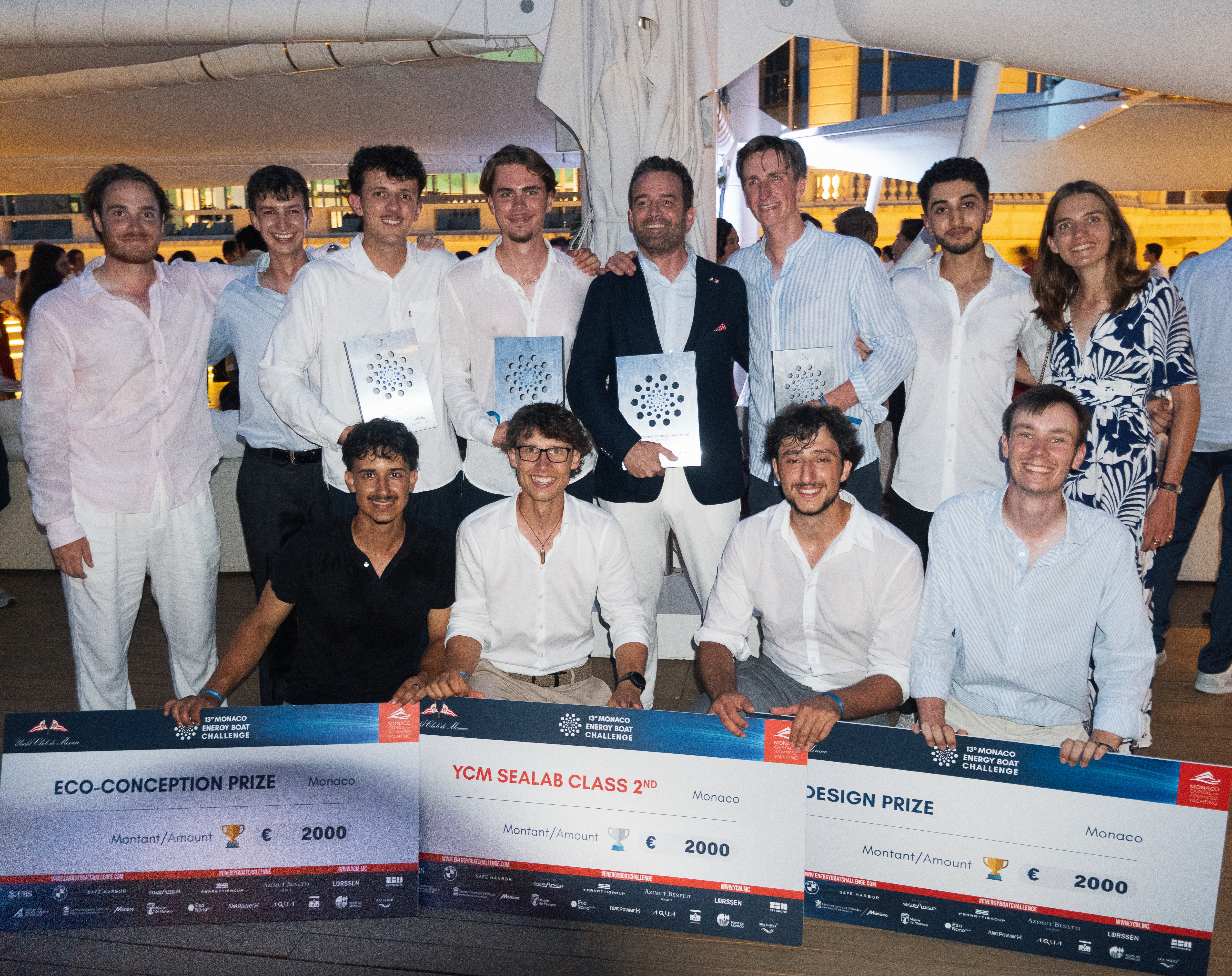
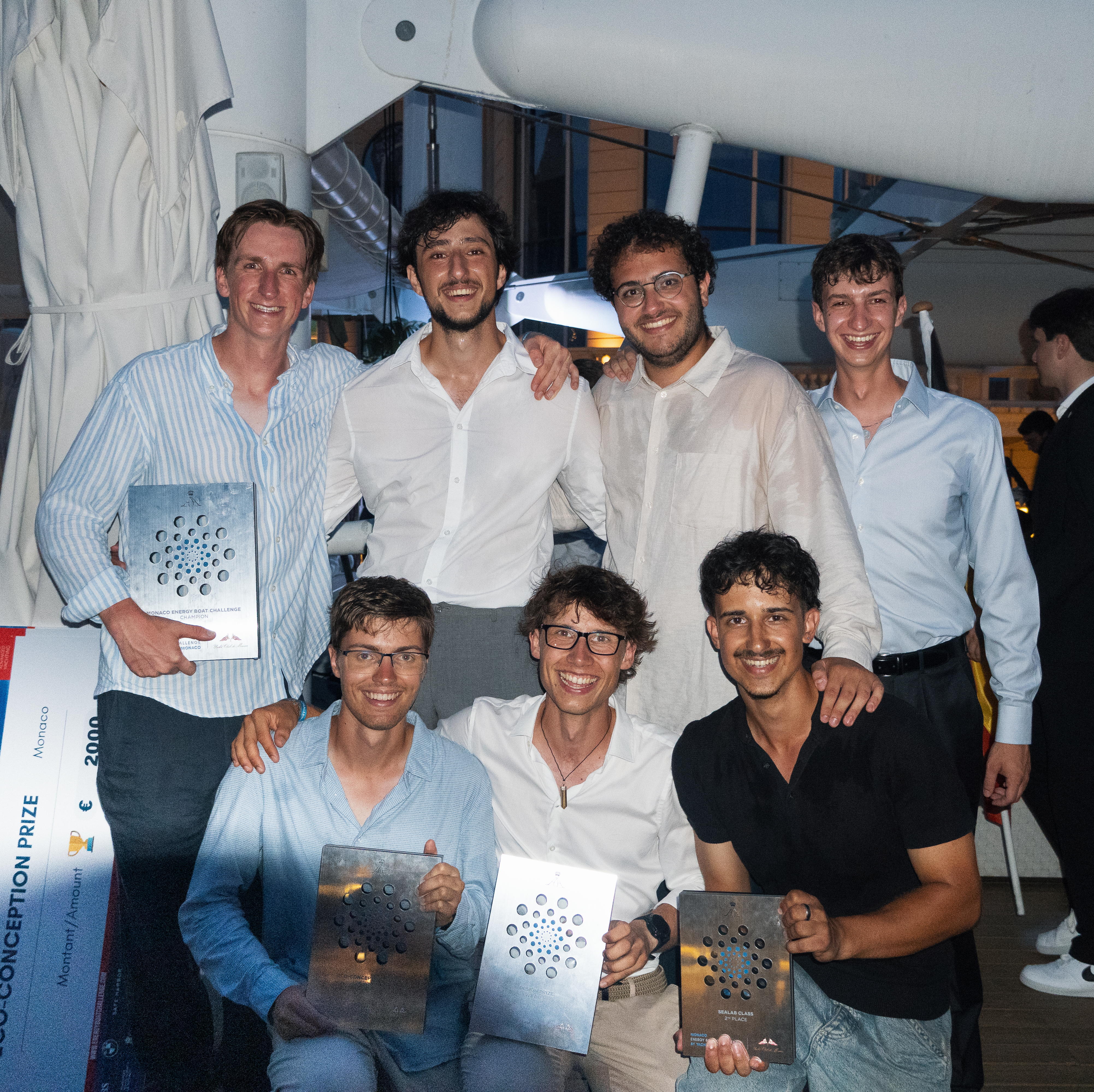
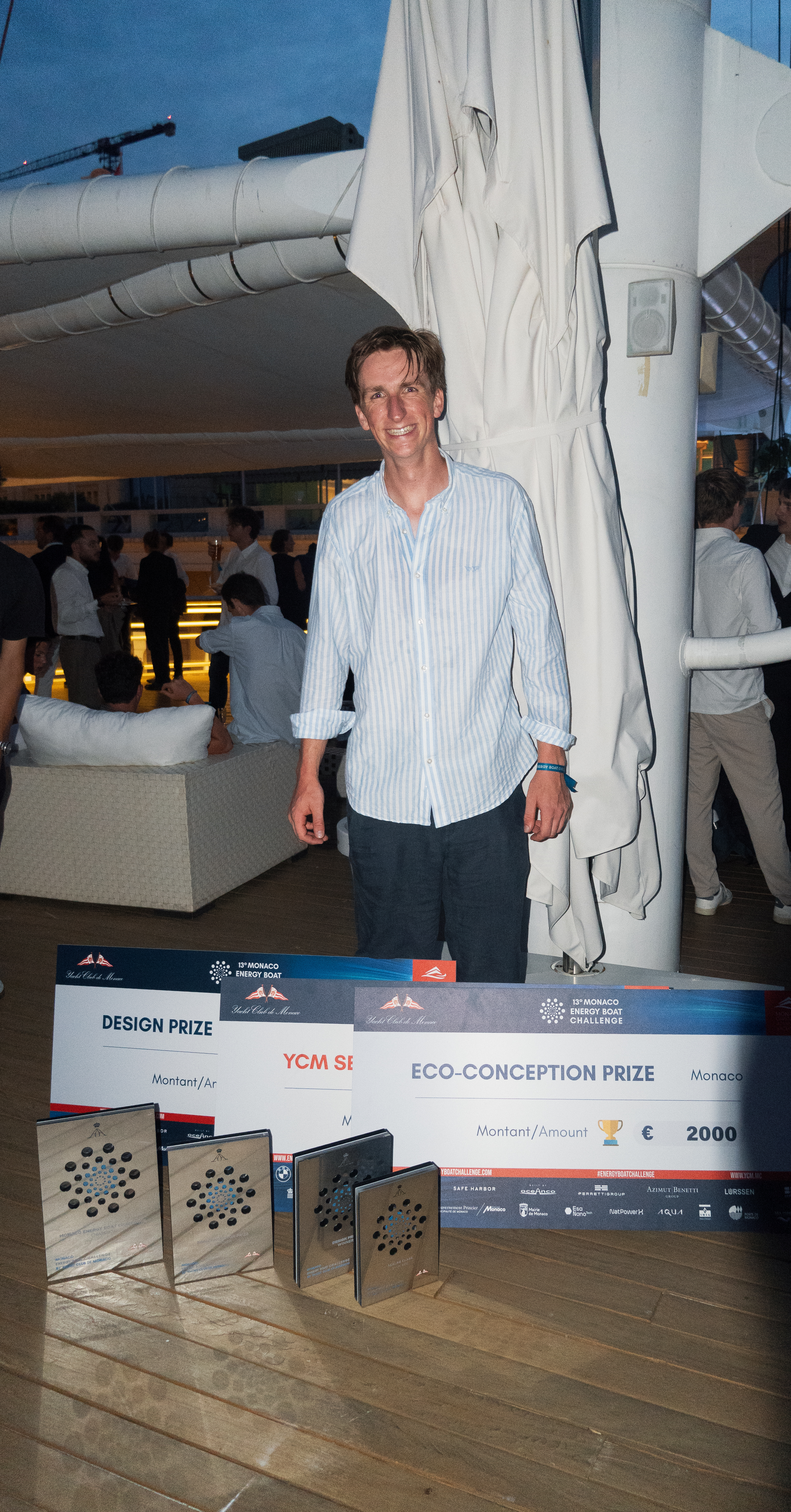
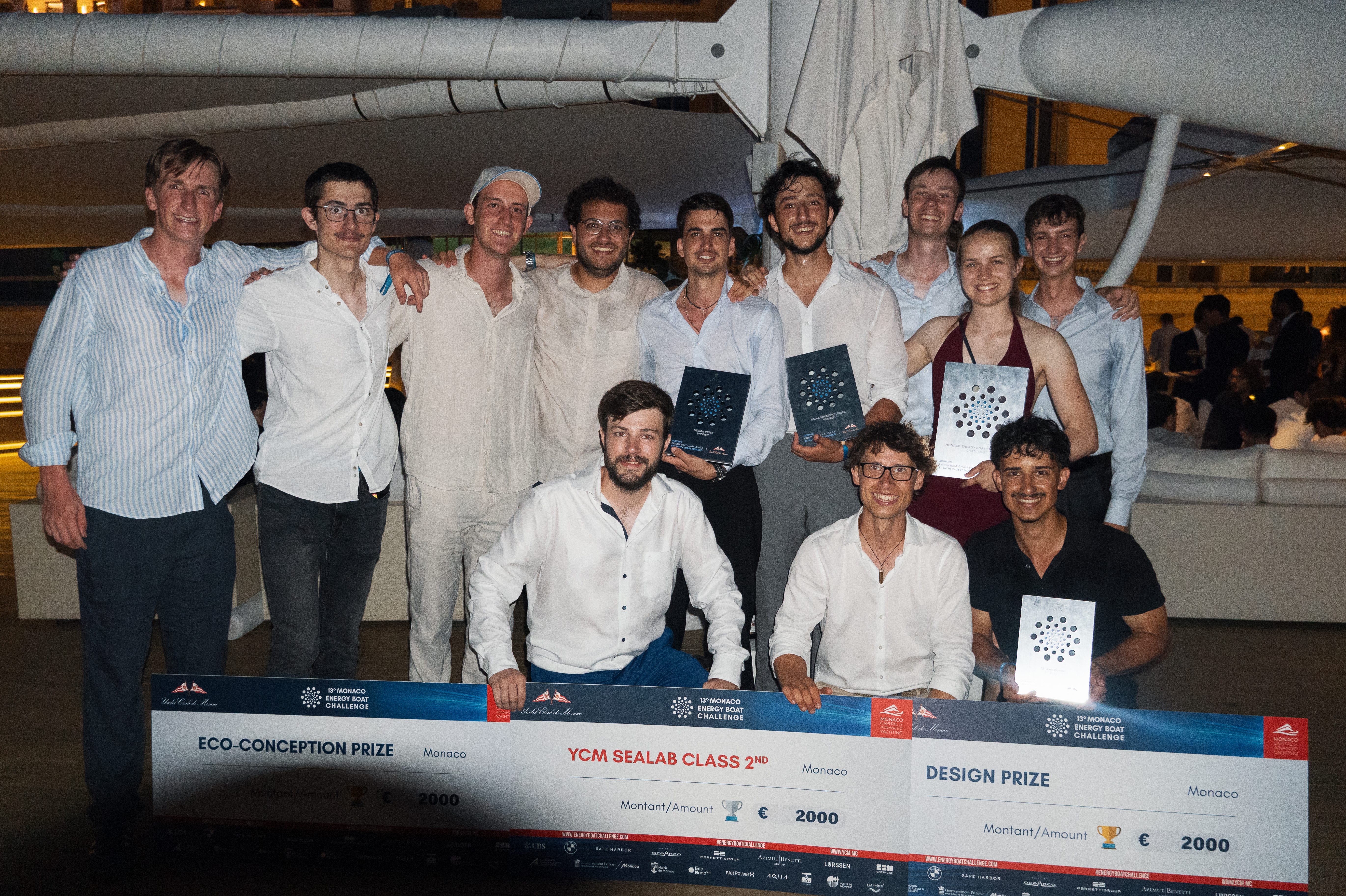
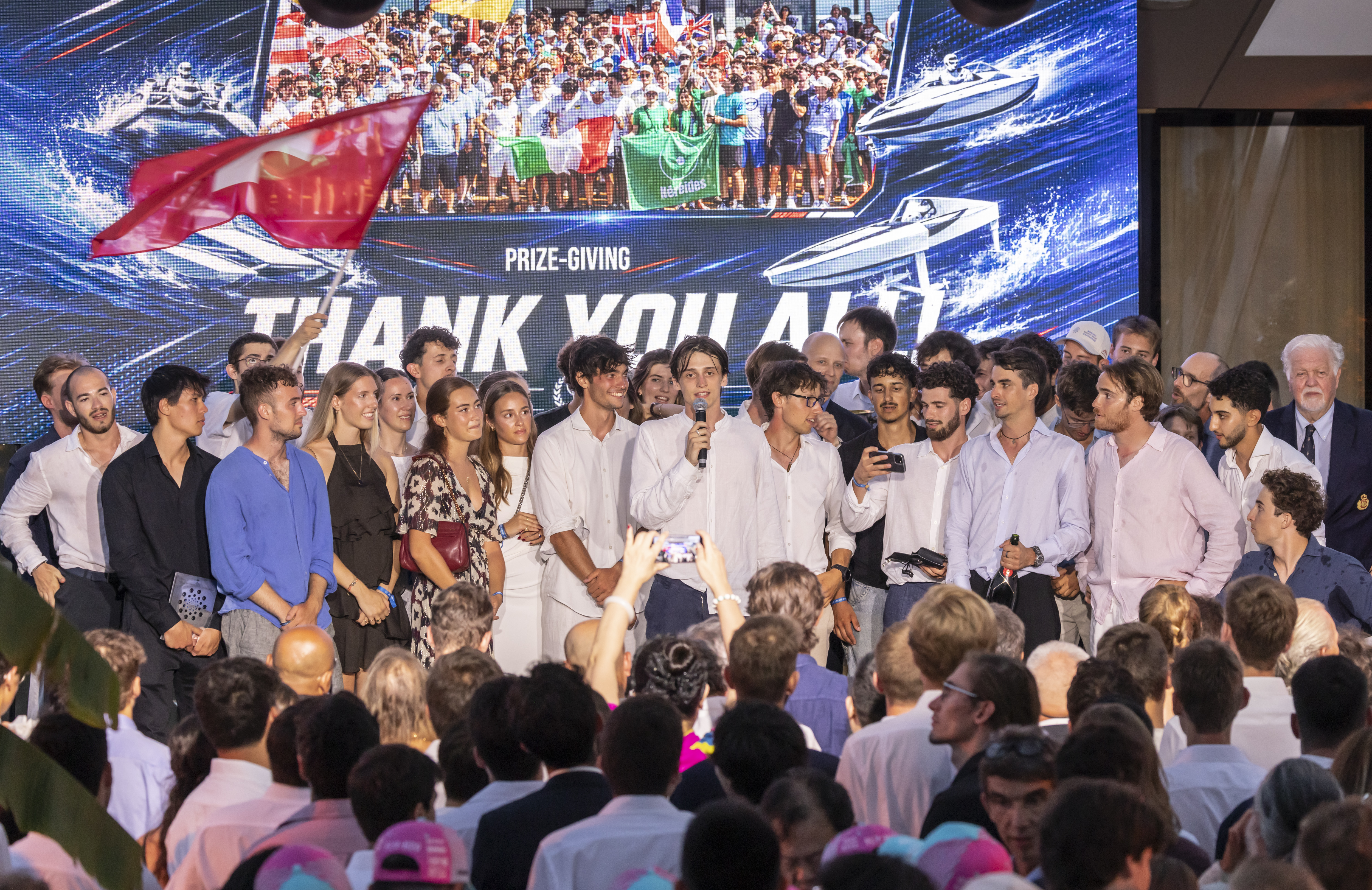
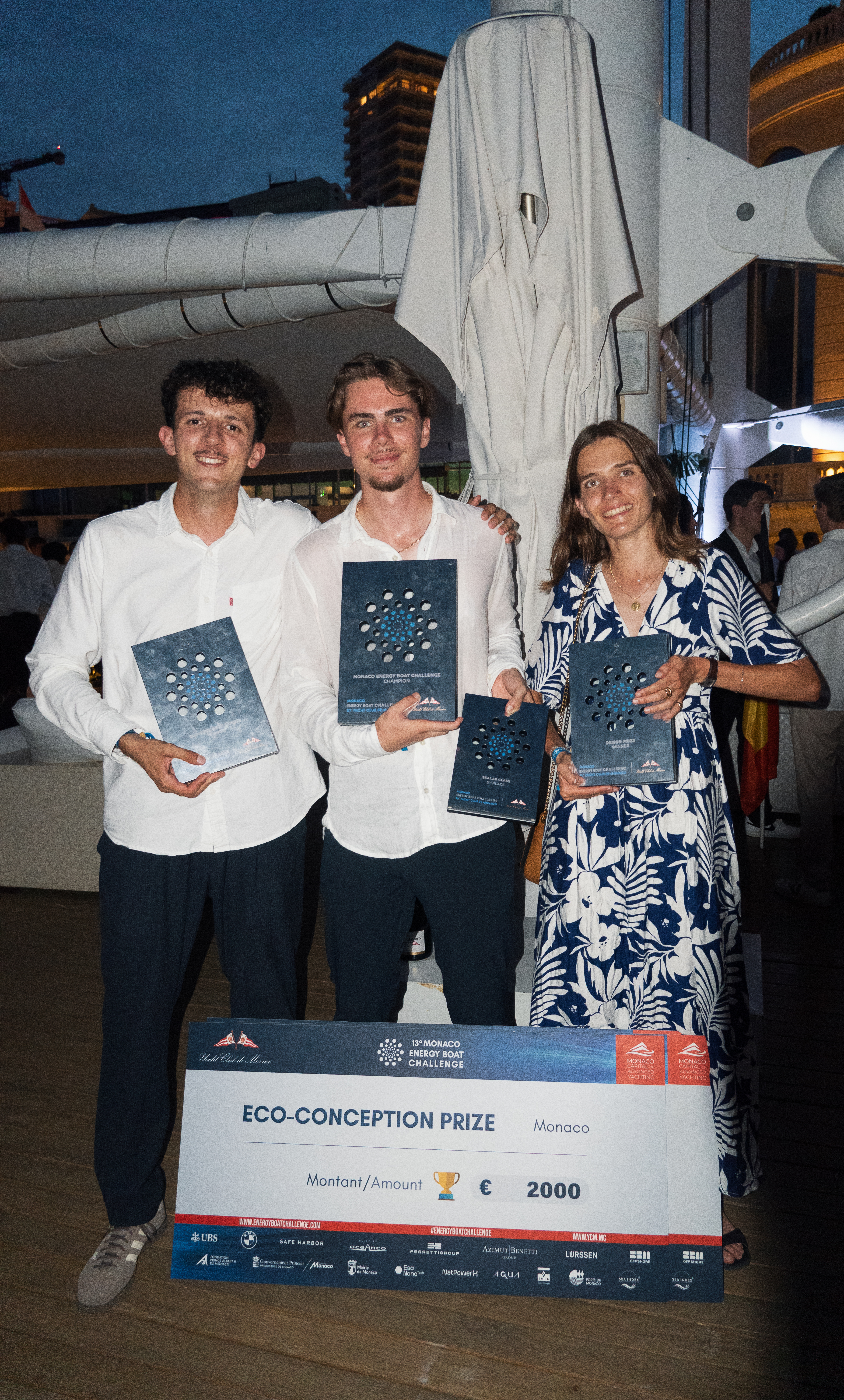
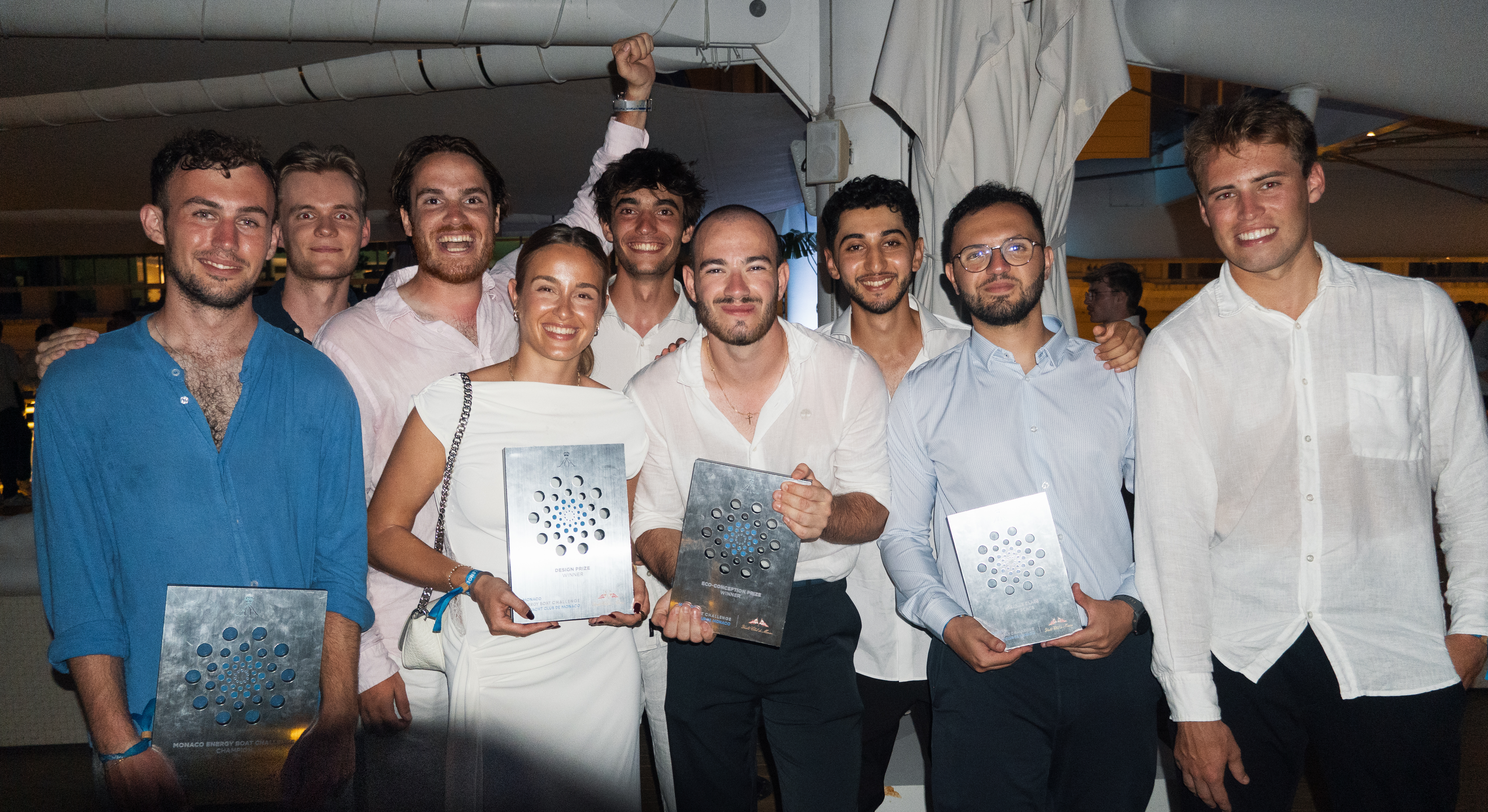
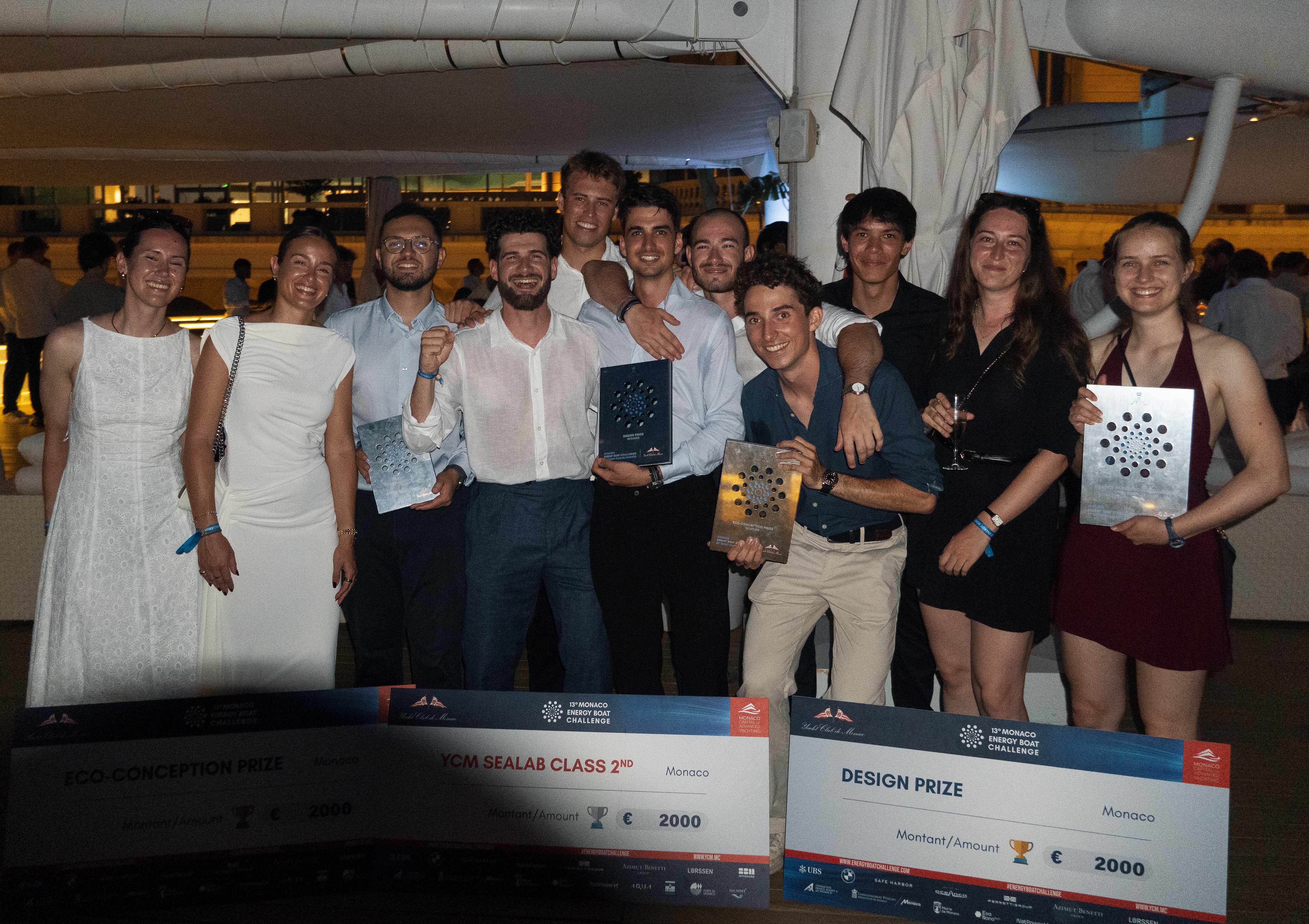
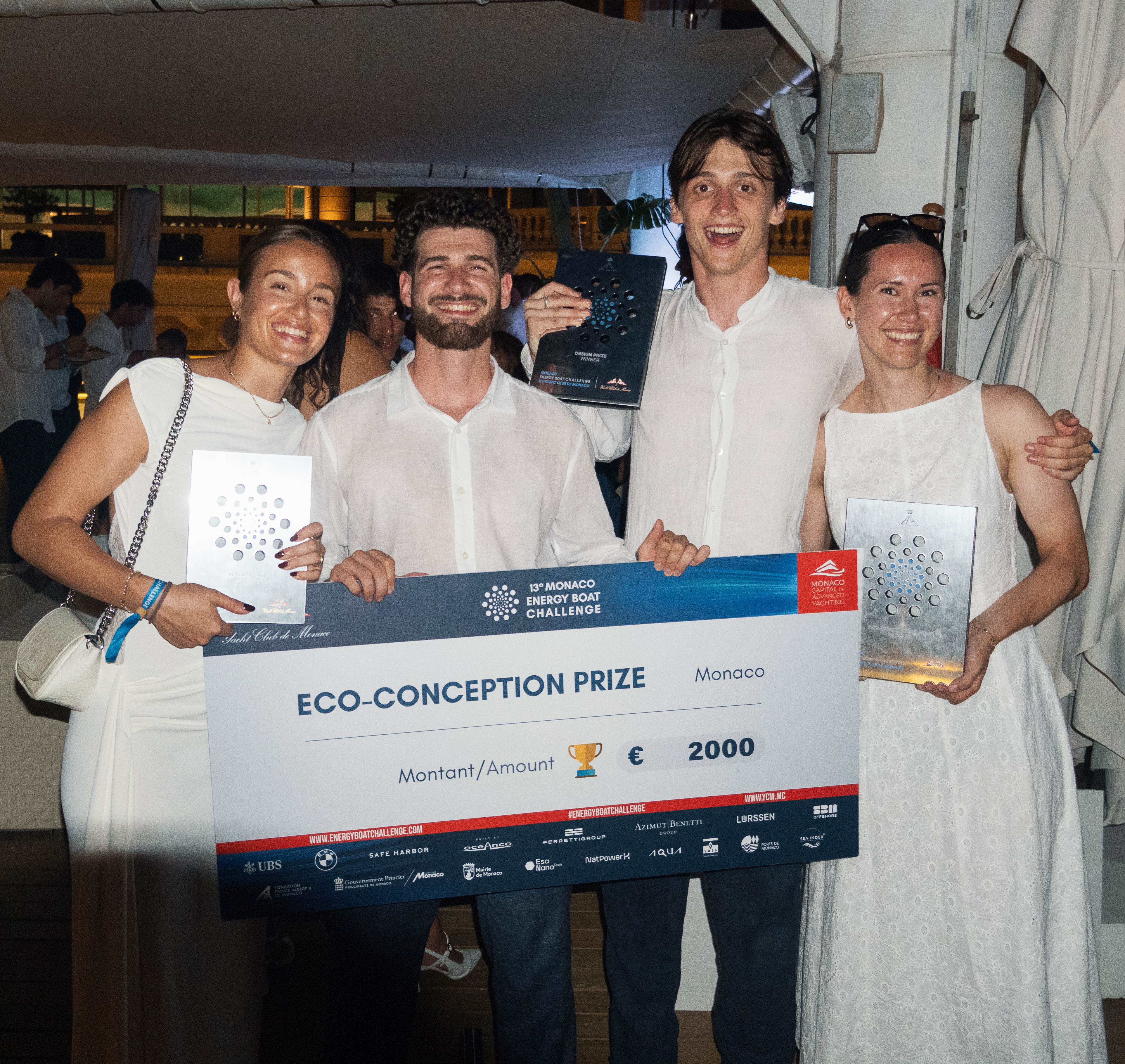
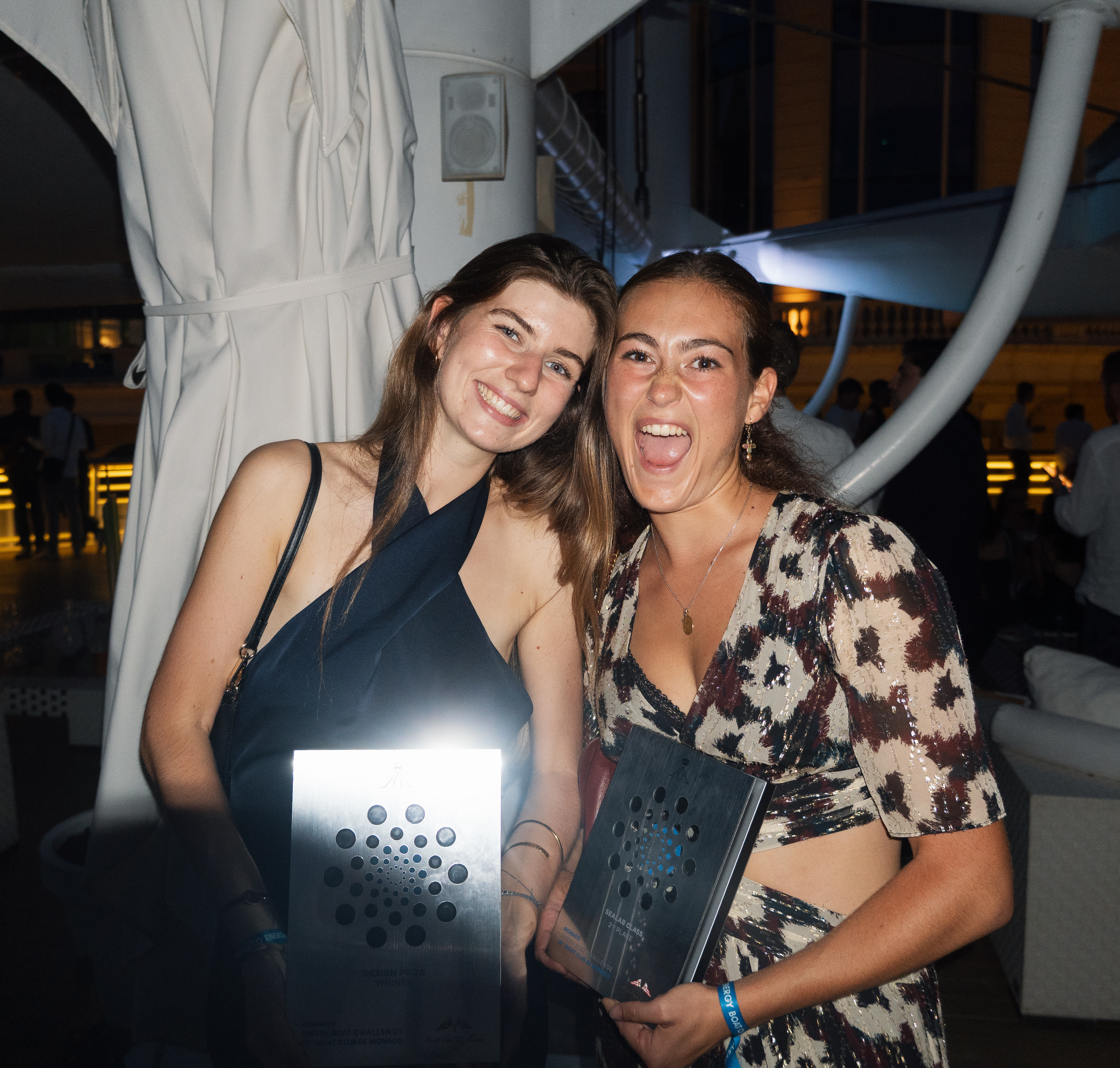
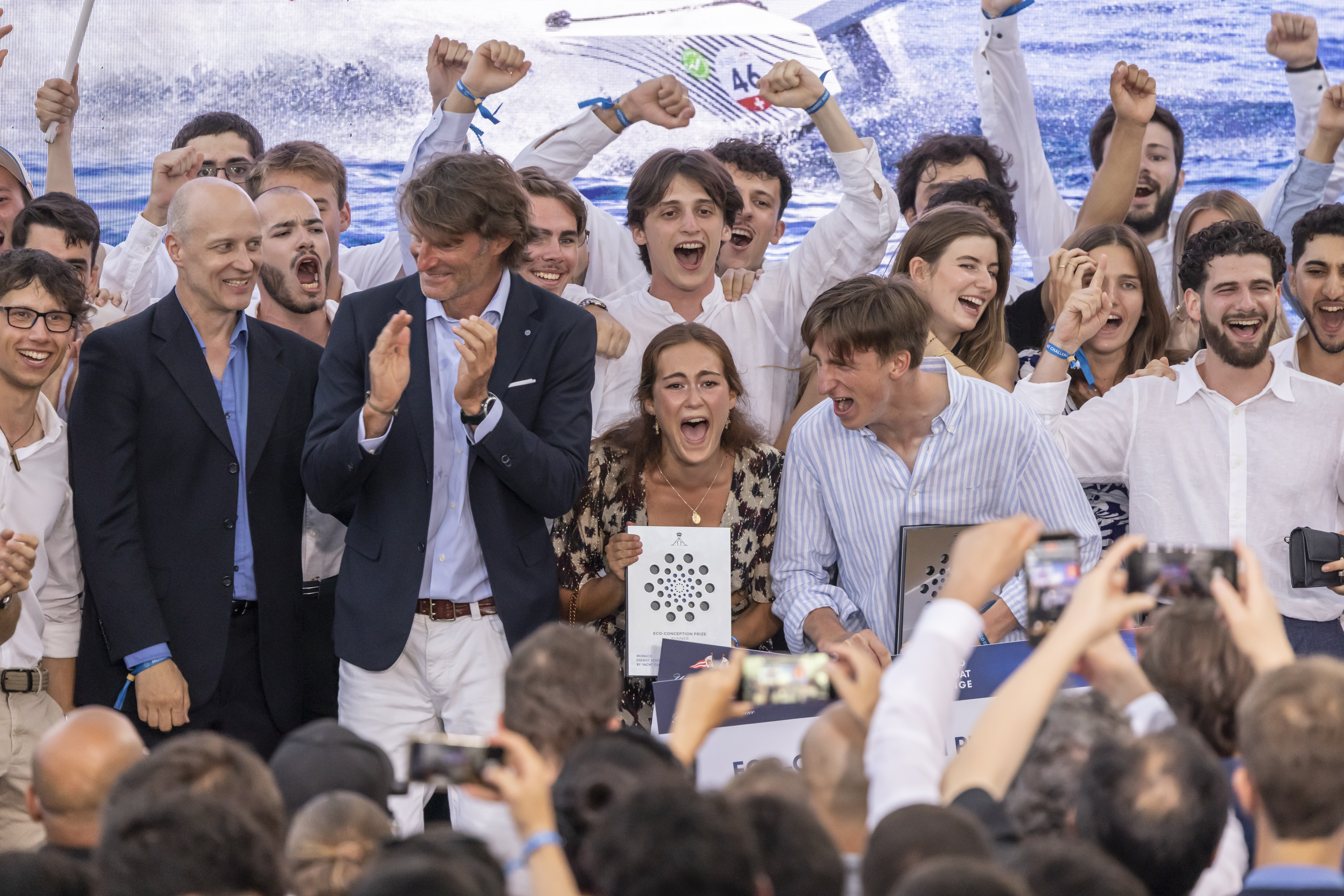
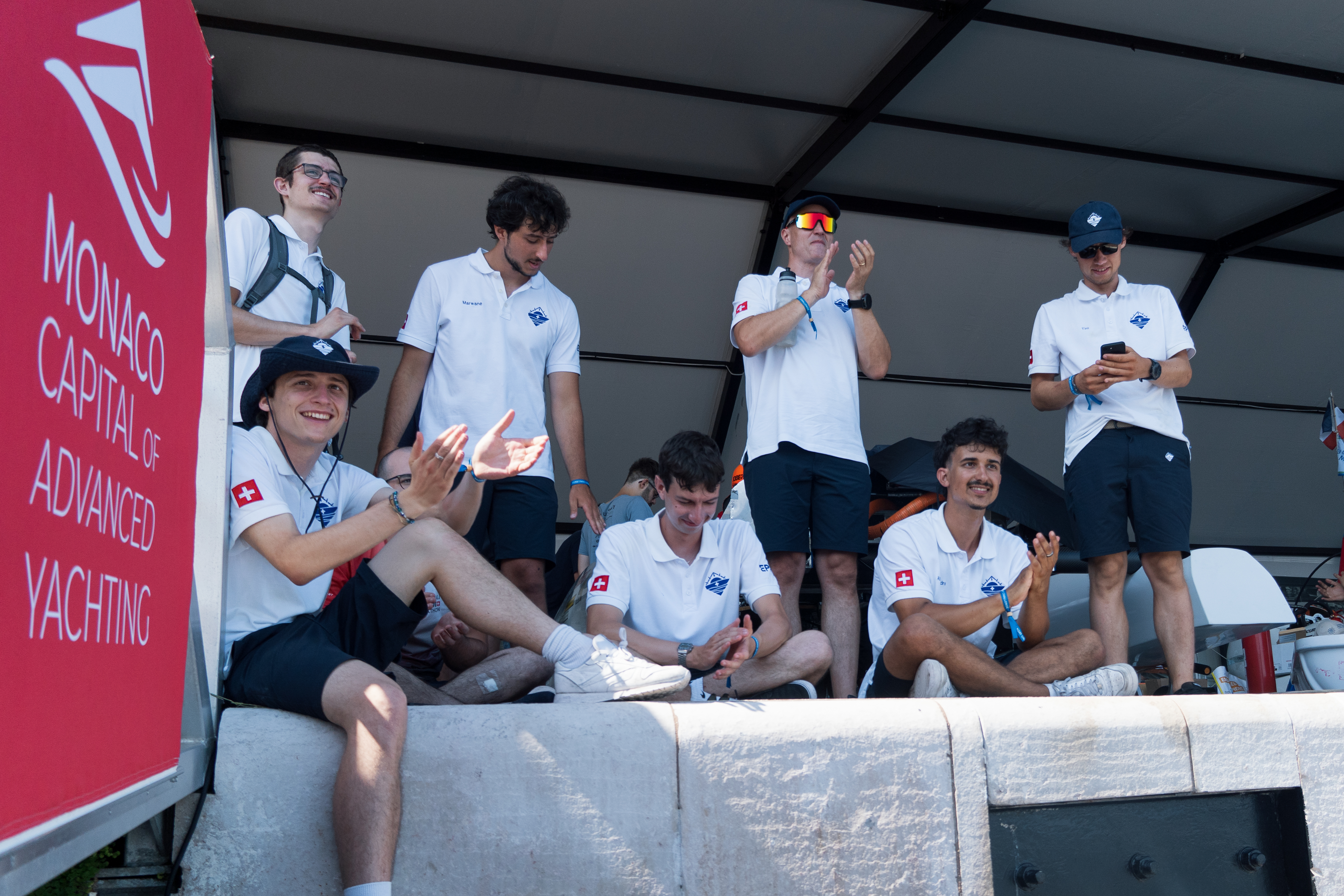
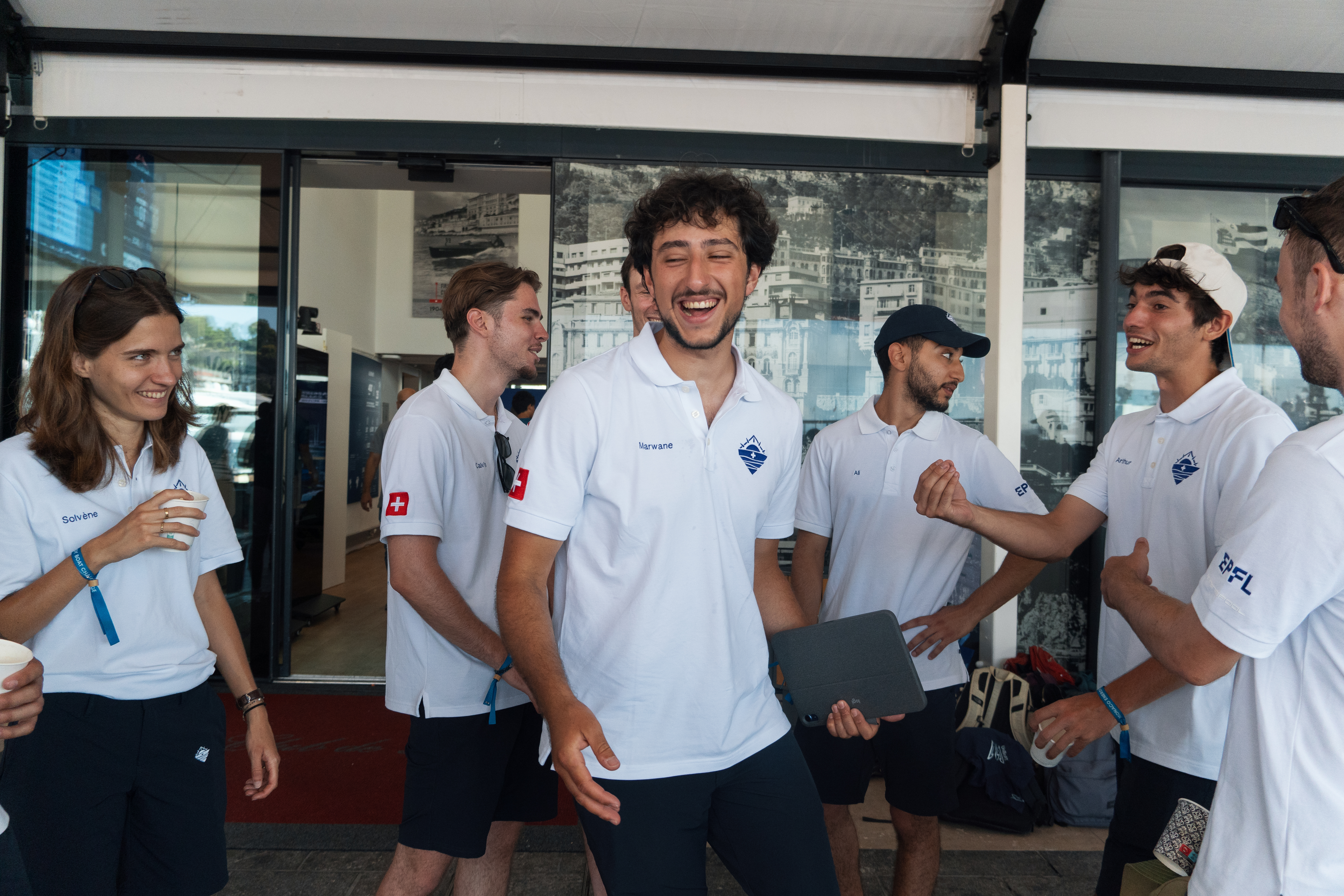
Walking into the Yacht Club for the awards ceremony, the atmosphere within our team was unlike anything we had experienced before. Excitement, hope, and stress mixed together as we waited for the results. The ceremony began with the special awards. First came the Design Award. We felt reasonably confident about our Eco-Conception presentation, but much less certain about Design. The room fell silent. “And the winner is… Swiss Solar Boat.” The entire team exploded with joy as we rushed onto the stage. Still smiling and holding our trophy, we prepared to leave… only to be asked to stay on stage. A few seconds later, we understood why. We had also won the Eco-Conception Award ! Three years of design iterations, engineering, manufacturing, testing and problem-solving had been recognised in the most rewarding way possible. Shortly afterwards, another excellent result followed: third place in the Communication Award, only two points behind first place out of a total of 100 available points. A fantastic achievement for our communication team, who worked tirelessly throughout the entire event.
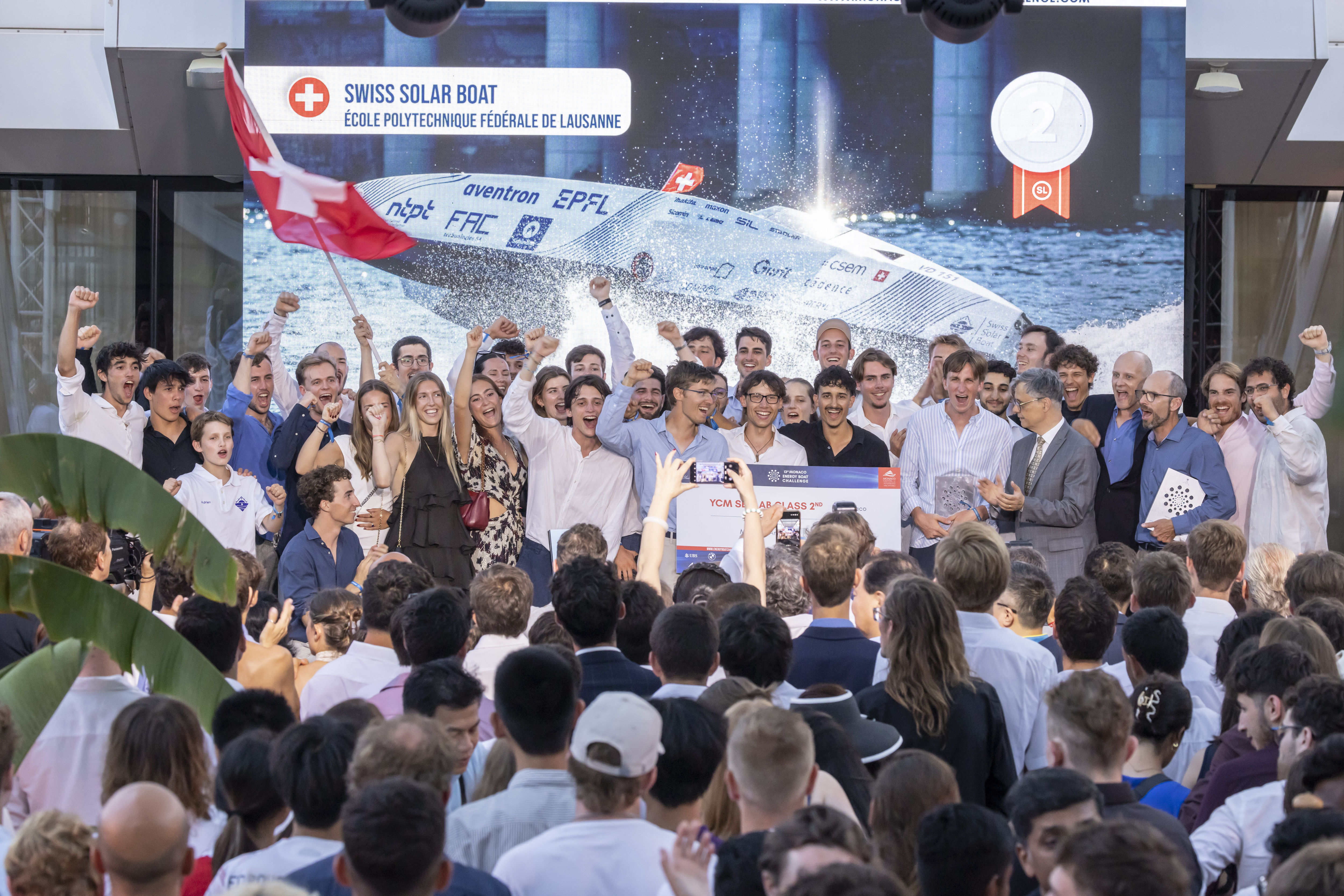
Next came the SeaLab category podium. There was no real suspense by then, as the rankings had already been published earlier in the day. Swiss Solar Boat finished second in the SeaLab category! An outstanding result against an exceptionally competitive field, and another moment worth celebrating together on stage.
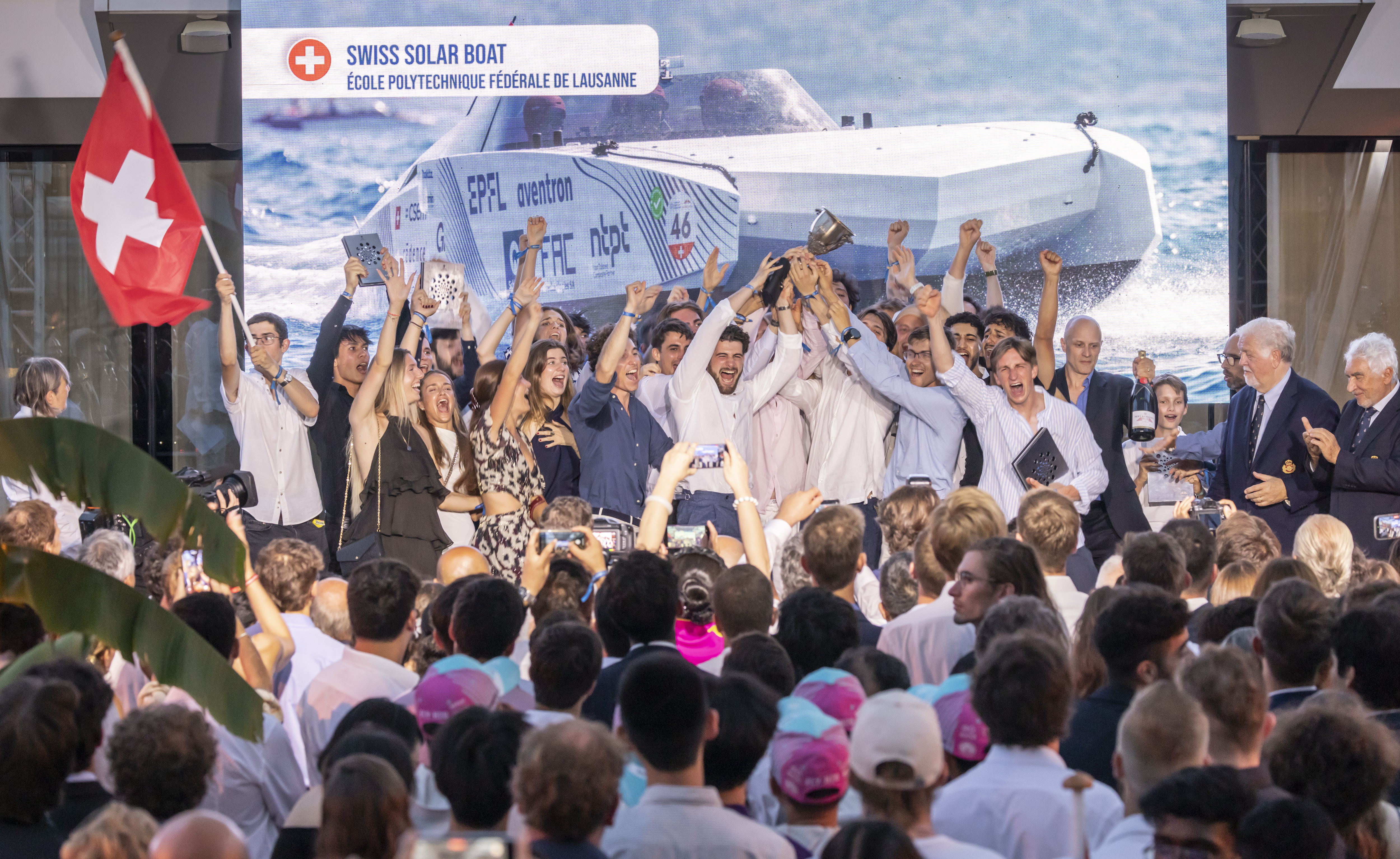
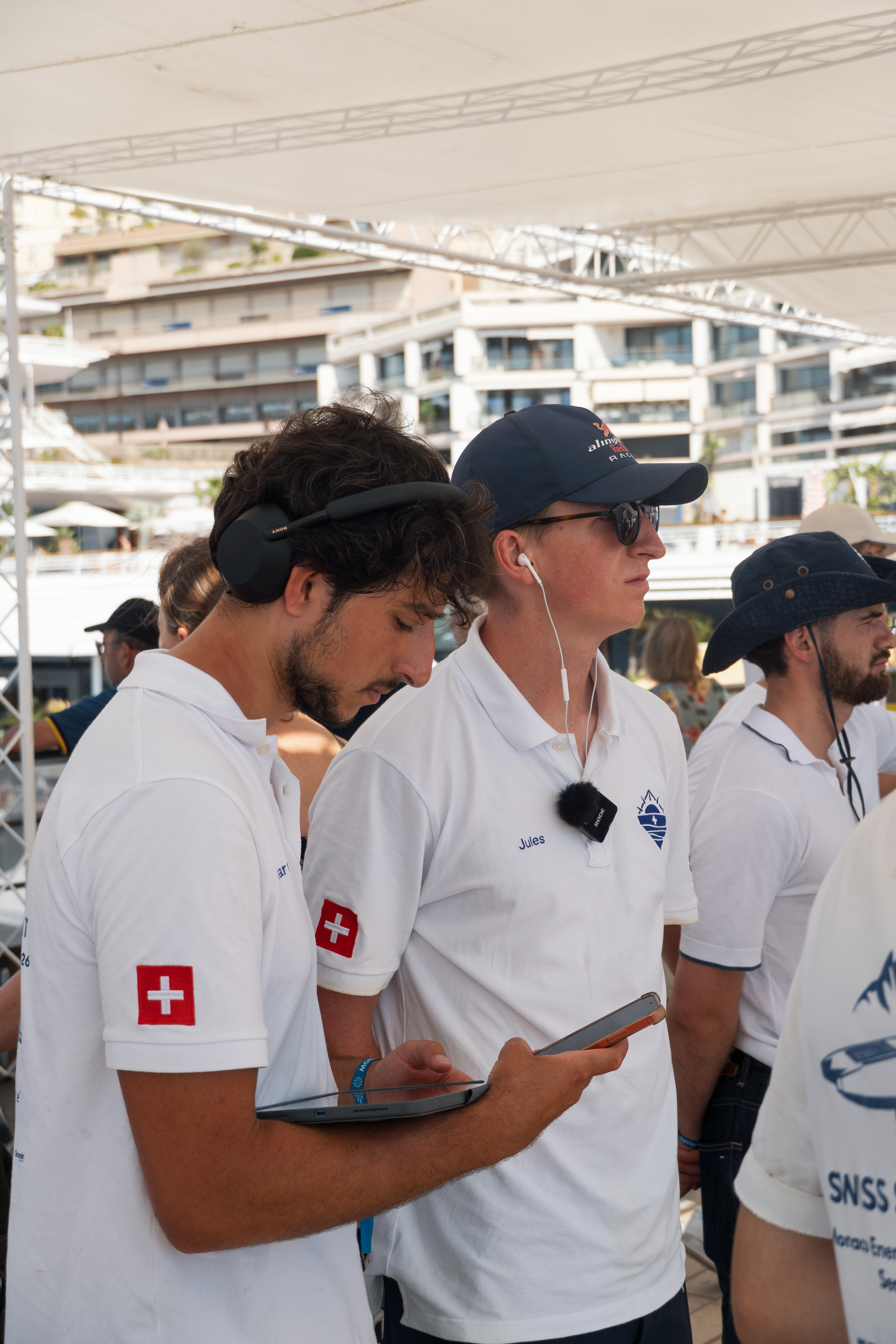
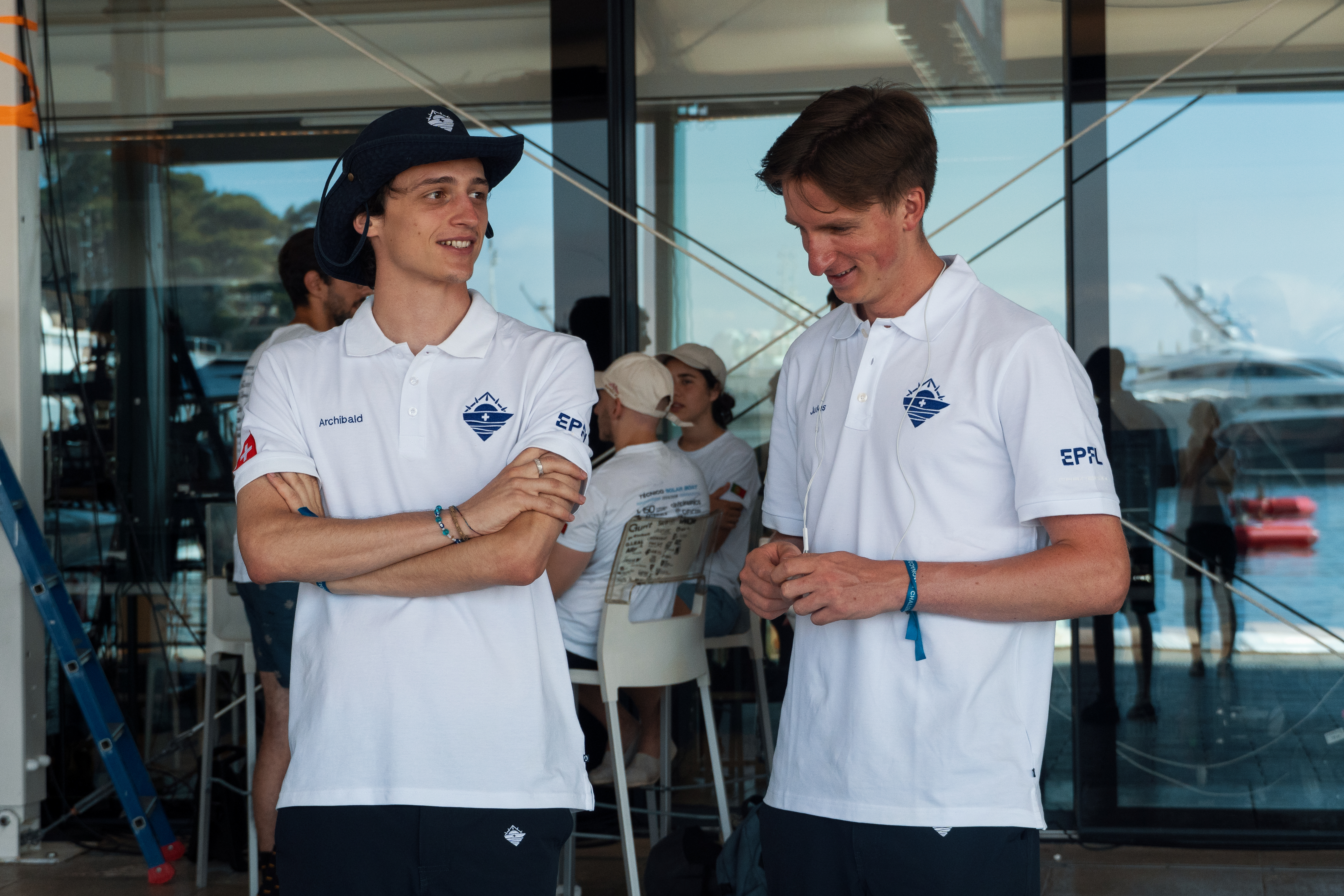
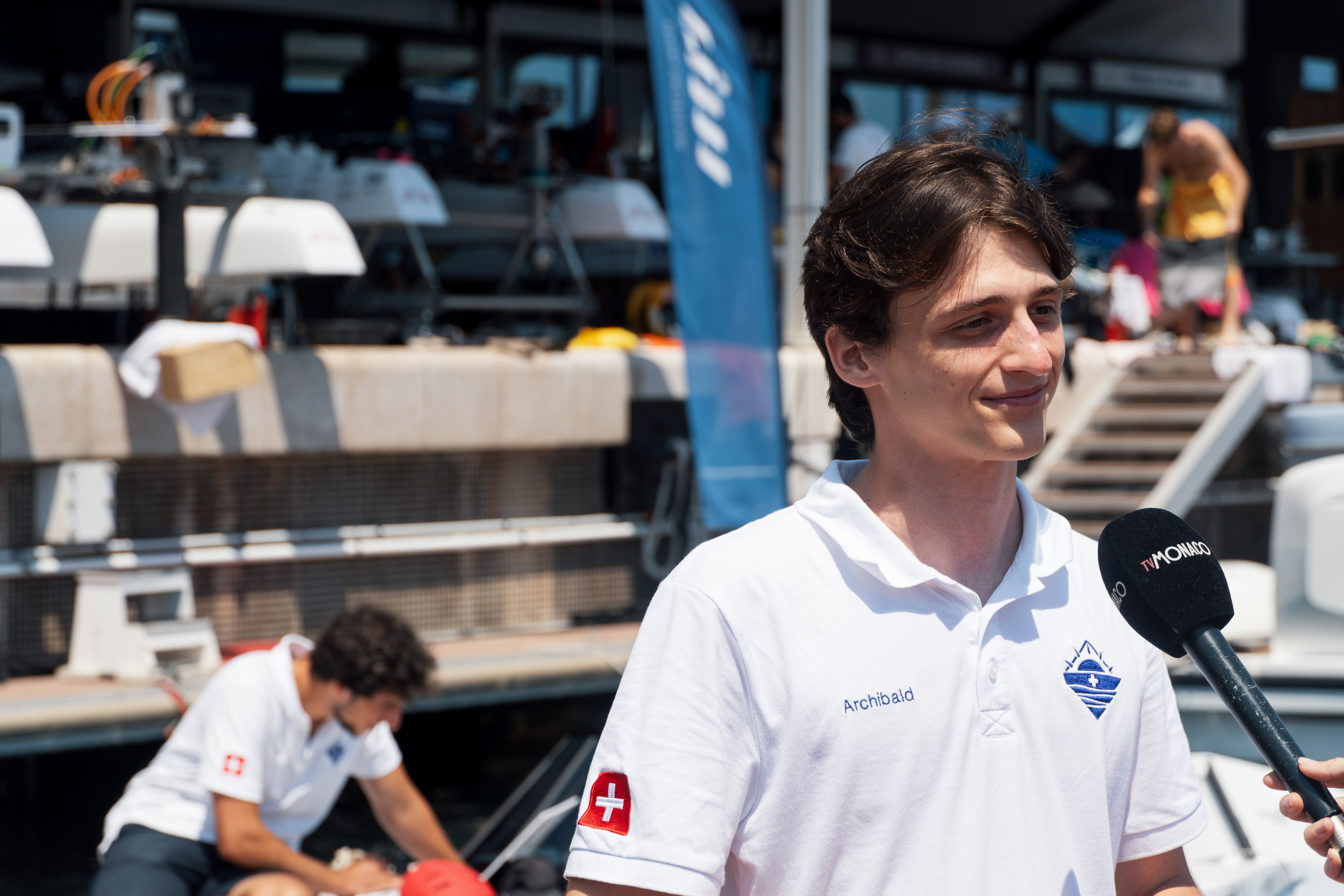
But one final trophy remained: the Overall Monaco Energy Boat Challenge Championship. The award that brings together every aspect of the competition. The room fell silent once again. For what felt like an eternity, nobody moved. Standing side by side, our president Archibald quietly turned to Jules, Chief Technical Officer and leader of the team during the competition, and whispered, « Do you think we have a chance? » Jules smiled nervously. « I honestly don’t know… my legs are shaking. »
Then Mr Alain Ucari, Deputy Treasurer General of the Yacht Club de Monaco, stepped onto the stage and announced: “The winner, this year, is… Swiss Solar Boat!”
Cheers, tears, hugs and champagne.
This victory belongs far beyond the students standing on that stage. It belongs to the more than 220 Swiss Solar Boat members who have contributed to this project over the past three years. It belongs to the EPFL staff and professors who supported us throughout the adventure. It belongs to our sponsors, who believed in the project even during the most challenging moments. It belongs to our families and friends, whose encouragement made it possible to dedicate countless evenings, weekends and holidays to this dream alongside demanding university studies.
We would also like to sincerely thank the organisers of the Monaco Energy Boat Challenge. Their professionalism, availability and great facilities make this competition a unique experience for every team.
Finally, we want to thank all the other teams. A victory only has meaning when it is earned against outstanding competitors, and this year’s field was exceptional. Beyond the competition itself, sharing this week with passionate students from around the world was undoubtedly one of the greatest rewards. We’d especially like to thank Hydromotion, Técnico Solar Boat and Surge Twente for the many inspiring discussions throughout the week. We hope to see you all again next year!
Post-scriptum :
On Sunday afternoon, Team Swiss Solar Boat returned to Lausanne, while the Lobst’Air, and its four trophies, headed home to enjoy a well-deserved summer break.
You might be wondering, what’s coming next ? During the 2026–2027 season, we aim to complete a full circumnavigation of Lake Geneva: nearly 160 kilometres requiring exceptional reliability, endurance and efficiency. And of course, we hope to return to Monaco to defend our title as Overall Champions… while chasing the one trophy still missing from our collection: first place in the SeaLab category!
To everyone who followed these Daily Recaps throughout the week, thank you for joining us on this incredible adventure. Your support means more than you can imagine.
If you’d like to follow what comes next, don’t hesitate to follow Swiss Solar Boat on Instagram and LinkedIn.
See you soon!